Wayanad tunnel road: Unusual haste in clearances flouts rules, documents reveal
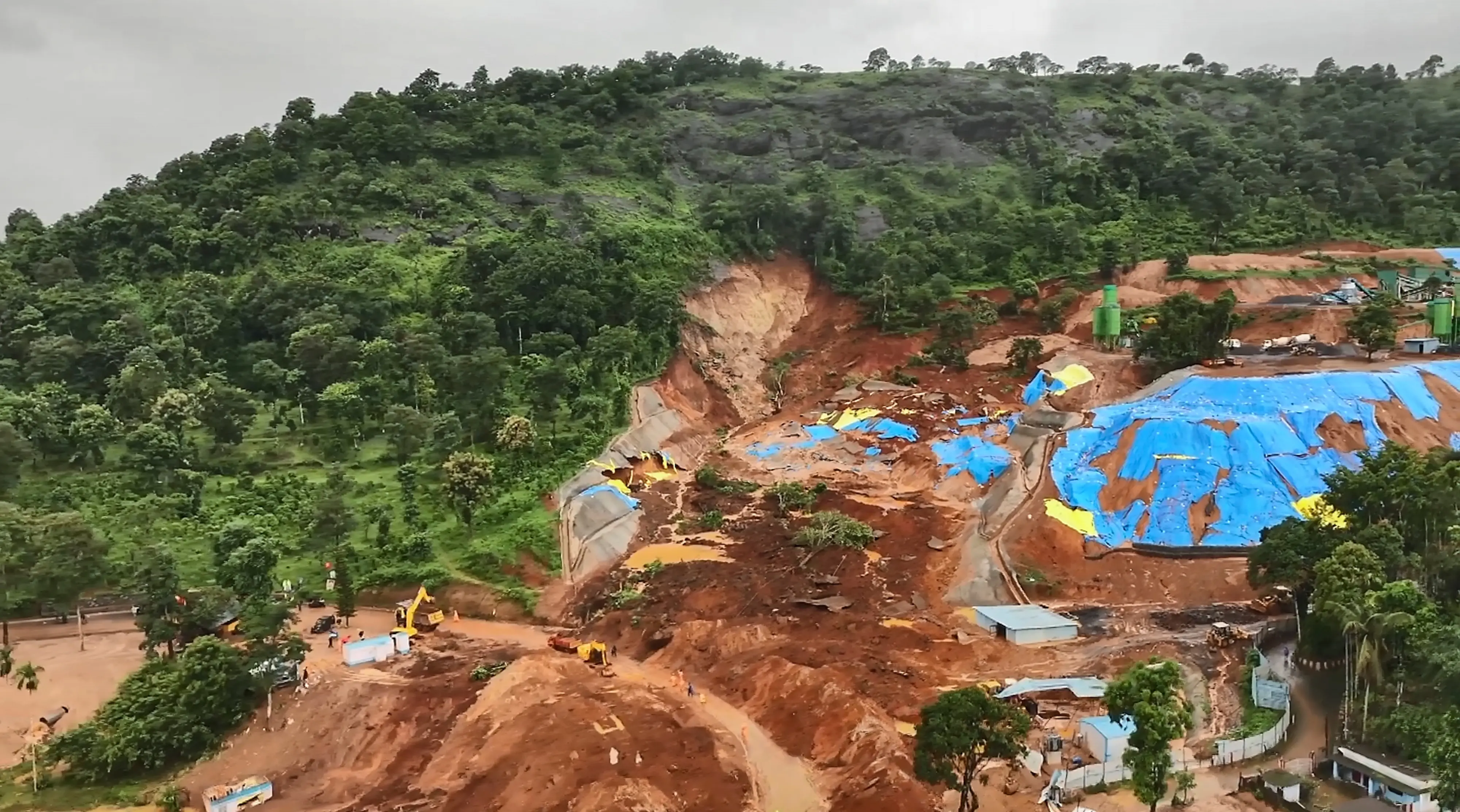
New Delhi: Official documents have revealed that the first-phase environmental clearance for the ₹2,134 crore Wayanad tunnel road project was granted with unusual speed, bypassing mandatory protocols. The State Environment Impact Assessment Authority (SEIAA) hastily approved the project and forwarded it to the Centre on the very day its chairman was retiring, scheduling a special meeting with just this tunnel road and one other agenda item.
Furthermore, the central Expert Appraisal Committee (EAC) granted its clearance without even visiting the project site, despite the massive scale of the required Environmental Impact Assessment (EIA). The committee made no effort to understand the actual geological realities of the region. Compounding the issue, Dilip Buildcon, the firm awarded the project contract, has previously been blacklisted.
Citing these critical lapses with specific examples, an organisation named the International Movement for Wetland Conservation has sent a formal letter to the Chief Justice of India. Seeking urgent intervention, the letter opens with a poignant plea made "on behalf of those who lost their lives in the recent accident at Kalladi”.
The letter demands an immediate halt to all construction work and calls for an independent, comprehensive probe into the clearance process, regulatory violations and the safety lapses that culminated in the disaster.
Major irregularities highlighted
- Lack of accreditation: Konkan Railway, which prepared the Environmental Impact Assessment (EIA) report, lacks the mandatory national accreditation required by law to conduct EIAs for large-scale infrastructure projects.
- Ignored disaster data: The EIA report completely failed to integrate historical data from the 2007 Velamcode disaster or the catastrophic 2024 Chooralmala-Mundakkai landslides.
- Understudied mechanical impact: The report contains no analysis of how rock blasting or the deployment of heavy Tunnel Boring Machines (TBMs) will impact the fragile terrain.
- Wildlife conflict: Frequent movement of heavy vehicles through the tunnel road will disrupt traditional elephant corridors, inevitably worsening human-wildlife conflict.
- Flawed mitigation budget: Proving that the EIA was unrealistic, the SEIAA had to direct the contracting firm to massively increase its Environment Management Plan allocation from an inadequate ₹1.02 crore to ₹15.04 crore to mitigate environmental damage.
- Bypassed base surveys: The Union Ministry of Environment, Forest and Climate Change approved the project without demanding a comprehensive, micro-level environmental impact study. Although it was acknowledged that these fundamental baseline surveys were never conducted, the ministry dismissed them as unnecessary and greenlit the destruction of 17.263 hectares of forest land.
- Fragile geography overlooked: No consideration was given to the fact that the project area lies in an ecologically fragile zone of the Western Ghats, directly adjacent to Puthumala (which suffered a major disaster in 2019), Mundakkai and Chooralmala.