Wayanad Landslides: Bailey Bridge crucial in overcoming rescue challenges– learn more about its use
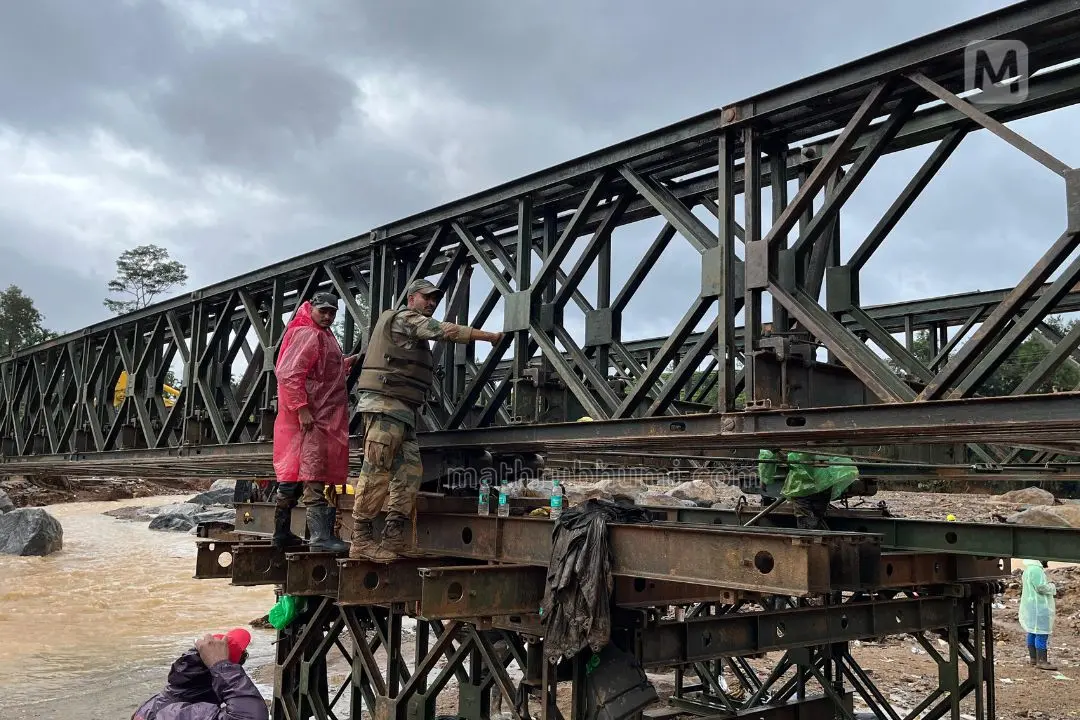
The Indian Army has intensified its rescue efforts for those stranded after the Wayanad landslides, and the construction of a 190-ft-long Bailey bridge is making progress. This bridge is vital as rescue operations are hindered due to the severe inaccessibility of the affected Mundakkai area. The bridge, which can support a weight of up to 90 tonnes, is expected to mitigate the challenges posed by the difficult terrain and adverse weather conditions.
"We hope that we will be able to complete the work of bailey bridge which is for 24 tonnes weight category, by this afternoon...our engineers were on the job throughout the night...we sent 5 earth moving equipment yesterday and today also we have sent many earth moving equipment. This is making our search operation much easier..." told Brigadier Arjun Segan, Commandant of the Para Regimental Training Centre to ANI.
Here’s a look at the origins of the Bailey bridge and its use.
The Bailey bridge, a type of modular military bridge, was developed during World War II by the British engineer Sir Donald Bailey. The design was conceived in response to the need for quick-to-assemble, portable bridges that could be rapidly deployed in combat zones. It is a type of portable, pre-fabricated truss bridge, extensively used in emergency situations such as rescue operations following landslides. Key aspects of the Bailey bridge’s utility in such scenarios include:
- Rapid deployment: Bailey bridges can be assembled quickly and easily by a relatively small team, making them ideal for emergency situations where time is critical.
- Accessibility: These bridges can be transported to remote or inaccessible areas—often the case in landslide-affected regions—using trucks or even helicopters.
- Sturdy construction: Despite their portability, Bailey bridges are robust and can support heavy loads, including vehicles and equipment necessary for rescue and relief operations.
- Versatility: They can be adapted to varying lengths and capacities, suitable for crossing gaps created by landslides or damaged infrastructure.
- Temporary but reliable: Although typically used as temporary solutions, Bailey bridges provide reliable and safe passage for both rescue teams and affected populations until permanent repairs can be undertaken.