Viral AI dance video featuring Kerala CM VD Satheesan removed from Instagram handle that posted it
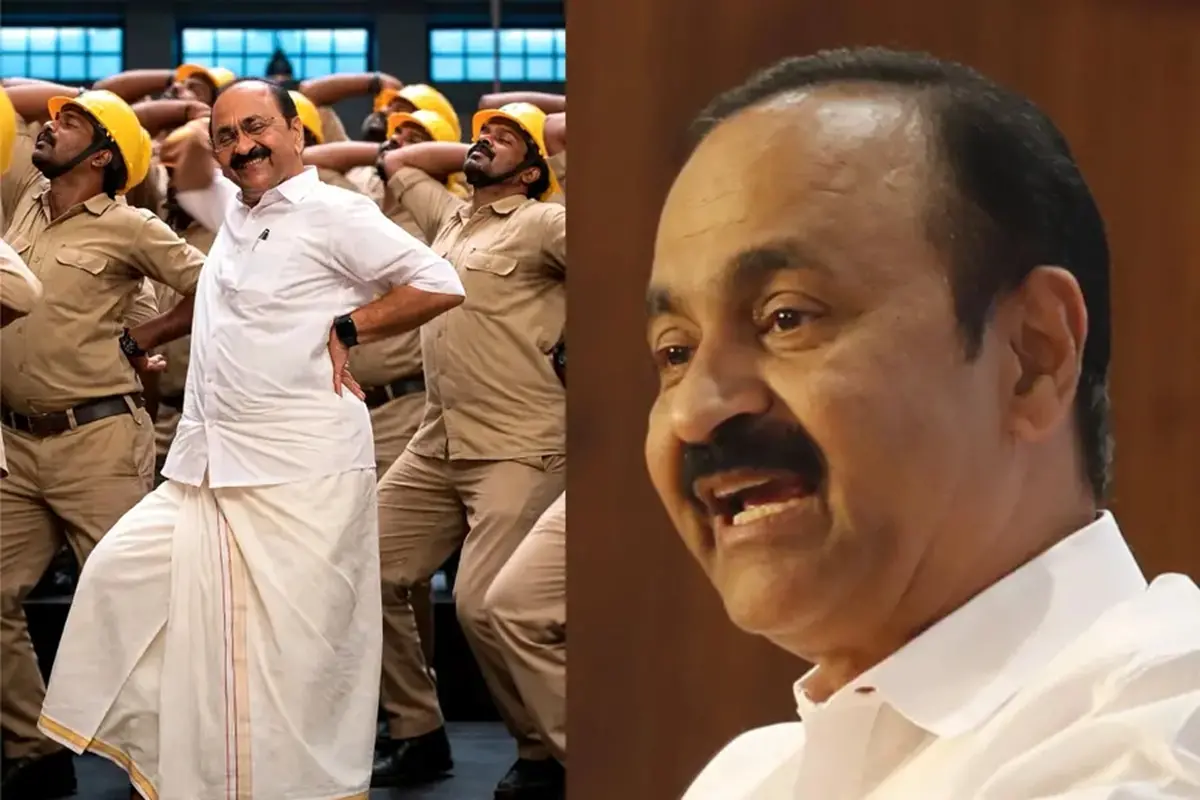
A viral AI-generated video showing Keralam Chief Minister VD Satheesan dancing with Kerala State Electricity Board (KSEB) staff is no longer available on the ‘Aikavala’ Instagram handle that claimed to have created and first uploaded it.
Media reports on Monday, September 14, said Meta had removed the digitally altered video after notifying the uploader under India’s social media regulations.
The video was reportedly first created by Thrissur native Abhijith along with his friend Akhil in Dubai. It was made against the backdrop of public difficulties linked to KSEB power cuts and was widely circulated across social media platforms.
According to Abhijith, the video had been viewed 1.78 crore times and received more than 50,000 comments.
While the original video is no longer available on the Aikavala Instagram handle in India, copies remained available on other Instagram accounts and Meta platforms, including Facebook, at the time of writing.
Abhijith has appealed against Meta’s action. He said the original post clearly carried a disclaimer that it was AI-generated and that there was no intention to defame anyone.
He also said he and Akhil had not expected the video to attract such a large audience.
Satheesan questions legal safeguards for AI creations
Last day, Satheesan spoke about the video while addressing a seminar titled “Music, Cinema and Law” in Ernakulam. The event was jointly organised by the Kerala Judicial Academy and the National University of Advanced Legal Studies (NUALS).
He said he was surprised by how realistic the footage appeared.
“I saw the video and found that I was dancing better than Mohanlal and my friend, Tamil Nadu Chief Minister Vijay. I was stunned and shocked,” he said, referring to the clip.
Satheesan then raised questions about how existing laws should deal with content created using artificial intelligence.
“Now Artificial Intelligence is creating music, creating dance, creating everything. How can we interpret in law of the new technologies' creations?” he asked.
He called for changes to the legal framework to address the challenges posed by AI, particularly in creative industries.
“Law is living law, law is changing time to time. I hope that after the introduction of this future technology, there should be many changes in the legal framework also,” Satheesan said.
He added that existing laws should be amended wherever necessary to protect the film industry from being pushed into a crisis.
India has introduced stricter rules for synthetic content
India has already brought in specific regulations covering synthetic content.
The Information Technology (Intermediary Guidelines and Digital Media Ethics Code) Amendment Rules, 2026, were notified by the Ministry of Electronics and Information Technology on February 10 and came into force on February 20.
The rules introduced a legal definition of “synthetically generated information”. They also require major online platforms to label AI-generated content, retain traceable metadata and remove flagged material within three hours of receiving a valid government or court order.
The three-hour requirement is one of the key provisions governing the handling of such content by major platforms.
Parliament examined the implementation of these provisions on August 5. Congress MP Karti P Chidambaram asked the Lok Sabha for details of deepfake complaints registered through CERT-In and the National Cyber Crime Reporting Portal over the previous two years.
He also sought information on takedown notices issued under the new rules and the proportion of such notices complied with within the mandatory three-hour period.
In a written reply, Minister of State for Electronics and Information Technology Jitin Prasada outlined the existing legal provisions for prosecuting deepfake-related offences and reiterated the obligations of online platforms.
AI deepfakes add to India's wider cybercrime challenge
The concerns over synthetic media come as India continues to record a sharp rise in cybercrime.
According to figures cited in a Press Information Bureau feature in October 2025, cybersecurity incidents increased from 10.29 lakh in 2022 to 22.68 lakh in 2024. The rise came as internet penetration reached 86 per cent of Indian households.
Government assessments have identified deepfakes, spoofing and AI-enabled phishing among emerging digital threats.
Law enforcement agencies have also expanded their efforts against online financial fraud and other cyber offences. The Samanvaya platform and its “Pratibimb” crime-mapping module have helped authorities make nearly 13,000 arrests and identify more than 1.5 lakh criminal links, according to government figures.
Authorities have additionally blocked more than 9.4 lakh SIM cards and 2.6 lakh IMEI numbers. More than Rs 5,489 crore was recovered in connection with 17.82 lakh financial fraud complaints.
These figures, however, relate mainly to digital fraud and cybercrime rather than synthetic media alone.
Copyright and personality rights remain key concerns
Satheesan's concerns are focused more on intellectual property and the use of a person's identity than on online financial scams.
AI tools can reproduce or manipulate a performer's likeness, voice and artistic style without consent or payment. India currently addresses several such issues through existing copyright provisions and court rulings concerning personality rights, rather than through a single comprehensive law dealing specifically with deepfakes.