Trawling ban in Kerala set to begin on June 9 amid ongoing disputes
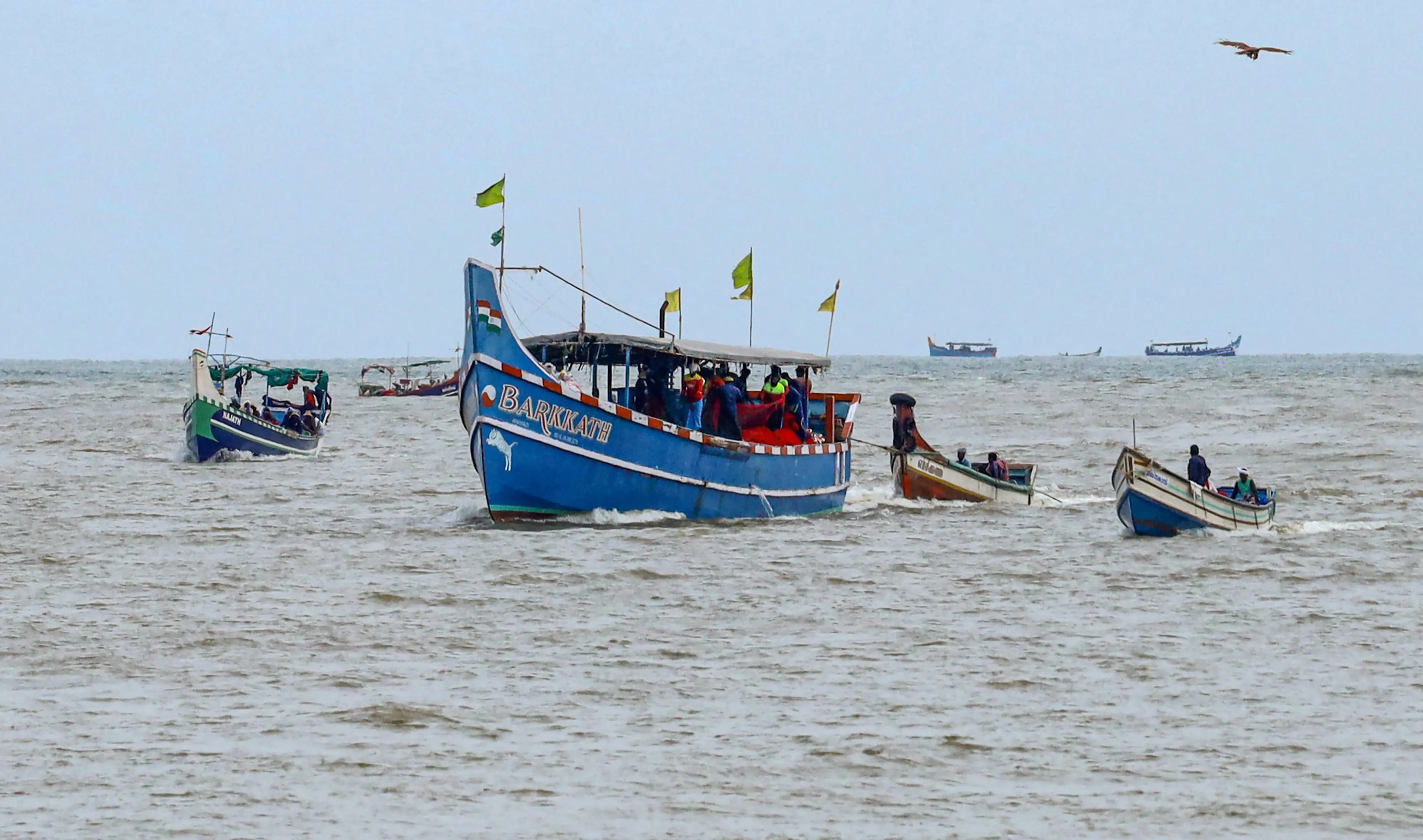
Ernakulam (Kerala): As the government announces the monsoon trawling ban in Kerala starting from midnight on June 9, it has once happened to reignite debates across the marine sector. The friction between traditional fishermen and mechanised boat owners dates back to the inception of the trawling ban. In the early days, these disputes often escalated into clashes and physical confrontations. Although time has passed and physical conflicts have ceased, both groups remain steadfast in their conflicting stances, ensuring the dispute persists.
The ban was introduced with the primary objective of completely removing trawling boats from the sea during the monsoon, which is the breeding season for fish, to prevent bottom-trawling that disrupts the seabed.
To safeguard the livelihood of traditional fishermen who rely entirely on the sea, the ban is implemented in a manner that permits them to venture out in their country crafts (traditional boats). Initially set for 45 days, the duration of the ban has now been extended to 52 days.
In the initial years, the scientific community assessed that the monsoon trawling ban led to a substantial increase in fish wealth, a trend clearly reflected in the data. However, a major decline in fish stocks was observed later. Currently, Kerala records an average annual fish production of around six lakh tonnes. Scientists state that the trawling ban is what keeps this yield sustainable and prevents it from plummeting.
Dr B Madhusoodana Kurup, who has conducted extensive research in this sector, confirms that this stability is indeed the primary achievement of the trawling ban.
The evolution of trawling ban: From 45 days
Following the recommendations of the Balakrishnan Nair Commission constituted in 1987, the trawling ban was first implemented in Kerala in 1988. Although the commission had recommended a three-month (90-day) ban, it was initially enforced for 45 days. This duration continued until 1994, after which it was increased to 47 days. In 2018, it was fixed at 52 days. Later, the Saira Banu and Sunil Mohamed committees appointed by the government recommended a 60-day ban spread across the Southwest and Northeast monsoons, but the government has not yet accepted this proposal.
Boat owners demand a ban on all vessels
Meanwhile, mechanised boat owners argue that the current format of the trawling ban does not help increase fish wealth. Their stance is that all fishing vessels, including traditional country boats, should be banned from fishing during the monsoon.
Joseph Xavier Kalapurackal, general secretary of the Federation of Fishing Boats and Industries Kerala, states that real benefits can only be achieved if the sea is given a complete period of rest. Their opposition lies specifically in singling out and banning only the mechanised boats.
Traditional fishermen demand a 90-day ban
On the other hand, the traditional fishing community demands that the ban be extended to 90 days in Kerala, arguing that trawling is the most destructive method of fishing as it completely destroys juvenile fish and fingerlings.
Charles George, state president of the Matsyathozhilali Aikya Vedi, pointed out that the government had at one stage decided to increase the ban to 60 days, and urged that the authorities should at least make an effort to implement that decision.