Thrissur Pooram disruption case: Fresh probe likely as Crime Branch findings explode into controversy
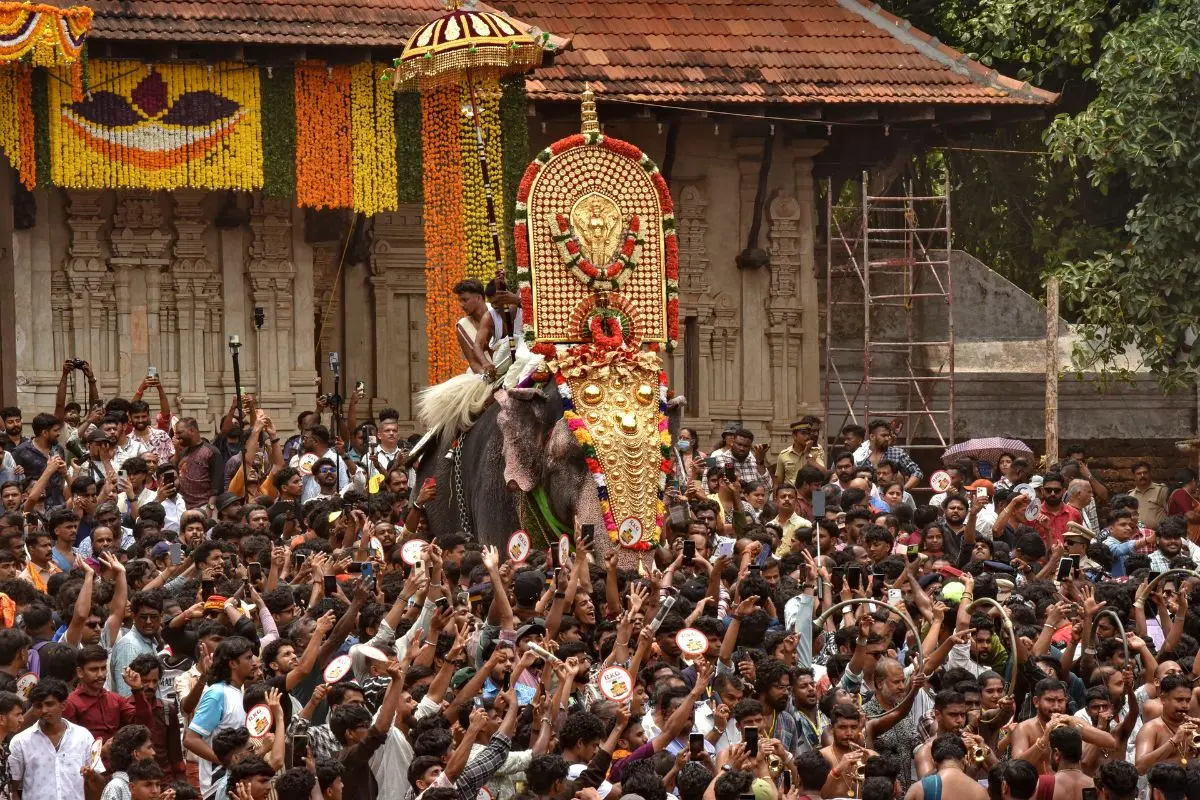
A fresh investigation or a further inquiry by the Kerala government into the disruption of the famous Thrissur Pooram festival now appears very likely. State authorities are adopting an extremely cautious stance and are unwilling to accept the findings submitted by the Crime Branch. State Police Chief Ravada A. Chandrasekhar recently forwarded the report to the home department to obtain official sanction before chargesheet proceedings begin in court. However, Devaswom Minister K. Muraleedharan has clarified that the present United Democratic Front (UDF) administration will not blindly endorse an inquiry that places the blame on festival organisers. This marks a major turning point in a long-standing dispute. The investigation was originally ordered in October 2024 under the previous Left Democratic Front (LDF) government led by Pinarayi Vijayan following fierce political accusations. Because the findings shield top police officers from scrutiny whilst shifting entire culpability onto temple custodians, the present state leadership is now actively considering whether to turn down the report and mandate a comprehensive reinvestigation.
How an iconic celebration ground to a halt
To understand the current anger, one must look back to April 2024, when the 237-year-old temple festival was thrown into disarray. Thrissur Pooram is celebrated annually in the summer month of Medam, drawing massive gatherings from across the region to witness towering elephant processions, traditional percussion ensembles, and stunning pyrotechnics. Yet heavy police restrictions and unexpected interventions soured the atmosphere. Tensions escalated rapidly on the festival night, prompting the Thiruvambady Devaswom, one of the primary organising bodies, to halt their midnight musical performance, reduce their majestic elephant parade to just a single tusker, and turn off decorative lights across the venue. Most disappointingly for thousands of devotees who braved the heat, the world-famous fireworks display had to be postponed. The spectacular fireworks were ignited in broad daylight the following afternoon.
Police cleared whilst temple organisers face severe charges
The resulting fallout sparked fierce political allegations across Kerala. Opposition groups alleged that the entire disruption was a deliberate political scheme engineered with the help of senior police officers and the Rashtriya Swayamsevak Sangh (RSS) to influence the Lok Sabha parliamentary elections in favour of Bharatiya Janata Party (BJP) candidate Suresh Gopi. Yet, after delay, the Crime Branch investigation concluded that no administrative or political sabotage had occurred. Investigators gave a clean chit to former police commissioner Ankit Asokan, finding that he was merely enforcing High Court directives. Former Additional Director General of Police (ADGP) M.R. Ajith Kumar was held responsible only for minor procedural lapses in duty rather than any criminal conspiracy. Meanwhile, the report identified eight committee members of the Thiruvambady Devaswom as the accused. Strikingly, these individuals maintain diverse political ties across the Congress, the Communist Party of India (Marxist) (CPM), and the BJP. Instead of probing institutional failure, the police slapped them with grave criminal accusations, including inciting rebellion against the state, attempting to cause a riot, and promoting communal hatred or wounding religious sentiments.
Outrage from organisers and widening political friction
These findings have provoked bitter resentment among temple authorities, who feel that victims and complainants are being wrongfully framed as criminals. Thiruvambady Devaswom secretary K. Girish Kumar publicly rejected the document, asserting that temple custodians would never act to ruin the sanctity of their own centuries-old celebration. Organisers argued that available video recordings clearly demonstrate unreasonable police heavy-handedness on the ground. Seeking redress, Devaswom representatives are scheduled to meet Chief Minister V.D. Satheesan along with ministers overseeing the Home and Devaswom portfolios to demand an independent reinvestigation. The controversy is further inflamed by past records: an earlier departmental inquiry by former police chief Darvesh Sahib had already identified official lapses by ADGP Ajith Kumar, yet no disciplinary action was pursued under the previous LDF administration. With the report completely ignoring whether administrative sabotage took place to sway elections, the government faces mounting public pressure to reject the current findings and uncover the full truth behind the festival's collapse.