Tea breaks, missed trains and accidental pulls: Railways flags misuse of emergency chains
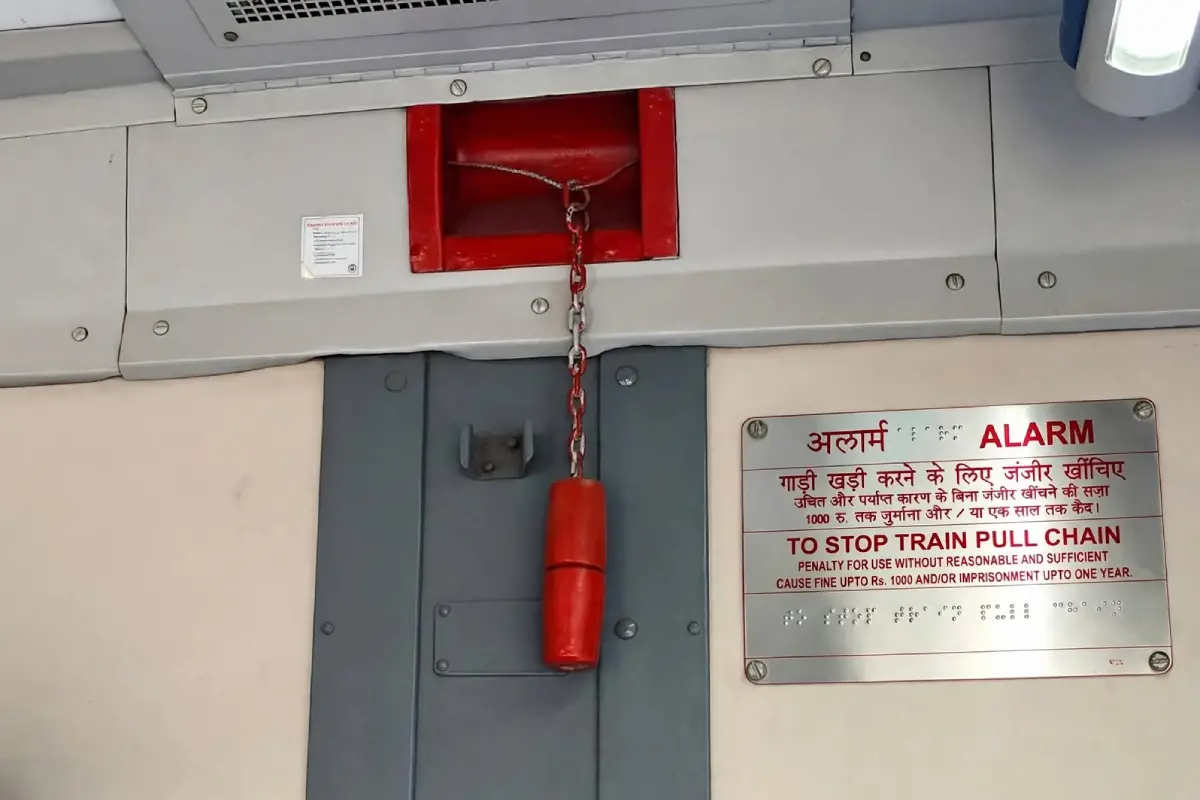
Payyannur, Kerala: Trains operating under the Palakkad Railway Division were brought to an emergency halt 59 times in September after passengers pulled alarm chains, with 39 incidents found to be unnecessary, according to Railway Protection Force (RPF) data.
Of the 59 incidents reported during the month, only 20 involved genuine emergencies, while the remaining 39 were classified as unauthorised alarm chain pulling. Cases have been registered in connection with all 39 incidents.
According to railway officials, genuine reasons for pulling emergency chains included parents travelling with infants, elderly passengers and patients being unable to get off trains in time, passengers falling onto railway tracks and medical emergencies requiring immediate attention.
However, several incidents involved avoidable circumstances. In some cases, passengers accidentally pulled the alarm handle while getting down from their berths. In others, passengers pulled the emergency chain after their companions, who had stepped out at stations to buy tea, failed to board the train before departure.
Unauthorised alarm chain pulling without a genuine emergency is a punishable offence under the Railways Act. Offenders can face imprisonment of up to one year, a fine of up to Rs 1,000, or both.
Railway authorities have advised passengers to report emergencies to police personnel or railway staff on board. Passengers can also seek assistance through the railway helpline number 139 or the Rail Madad platform.
The Railways have expressed concern over the increasing misuse of emergency alarm chains, warning that such incidents disrupt train operations and cause avoidable delays.
When an emergency chain is pulled, the train’s braking system is activated, bringing it to a halt. Railway staff must then reset the pressure valve before the train can resume its journey, a process that typically takes at least 10 to 15 minutes.
If a train is stopped on a bridge or at another difficult location, restoring normal operations may take even longer. Such disruptions can also affect trains running behind the halted service, leading to delays across the route.
The Passenger Emergency Alarm Signal Device (PEASD) operates differently in conventional railway coaches and Linke Hofmann Busch (LHB) coaches.
The system works through an interconnected chain mechanism linked to the pressure valve, extending from the locomotive to the brake van at the rear of the train.