Temple practices for women, Yesudas’ entry into Guruvayur: Swami Satchidananda clarifies stance
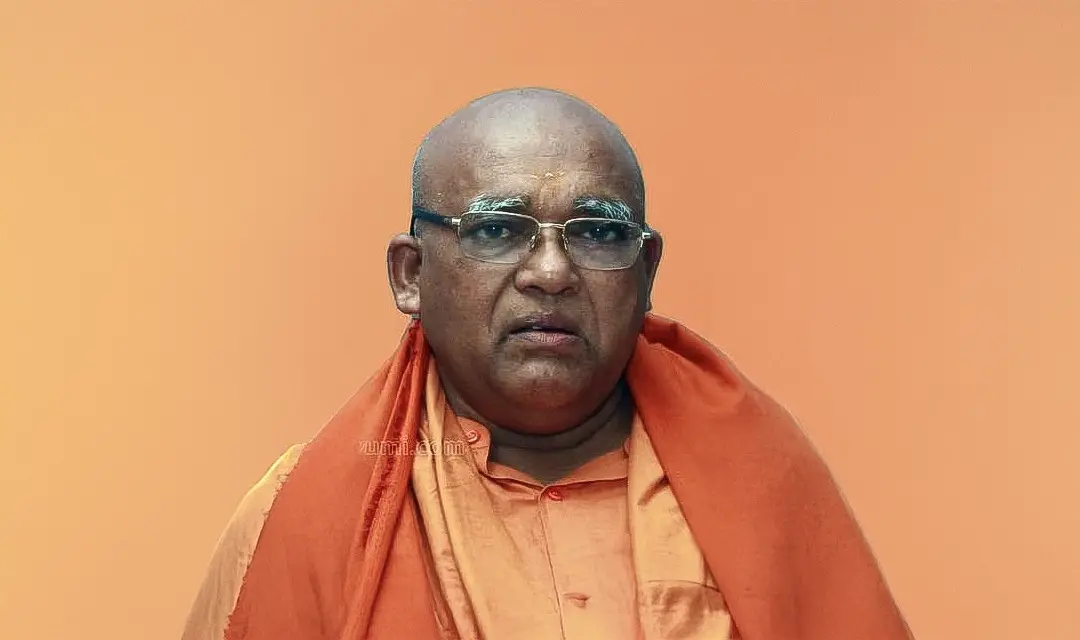
Swami Satchidananda, head of Sivagiri Mutt, clarified on Saturday that his recent comments about the dress code for male devotees entering temples were made out of a sense of moral responsibility.
Sivagiri Mutt serves as the headquarters for the Sree Narayana Dharma Sangham, an organisation of disciples and followers of Kerala’s revered reformer, Sree Narayana Guru. The debate surrounding Satchidananda's remarks on the attire of male devotees was further amplified when Kerala Chief Minister Pinarayi Vijayan supported his views, turning it into a political issue.
“Being a spiritual centre, it is our moral responsibility to address certain issues that need timely rectification,” Satchidananda told Mathrubhumi English during an interview.
However, Satchidananda emphasised that the organisation is not currently pushing for reforms to certain existing temple practices deemed restrictive for women. Regarding food habits, he clarified that there is no compulsion or enforcement, although Sree Narayana Guru had his own stance on the matter. When asked whether Sivagiri Mutt intends to raise the current debate in collaboration with the state government's Navothana Moolya Samrakshana Samithi (Committee for the Protection of Renaissance Values), he stated that there are no such intentions.
The Samithi was established in 2019 following the debate over women's entry into Sabarimala. It includes members from various communities and aims to preserve the values of Kerala’s Renaissance. However, the Samithi has faced internal divisions and the resignation of key members, leading to limited activity. Despite calls from the ruling government to protect Renaissance values, the Samithi has not yet become very active.
Satchidananda also reiterated his appeal for the legendary playback singer and Carnatic music exponent, KJ Yesudas, to be allowed entry into the Sree Krishna temple in Guruvayur. “Some people suggested that the Sree Narayana Dharma Sangham should organise a protest march for this cause. However, since Yesudas is currently abroad, we must first discuss the matter with him before pursuing this cause,” he explained.
Yesudas, known for singing numerous devotional songs in praise of Hindu gods, has long desired to enter the Sree Krishna temple. However, due to his Christian background, restrictions exist on his entry. While the singer is not actively pursuing this interest at present and is abroad, it is learned that the aspiration still remains.
Political debate
Swami Satchidananda earlier made comments about the practice in temples where male devotees are not allowed to wear shirts, urging temples to reconsider this custom. Chief Minister Vijayan welcomed this stance, suggesting that such practices should change with the times. However, this sparked strong reactions from groups like the NSS and Kerala Yogakshema Sabha. NSS general secretary G Sukumaran Nair opposed government interference in temple customs, stating that Hindus should be free to enter temples without altering practices. Vellappally Nateshan of the SNDP Yogam argued that the issue should not divide Hindus, highlighting that different temples have different practices, and changes cannot be forced. Meanwhile, Travancore Devaswom Board president P S Prashanth called for a healthy discussion on whether changes in temple customs were necessary. Opposition Leader V D Satheesan and Congress leader K Muraleedharan agreed that changes to temple customs should be left to the communities involved. They emphasised that political interference in such matters was unnecessary.
Earlier today, differing from Kerala Chief Minister Pinarayi Vijayan's view that temple customs should change with the times, state Transport Minister K B Ganesh Kumar on Saturday said that practices in temples should be decided by the tantris.
The minister, who is also a director-board member of the Nair Service Society (NSS), said that if the government felt some changes were necessary, they should be made in consultation with the tantris or after holding a 'devaprasna'.
"Various temples have their customs and practices, and devotees should abide by them. Others need not go to the temple," said Kumar, a representative of Kerala Congress (B) in the state cabinet.