Six-lane National Highway: Service roads are also death traps, says NATPAC
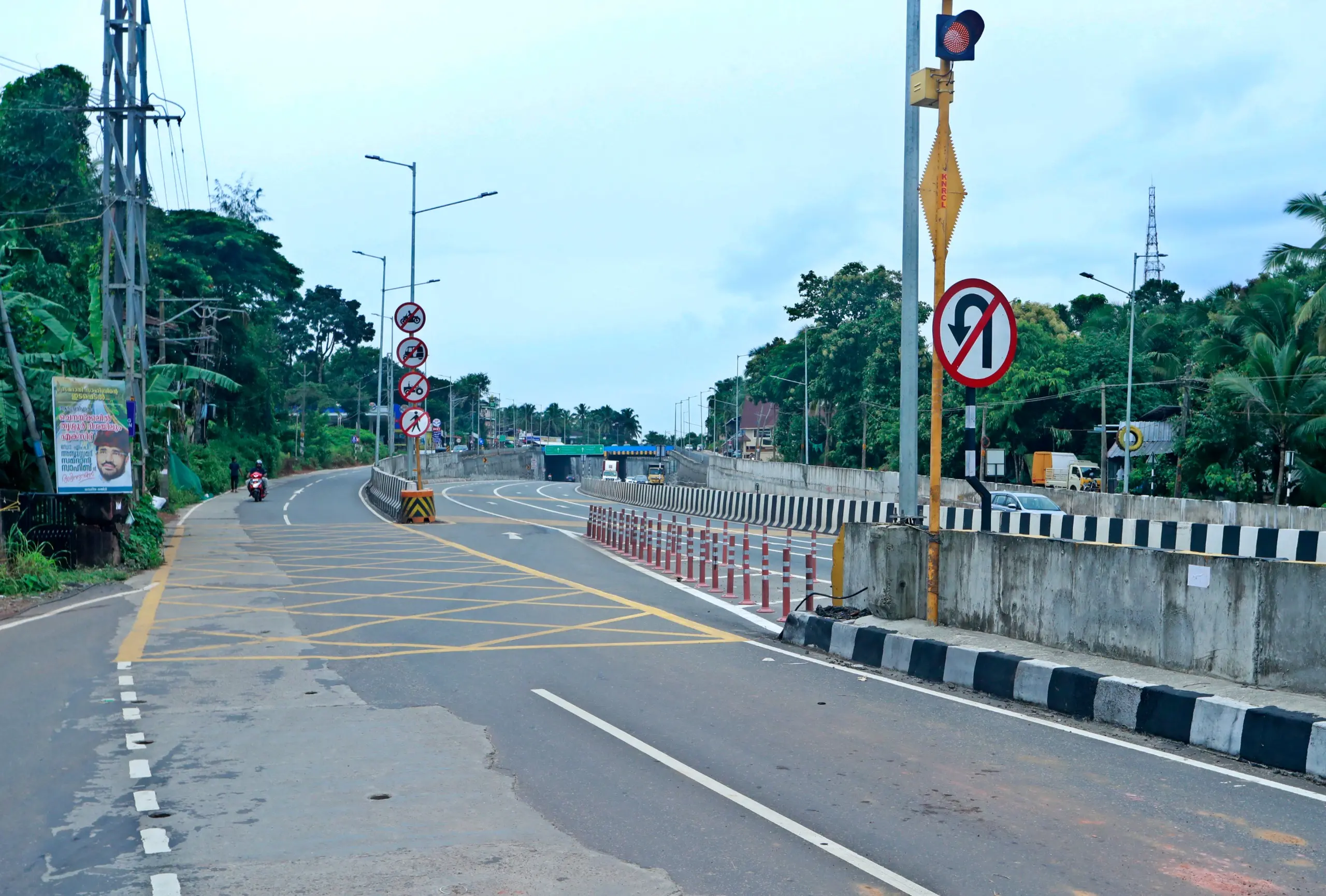
Thiruvananthapuram: There are numerous accident-prone areas even on the service roads of the six-lane National Highway nearing completion between Kasaragod and Thiruvananthapuram, according to the National Transportation Planning and Research Centre (NATPAC).
An inspection conducted by a team of NATPAC experts, against the backdrop of increasing accidents in the completed stretches of the highway, has revealed significant lapses in road safety.
The design of several underpasses obstructs drivers' visibility. Vehicles travelling on the service roads cannot see vehicles emerging from the underpasses. A visibility funnel should have been provided to ensure that vehicles entering the service road are visible to other motorists, but this was not incorporated into the design.
Regulations stipulate that road safety audits must be conducted at the design, construction and completion stages of a National Highway, with shortcomings addressed at each stage. However, NATPAC Director Dr R. Ashalatha said the design flaws can no longer be rectified.
When the width of the six-lane highway, originally planned at 60 metres, was reduced to 45 metres, it was the service roads that lost width. A service road requires a minimum width of 7.5 metres, including a footpath, but this requirement has not been met anywhere in the state.
Two-way traffic is permitted on the service roads, but land has not been acquired for bus bays. As a result, buses stopping on the road itself could cause traffic congestion. In most places, the service roads also lack the capacity to accommodate local traffic fully.
Specific lanes and the prescribed width have not been provided at entry and exit points connecting the service roads to the National Highway. These acceleration and deceleration lanes must be separated from the main carriageway in a way that does not interfere with vehicles travelling in the leftmost lane.
Barriers have been installed at most locations instead of proper dividers. Signboards should be placed on the dividers so that they are clearly visible to drivers travelling in the right-hand fast lane and the middle lane. However, as the dividers lack sufficient width, the signboards have been placed on the left side, making them less visible to approaching drivers.