Sabarimala women entry: Nine-judge SC bench to hear review petitions from April 7
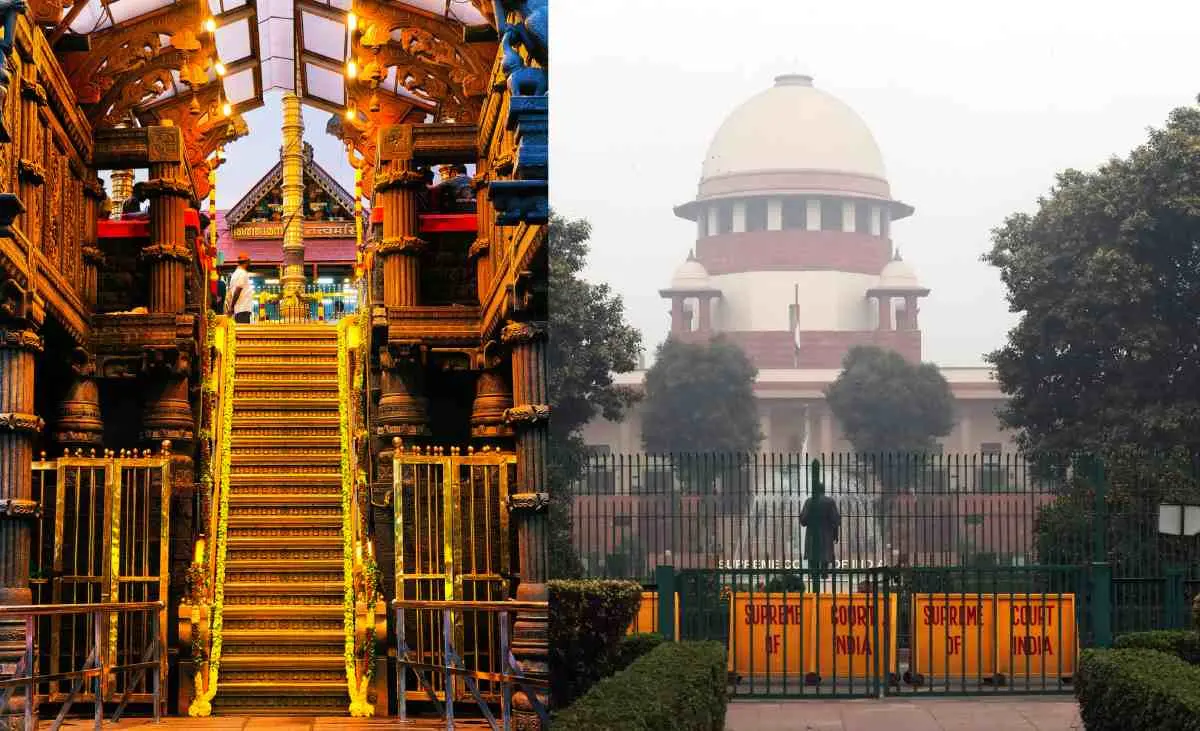
New Delhi: A new nine-judge bench of the Supreme Court will hear the review petitions challenging the 2018 verdict that allowed women of all ages to enter Sabarimala. Only Chief Justice Surya Kant from the previously constituted nine-judge bench remains on the Court, necessitating the formation of a new bench. Further proceedings, including the scheduling of hearings, have been assigned to a three-judge bench led by the Chief Justice.
Arguments from the review petitioners and their supporting parties will take place from 7 to 9 April, while the opposing parties will present their arguments from 14 to 16 April. Counter-affidavits can be submitted on 21 April, with the aim of concluding all arguments by 22 April. The members of the nine-judge bench will be notified by the Chief Justice through a special order.
The Court has directed all parties to submit their written arguments by 14 March 2026 and has appointed nodal counsels to represent the matter.
Solicitor General Tushar Mehta informed the Court that the central government supports the review of the verdict. The position of the state government is now expected to play a crucial role.
ALSO READ | Supreme Court review looms: What will be Kerala government’s stand on Sabarimala women’s entry?
The Supreme Court’s original verdict on 28 September 2018 was influenced by the Pinarayi Vijayan-led government’s support for women’s entry into the temple. However, the issue proved politically costly for the Left Democratic Front (LDF) in the 2019 Lok Sabha elections. Since then, both the government and the LDF have sought to downplay the matter.
ALSO READ | Left's Ayyappa gamble: From Navothanam to Nivedyam?
While no official statement has been made regarding any shift in the stance of the government or the Communist Party of India (Marxist) on women’s entry, there is currently no public support for it. The government had previously indicated that its position would be clarified in court—a moment that has now arrived.