‘Ruling party’s revenge’; Tantri claims he was framed for opposing women’s entry at Sabarimala
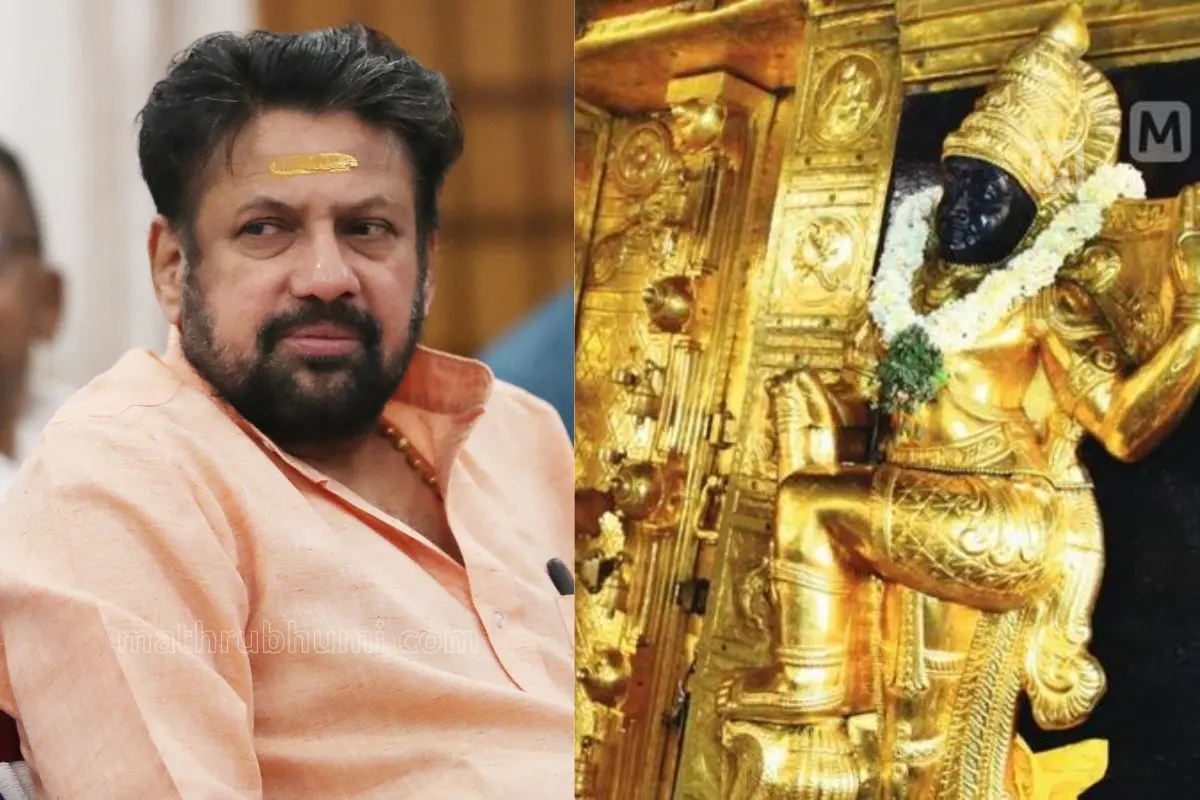
Details in the bail plea of Sabarimala Tantri Kandararu Rajeevaru emerged in the media on Friday, two days after he was granted bail in both gold-related cases by a vigilance court in Kollam.
The cases concern the alleged loss of gold from temple artefacts at the Sabarimala shrine. The court, while granting relief on Wednesday, had observed that there was not “even an iota of evidence” to establish his involvement.
Bail plea alleges retaliation over women’s entry row
In his plea, Rajeevaru claimed his arrest was a retaliatory move linked to the controversy over women’s entry into Sabarimala.
He alleged that certain police officers, seeking to please the ruling party, had attempted to facilitate the entry of women into the temple, and that he had resisted those efforts. He claimed that he had made it clear that political interference in temple affairs would not be allowed. When attempts were made to permit women’s entry, he warned that he would stop poojas and step outside the temple.
The Tantri further claimed that the government had considered turning Sabarimala into a temple open every day, and that he had thwarted that move. According to him, these actions led to the alleged revenge.
He also accused the Special Investigation Team (SIT) of concealing facts to suggest that the first accused, Unnikrishnan Potti, had been brought to Sabarimala through him. The Tantri claimed that relatives of Potti had worked at the shrine and that this was withheld to strengthen the conspiracy case.
Rajeevaru maintained that his duties are confined to rituals, ceremonies and poojas, and that he has no legal authority over temple administration or the safeguarding of valuables.
Court questions conspiracy charge, cites lack of evidence
Rajeevaru is the 16th accused in a case relating to the alleged loss of gold from Dawarapalaka plates and the 13th accused in another concerning gold from Sreekovil doorframes.
The SIT argued that his opinion dated June 18, 2019, on re-plating gold artefacts pointed to a crucial role. The court, however, said the opinion formed the “anchor sheet” of the incident and established his prima facie bona fides.
“Very importantly, there is nothing on record, not even an iota of evidence from the side of the SIT, to establish any positive involvement on the part of the petitioner in the alleged irregularities,” the court observed.
It added that the conspiracy case failed as he had not signed the crucial mahazars dated July 20, 2019, and May 18, 2019. Had there been a conspiracy, he would have been a signatory, the court noted.
The artefacts were outside the sanctum’s inner precincts and not directly linked to rituals. Under the Devaswom Manual, the Tantri renders opinions only when sought by the Board, while maintenance rests with the Travancore Devaswom Board.
The court granted bail on medical grounds and in view of his limited role, directing him to furnish bonds of Rs 2 lakh with two solvent sureties in both cases, surrender his passport, remain in Kerala, avoid Pathanamthitta district, and report to investigators twice weekly.