‘Priya Varghese's appointment will be upheld if work experience qualification is met’: Supreme Court
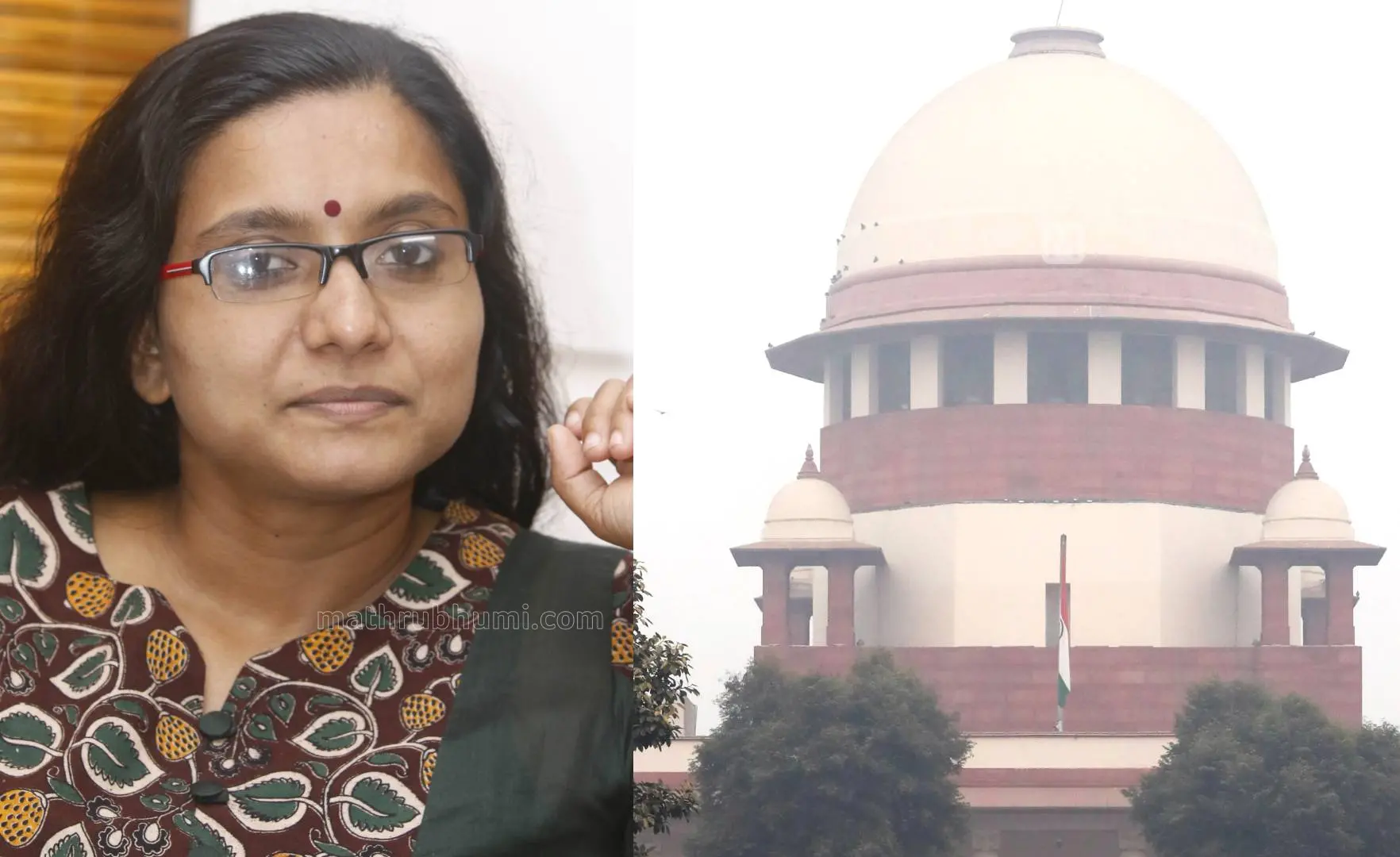
New Delhi: The Supreme Court has made a crucial observation in the case concerning the appointment of Priya Varghese as an Associate Professor in the Malayalam Department at Kannur University. The apex court clarified that if it is proven that Priya Varghese possesses the requisite eight years of work experience required for the appointment of Associate Professor, her appointment will be upheld.
The court also made it clear that if she fails to prove the required work experience, her appointment will be set aside. The Supreme Court has reserved its verdict on the petition challenging Priya's appointment.
An Associate Professor appointment requires eight years of teaching experience. The Supreme Court noted that there is no dispute regarding the fact that Priya served as a teacher for four years. The dispute pertains to the remaining four years.
Senior Advocate K Parameshwar, appearing for Priya, argued that she meets the required work experience criteria if the period of research conducted whilst serving as an Assistant Professor and her tenure on deputation as the National Service Scheme (NSS) director are taken into account.
K Parameshwar contended that under UGC Regulation 4.1 for Associate Professor appointments, even the research period of an Assistant Professor can be counted as teaching experience. He also argued that Priya conducted her research whilst serving as an Assistant Professor without taking leave.
However, Additional Solicitor General K M Nataraj, appearing for the UGC, cited Regulation 3.11 to argue that research conducted as part of a PhD cannot be counted as work experience. The court orally disagreed with this argument. The bench orally observed that its stance is that research carried out by an Assistant Professor as part of a PhD can be counted as teaching experience.
Senior Advocate P N Ravindran, appearing for petitioner Joseph Scaria, also argued that under UGC Regulation 3.11, research conducted as part of a PhD cannot be counted as work experience. Following this, the Supreme Court directed Priya Varghese's counsel to submit written details demonstrating the eight-year qualification.
The details submitted in writing must first be provided to the lawyers for Joseph Scaria and the UGC. The bench, comprising Justices Manoj Misra and Manmohan, stated that they could also submit their written positions to the court.
UGC requests verdict not to serve as precedent
Additional Solicitor general K M Nataraj, appearing for the UGC, requested the Supreme Court that the verdict in Priya Varghese's case should not be applied to other cases. However, the Supreme Court stated that this request could not be accepted. The Supreme Court pointed out that two provisions within the UGC regulations maintain differing stances on whether the research period can be counted as teaching experience, and therefore clarity is required on the matter.
University arrived with documents, but found no opportunity to submit
Advocate Zulfiker Ali, representing the university, arrived at the Supreme Court on Tuesday and Wednesday with documents aiming to show that Priya was awarded extra marks in the interview to place her at the top of the rank list. However, as no discussion regarding the interview took place in court, the documents could not be handed over.
During the previous government's tenure, Kannur University and the state government had filed affidavits in the Supreme Court upholding Priya's appointment. Priya's counsel argued in court that the appointment should be validated on the basis of these affidavits.
Senior Advocate Nikhil Goel, appearing for Kannur University, on the other hand argued that the university accepts the UGC regulations.
For the State Government, Senior Standing Counsel Ramesh Babu appeared in the apex court.