Kerala power crisis: KSEB asks people to cut usage till Sept 30; CM targets solution by Sept 15
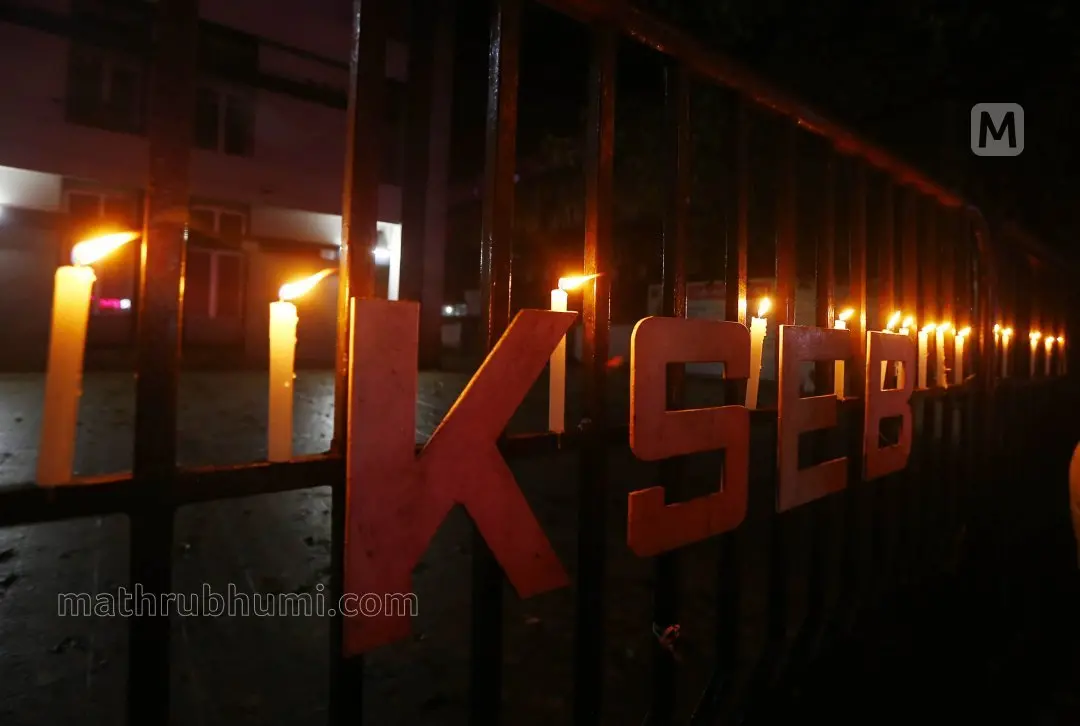
Kerala is facing a growing power shortage as high electricity demand, weak monsoon conditions and unexpectedly high temperatures put increasing pressure on the state’s power system. KSEB chairman M G Rajamanikyam has now urged consumers to practise self-regulation and reduce electricity use until September 30 to help the state get through the immediate crisis.
Rajamanikyam said the KSEB and the government do not want to put people through the inconvenience of power cuts, but public cooperation was essential under the present circumstances. He was speaking to reporters after a high-level KSEB meeting.
The appeal comes after Kerala recorded its highest-ever daily electricity consumption of 94.76 million units (MU) on Tuesday. Of this, 22.85 MU was generated within the state, while 72.91 MU had to be purchased from outside.
KSEB asks consumers to cut load until September 30
Rajamanikyam said electricity demand that is normally seen around 7 pm is now being recorded even at 1 am, indicating that the unusually high load is continuing well into the night.
He said the board understands the difficulties caused when power supply is disrupted, particularly after midnight when people are sleeping. The KSEB is also preparing special software to provide advance information about possible power restrictions so consumers can be informed beforehand.
The chairman particularly appealed to households to regulate their use of air-conditioners. As temperatures rise, AC usage increases and adds substantially to the electricity load.
He suggested switching on the AC around half an hour or an hour before going to bed to cool the room and then switching it off, instead of running it continuously through the night.
Rajamanikyam said reducing the electricity load through self-regulation until September 30 is the main option available to the state at present.
Government targets September 15 to resolve shortage
The KSEB chairman said the present crisis was expected to ease by October 1, when additional power becomes available.
Around 500 MW of additional power is expected to become available by October, while power obtained through swap agreements would also add to the supply. According to Rajamanikyam, these arrangements could help bridge the existing shortage of around 900 MW.
He said this would allow Kerala to move through October and November without major supply difficulties, provided the state manages to overcome the immediate shortage until September 30.
The development comes after Kerala Chief Minister VD Satheesan said government was working to bring in additional electricity and aimed to find a solution to the shortage by around September 15.
Satheesan, who spoke to reporters after the Cabinet meeting, said the state was facing a shortage because of increased consumption, poor rainfall and inadequate inflows into reservoirs. Procuring electricity from neighbouring states had also become difficult, particularly during peak hours, he said.
The chief minister blamed the cancellation of a long-term power purchase agreement by the previous Left Democratic Front government for adding to the state's present difficulties.
The agreement, entered into during the Oommen Chandy-led UDF government, had provided electricity at around Rs 4.29 per unit. After its cancellation, the state is now having to purchase power at much higher rates, with the cost going up to around Rs 10 per unit, Satheesan said.
"If the agreement had continued, this situation would not have arisen. The Congress-led government had taken that decision anticipating such a situation," he said.
"There has been a situation where adequate power is not available. There are problems in several places," Satheesan said.
Despite the difficulties, the government was making every effort to maintain uninterrupted supply without putting an excessive financial burden on consumers, he said.
"With electricity consumption having increased so much, our main objective is to bring in additional power and find a solution to the present power shortage by around September 15," the Chief Minister said.
He said the KSEB would be instructed to take all necessary steps on a "war footing" to tackle the crisis.
Kerala records record electricity consumption
The pressure on the system became particularly severe during Tuesday evening’s peak period.
Kerala’s maximum demand reached 4,851 MW, with peak demand recorded at around 6.44 pm. Electricity was not available in the required quantity through the power exchange during the evening peak, while grid frequency also fell.
As a result, partial power restrictions were imposed from 6.30 pm on Tuesday until 1 am on Wednesday.
The shortage is not confined to Kerala. Rising electricity demand across the country has reduced the amount of power available through the power exchange. A notification from the Grid Controller of India said the country was facing a power availability shortage of around 12,000 MW.
Kerala has also faced an unexpected reduction in the availability of electricity from central generating stations, further tightening supply.
Weak monsoon and heat add to pressure
The increase in electricity consumption has coincided with weaker rainfall and higher-than-usual temperatures in several parts of Kerala.
With the weather remaining hot, households and commercial establishments have been relying more heavily on fans, air-conditioners and other cooling appliances. The resulting increase in demand has added to the pressure on the already stretched power system.
Punalur recorded the highest maximum temperature in the state on Tuesday at 35.2 degrees Celsius, which was 3.3 degrees above normal.
Kottayam recorded 34.6 degrees Celsius, 3.8 degrees above normal. This was the highest departure from normal among the weather stations monitored.
CIAL Kochi recorded 34 degrees Celsius, while Thiruvananthapuram city recorded 33.6 degrees, Kozhikode 33.5 degrees, and Vellanikkara and Palakkad 33.4 degrees each.
Reservoir levels remain a concern
The availability of water in Kerala’s reservoirs is another factor adding to the pressure.
KSEB data showed that storage stood at 63.55 per cent of the total capacity. This was 80.03 per cent of the storage level recorded during the corresponding period last year.
The government has attributed the power shortage to increased consumption, poor rainfall and inadequate inflows into reservoirs. Procuring electricity from neighbouring states has also become difficult, particularly during peak hours.