‘Only the temple beyond Pathinettam Padi’: Sabarimala master plan envisions preservation
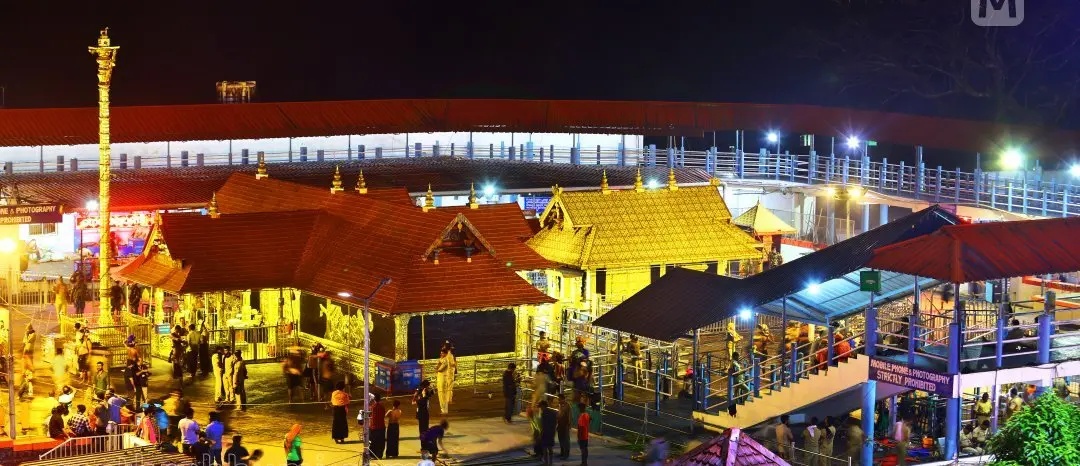
Pathanamthitta: The Sabarimala Master Plan has been drafted on the principle that once pilgrims climb the Pathinettam padi (the 18th step), only the temple should remain. The current flyover that ferries devotees up to the steps must be completely dismantled.
About six months ago, the Devaswom Board initiated a pilot scheme for devotees to have darshan via Balikalppura. This system will be implemented more remarkably going forward. Buildings within a 56.7 metre radius of the temple must be demolished. It is advised that no structures be erected above the temple’s lower canopy within this boundary. These detailed plans were presented at the Global Ayyappa Sangamam held at Pampa.
Rebuilt as a forest temple; Estimated cost at ₹778.17 crore
Experts from the Thiruvananthapuram Engineering College, acknowledging the difficulty of spotting the Sabarimala Temple amid concrete structures, prepared the layout based on the master plan.
The design prioritises preserving the temple’s status as a “forest temple” to the greatest extent possible. The project is estimated to cost ₹778.17 crore. The Sabarimala High Power Committee has recommended implementing it in three phases.
Within the 56.7 metre radius currently stand the rooms occupied by the Tantri (chief priest), Melshanthi (head priest), the Executive Office and the Devaswom guards’ quarters—all of which will need to be demolished. It is proposed that new resting quarters for the Tantri and Melshanthi be constructed within the same boundary, but no toilets will be allowed there.
The temple’s outer prakaram (courtyard) will be completely redesigned. The Pilgrim Centre-1 (Pranavam), adjoining the prakaram, will be entirely demolished.
Accommodation for 10,000 pilgrims at Sannidhanam
As Nilakkal develops into the main base camp, accommodation facilities at Sannidhanam must be reduced from the current 65% occupancy to 19%. Currently, around 1,000 officials including police, government employees and Devaswom staff reside at Sannidhanam.
This number will be reduced to 600. Accommodation for pilgrims will be limited to 4000. The plan stipulates that no more than 10,000 people may stay at Sannidhanam at any given time.