Kerala reports two deaths from amoebic encephalitis
Kozhikode: Two people in Kerala have died while being treated for amoebic encephalitis, health officials said Monday.
The victims were a three-month-old baby from Omassery in Kozhikode and a 52-year-old Kannethu Ramla from Cherur in Kannamangalam, Malappuram. Both had been admitted to Kozhikode Government Medical College Hospital.
Doctors said the infant had been on a ventilator for 28 days. Initial assessments indicated the child contracted the infection from well water, and subsequent tests confirmed the presence of the amoeba in the source.
Ramla had been under treatment for one and a half months. She first showed symptoms on July 7 and sought care at private hospitals in Tirurangadi and Vengara. As her condition worsened, she was admitted to Kozhikode Government Medical College Hospital on Aug. 4, where tests confirmed the diagnosis.
Doctors said her condition briefly improved, but she later developed fever and vomiting again. She died Sunday morning.
What is amoebic encephalitis?
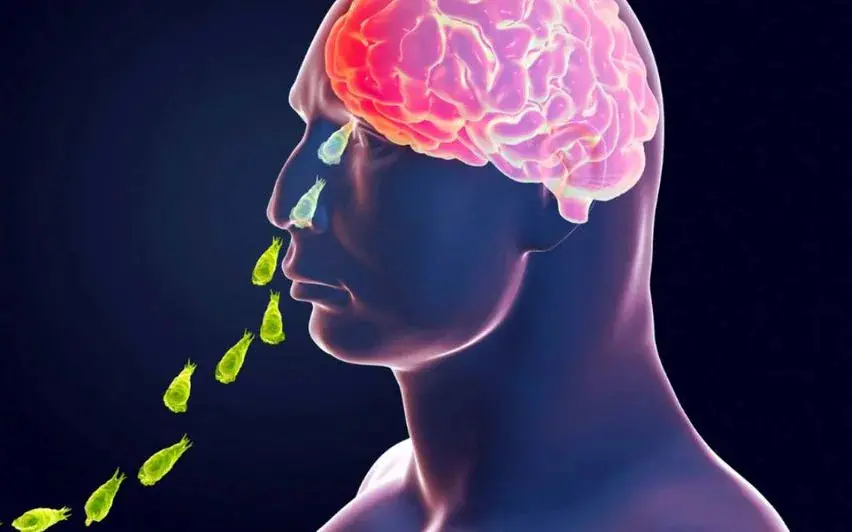
Amoebic encephalitis is a rare, often fatal, brain infection caused by free-living amoebae such as 'Naegleria fowleri', 'Acanthamoeba', 'Sappinia' and 'Balamuthia mandrillaris'. The organisms typically enter the brain through the nasal passage, crossing the thin membrane separating the nose and brain, or via a perforated eardrum. The disease leads to meningoencephalitis and carries a mortality rate of more than 97 per cent.
The disease is not spread from person to person. Infection usually occurs when amoeba from mud in stagnant or contaminated water enter the body through the nose. Symptoms appear within one to nine days of exposure.
Preventive measures
- Avoid swimming or bathing in stagnant or dirty water.
- Do not use water that has been contaminated by animals or left untreated for years.
- People with nasal surgery, head injuries or pus in the ear should avoid stagnant pools and streams.
- Use chlorinated, well-maintained water in swimming pools and water parks.
- Avoid pouring water into the nose; use a nasal clip if needed.
Symptoms
- Severe headache, fever, nausea, vomiting.
- Stiff neck and sensitivity to light.
- Loss of appetite, lethargy, and abnormal behaviour in children.
- In severe cases, seizures, fainting, and memory loss may occur.
Early treatment improves survival. Diagnosis is confirmed by PCR testing of cerebrospinal fluid. Treatment involves a combination of five drugs shown to be effective against amoebae.