In the mist, a new discovery: How a Kozhikode team uncovered a new species in the Ghats
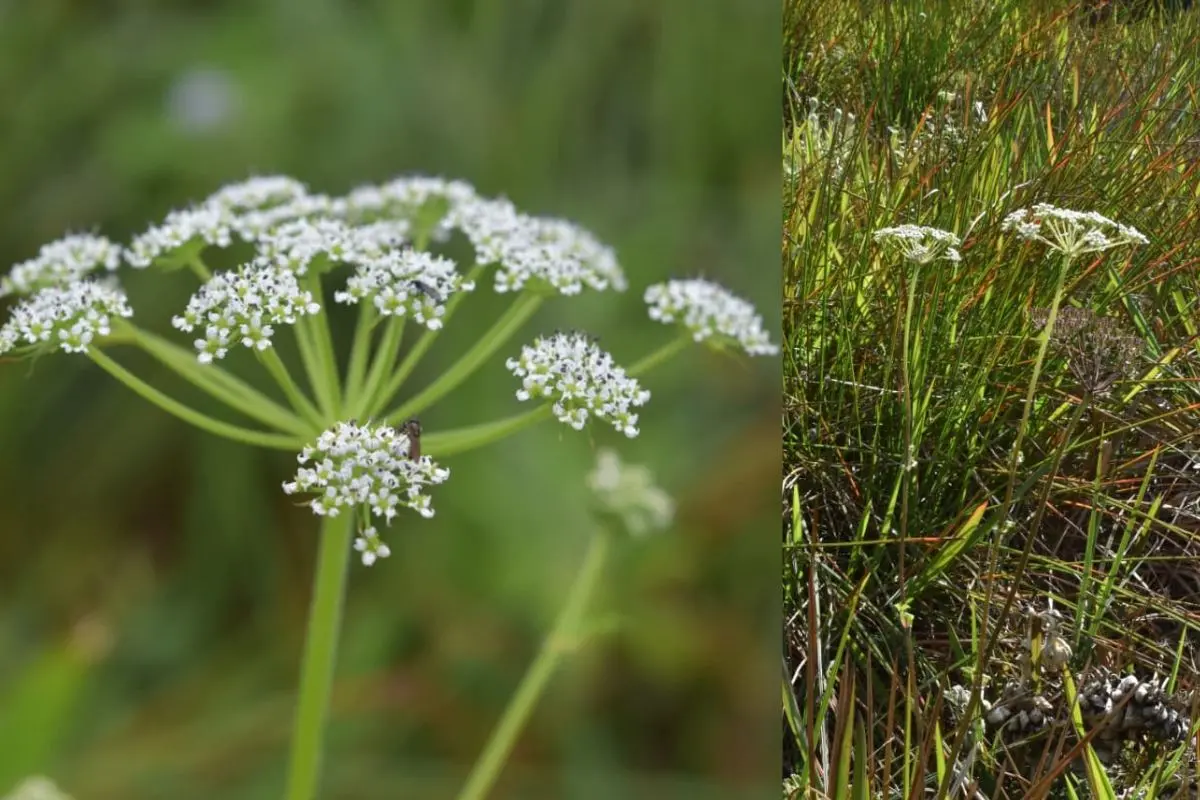
Long after colonial botanists mapped much of the Western Ghats and generations of researchers trekked its slopes, the high-altitude grasslands of Eravikulam National Park in Munnar, Kerala have yielded yet another secret.
A team from St Joseph’s College (Autonomous), Devagiri has identified a new plant species, Tetrataenium paikadae. The research paper, authored by Rekha Chappan, Prasanth Malammal Kanhirampadam, Aswindas Thekke Parakkal and Dr Manudev Kambiyelummal Madhavan, documents the find after nearly three years of fieldwork between 2021 and 2024.
Looking Where Others Didn’t
The team chose to focus on the Apiaceae family -- commonly known as the carrot or parsley family, a group that has received relatively little focused attention in the Western Ghats. Dr Manudev Madhavan, Assistant Professor at Devagiri College, explains that gaps in research within this family prompted the team to take it up for detailed study.
The topic was assigned to his student, Rekha Chappan. From there, the work became methodical: identify how many Apiaceae species are already recorded from the Western Ghats, understand their known habitats, and then head into similar terrains to locate them.
Apiaceae plants, he explains, are typically found in high-altitude grasslands. “When you explore areas with similar terrain, sometimes you stumble upon something that looks familiar, but slightly different. Many might dismiss it as a superficial resemblance. It takes patience to pause and question it.”
From Suspicion to Scientific Proof
When the team encountered the unfamiliar plant in Eravikulam’s misty grasslands, they did not immediately label it “new.” Instead, they began the verification process.
The first step: detailed morphological documentation -- what scientists call preparing a data sheet. Every visible feature was recorded and compared with existing literature.
“We don’t rely only on Western Ghats data,” Dr Madhavan explains. “We conduct national and international searches, examining global literature.”
Crucially, botanists compare their specimen with what is known as a “type” or voucher specimen, the original reference sample of a species preserved in herbaria. The team also consulted subject experts before moving toward publication.
The research paper went through four rounds of anonymous peer review before being accepted. From submission to publication, the process took eight months, a relatively swift timeline in taxonomic research.
Simple Tools, Sharp Eyes
Unlike many modern biological discoveries that rely heavily on advanced genetic sequencing, this work was rooted in classical taxonomy.
“A basic lab is enough for most of this,” says Dr Madhavan. “We work primarily on morphology.”
However, certain features required precision. In the Apiaceae family, seed anatomy is critical, especially the oil canals that give many members their characteristic aroma. Studying these structures demanded high-quality microscopes. In some cases, the team conducted surface micrology analyses, which can cost up to ₹1,500 per sample.
Dr Madhavan is also currently collaborating with Cochin University of Science and Technology (CUSAT) on research related to oil canals in the family.
A Protected Home
The discovery’s location inside Eravikulam National Park gives the species a better chance of survival. In earlier work, Dr Madhavan had described two new species from Ponkunnu Mala, an unprotected area, raising concerns about habitat vulnerability.
Yet there is a twist: the plant is aromatic, and animals appear to be fond of it. “There are different tolerance levels for species,” he notes.
For hikers, the plant’s white, perfectly symmetrical flowers may stand out. But that visibility carries risk. “People notice the flowers and pluck them,” he says. “At least in Eravikulam, they are relatively safe.”
Edibility and the Road Ahead
Does it smell like carrot or parsley? Yes, it is aromatic, a hallmark of the family.
Is it edible? That remains unknown. While many related species are edible, no such report exists yet for this one.
For Dr Madhavan, the discovery opens new avenues. He is particularly interested in exploring animal-plant interactions involving the species, an area he hopes to study further.