MT, the tireless raconteur, who never failed to impress his readers
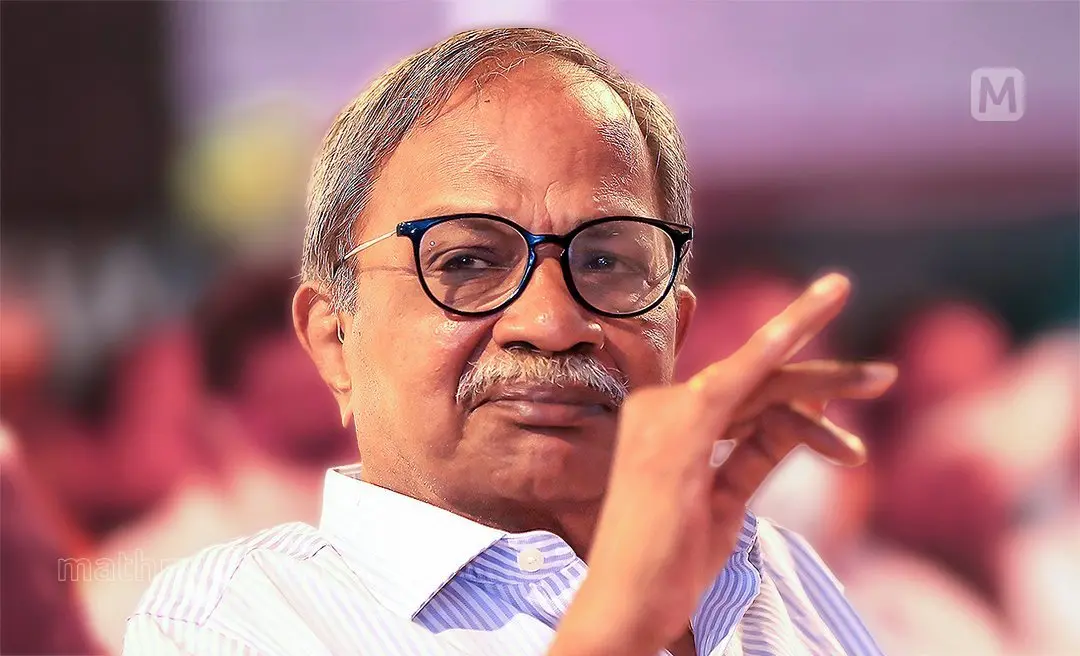
Kozhikode: He walked tall over the small world of Malayalam literature. His words traveled afar. His sentences crossed geographical boundaries. His stories and novels transcended the barriers of culture, language, and politics. His works effused youthfulness, and their influence over readers was comprehensive and irrefutable. Keralites, especially the youth of the 60s and 70s, identified themselves with the disgruntled, rebellious protagonists of MT’s stories and novels. He was a colossus who filled the literary skies of Malayalam, unchallenged during his lifetime.
From a precocious young man in a hurry who produced story after story decorated with beautiful language and the characteristic rebelliousness of the youth of the second half of the 20th century, MT Vasudevan Nair grew into an influential literary figure in double-quick time, establishing himself as a man of magical influence over language. To a great extent, this was made possible because of his presence as both a director and scriptwriter in Malayalam films as well.
Trapped in the hangover of theatre, Bollywood, and Tamil movies, the Malayalam film industry underwent a drastic change in the early 60s when MT, along with other stalwarts like Sethumadhavan, A. Vincent, P. Bhaskaran, and Ramu Kariyattu, revolutionized the landscape of the film industry with real-life characters. His scripts stood out for their literary quality and emotional impact on spectators. Mainstream actors yearned to don the roles penned by the master craftsman. Many actors are remembered for the roles penned by the man who turned everything he touched into gold. The reinterpretation of Chanthu in Oru Vadakkan Veeragadha is one of the best characters portrayed by Mammootty in his long acting career. Nobody could forget the pain of the hero destined to be defeated, even though he possessed all the skills needed to conquer the world. Defeated in love, fight, trust, and life, the wounded hero realizes he can never win a battle in life. Only a man of great artistry could chisel out such a powerful character, and Mammootty was fortunate to don that role sculpted by MT.
If one considers films, there are numerous examples of characters that helped actors and actresses win state and national awards.
MT directed seven films and wrote the screenplay for around 54 films. He won the National Film Award for Best Screenplay four times for Oru Vadakkan Veeragadha (1989), Kadavu (1991), Sadayam (1992), and Parinayam (1994), the most by anyone in the screenplay category.
But away from the glitter and glamour of films, MT the writer shone like a lone star among his contemporaries with sage-like stoicism as he penned down masterpieces without intervals. The modern epic Randamoozham is rated as a great work of art. The portrayal of the legendary character Bhima and the depiction of love, lust, war, power, and the meaninglessness and absurdity of life were rendered with the magical prowess of a man possessed by mystic powers. This was a different MT, who had researched extensively to weave an immaculate tour de force that will outlive generations for the sheer quality of the language and the treatment of the subject.
There was another MT before Randamoozham, who was more focused on individuals striving to free themselves from the old order to create lives of their own in the ruthless new world, which was emerging so rapidly in Kerala. The gradual collapse of the Nairs, who had wielded considerable influence and enjoyed a comfortable, affluent life in the early fifties, was inevitable. Left with only their former glory to project as their own, the fall of the Nairs was a result of the fast-changing world around them.
MT himself was experiencing these changing times. Naturally, his protagonists scorned their elders, challenged traditionalists, and moved swiftly into the changing world in an attempt to find their real selves. Here too, the characters and plots were protected and beautified with a language unknown to Malayalis till then. Readers memorized the dialogues of the characters. They repeated them when writing letters to their friends and lovers. MT was omnipresent.
In his final creative stage, the quantity of his works decreased, but the meditative quality of the writer rose beyond recognition, as seen in the short stories Vanaprastham, Sherlock, and his last novel, Varanasi. The transformation was unique and complete, revealing a totally changed MT, approaching his characters with a touch of spirituality and philosophy, a complete deviation from his earlier works.
When the legendary writer Vaikom Muhammad Basheer passed away, MT said, "Here was a man who keeps on telling stories. As he told stories, the man himself has become a story." Likewise, here was a man who not only told stories but also compelled his readers to keep reading them again and again, unlike any other writer of his generation. He was a genius—a tireless raconteur who never failed to impress his readers.
Recognitions
In 2005, MT was honored with India's third-highest civilian award, the Padma Bhushan. He received numerous other accolades, including the Kendra Sahitya Akademi Award, Kerala Sahitya Akademi Award, Vayalar Award, Vallathol Award, Ezhuthachan Award, Mathrubhumi Literary Award, and the ONV Literary Award. In 2013, he was awarded the JC Daniel Award for lifetime achievement in Malayalam cinema.