He made people smile, cry, love and sigh; leaves behind a world of beautiful songs, not imitators
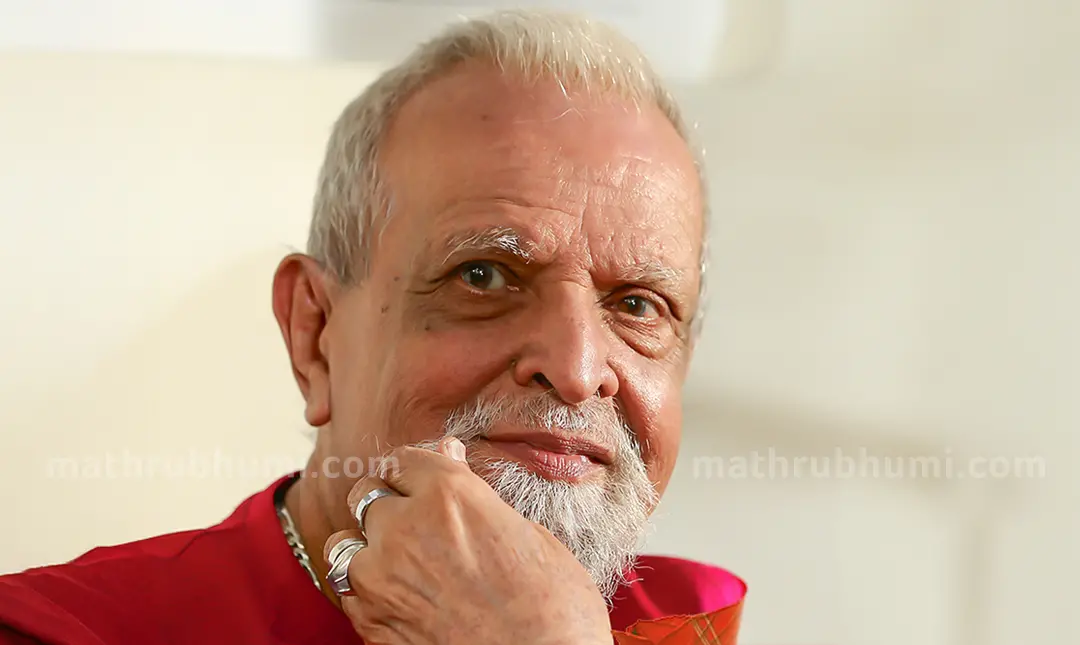
Whenever a Malayali comes across the soft, romantic, and beautiful yet masculine voice of P. Jayachandran, the magic of that voice captivates the imagination and sends him or her into rapturous moods of eternal bliss. One would wish the song would last forever, keeping the person in the mellifluous flow of divine music, floating along, forgetful of the material world around. Though his contemporary K. J. Yesudas was more popular and more successful, Jayachandran was not far behind both in quality and popularity. Curiously, many Malayalis even prefer Jayachandran’s songs over those of Yesudas.
Not a trained musician, as he was not properly trained in Carnatic music like Yesudas, Jayachandran’s mastery over his voice and ‘bhava’ was incomparable, even when he sang songs with a classical touch, such as ‘Ragam Sree ragam,’ a ragamalika, a garland of ragas, tuned by M. B. Sreenivasan in the film Bandhanam. The way he sang ragas like ‘Sree,’ ‘Hamsadhwani,’ ‘Vasantha,’ and ‘Malayamarutham’ would make one wonder about his complete control over these beautiful ragas. Though this song was not listed among the best of Jayachandran’s works when considering his finest songs, yours truly, along with many others, sincerely believes this is indeed one of his best songs and should be ranked alongside ‘Anuraga ganam pole,’ ‘Karimukil kattile,’ and ‘Ekantha Padhikan njan.’
There are many more songs, like ‘Nin Maniyarayile’ and ‘Eeshwaran orikkal virunninu poyi,’ which have a classical touch, but he sang those songs with such ease that even a trained singer would find it hard to emulate. Though Yesudas, the colossus, has woven a magical web over music lovers and influenced young singers, thereby producing many clones—since everyone who wanted to be a singer tried to sing like Yesudas and imitated his voice and style—there were no imitators for Jayachandran. His style was difficult to emulate or follow. He made lyrics dance with such finesse and sweetened the brilliant tunes set by legendary music directors like Devarajan master, V. Dakshinamurthy, K. Raghavan, M. B. Sreenivasan, M. S. Vishwanathan, M. K. Arjunan, and many others.
He was equally at ease with romantic songs, devotional songs, and light music. His voice was perfect for every emotion and embraced every branch of music. Mothers used to sing his ‘Onnini sruthi thazhthi paduka poonkuyile’ as a lullaby to make their babies sleep. This particular song, penned by O. N. V. Kurup and tuned by Devarajan, is still considered a masterpiece in light music. Devotees would sing ‘Mandalamasa pularikal,’ penned by the great poet P. Kunhiraman Nair and tuned by M. K. Arjunan, when they climbed Sabarimala. They would cry out of deep devotion when they sang another masterpiece, ‘Swamee saranam,’ written by Vayalar and tuned by Devarajan. His voice was so unique that he could make people smile, cry, love, sigh and turn them into hopeful human beings who could find beauty in the world .
Even when a generational shift took place in the Malayalam music industry, Jayachandran still remained the favorite singer of new-generation musicians. His voice never got tired. The evergreen romantic voice continued to fascinate Malayalis till his final moments. A hardened devotee of Lord Guruvayurappan, Jayachandran dedicated everything before the feet of Guruvayurappan and believed that whatever he had been able to achieve in life was because of His blessings.
An era of Malayalam film songs ends with the death of Jayachandran. Though he is no longer with us, the bhava-laden voice of the legend will remain through his beautiful, mesmerizing, and unforgettable songs, like the romantic song ‘Anuraga ganam pole.’