Ketamine gave relief to Elon Musk and Matthew Perry — but why did it drag Kerala nurse Nimisha Priya to death row?
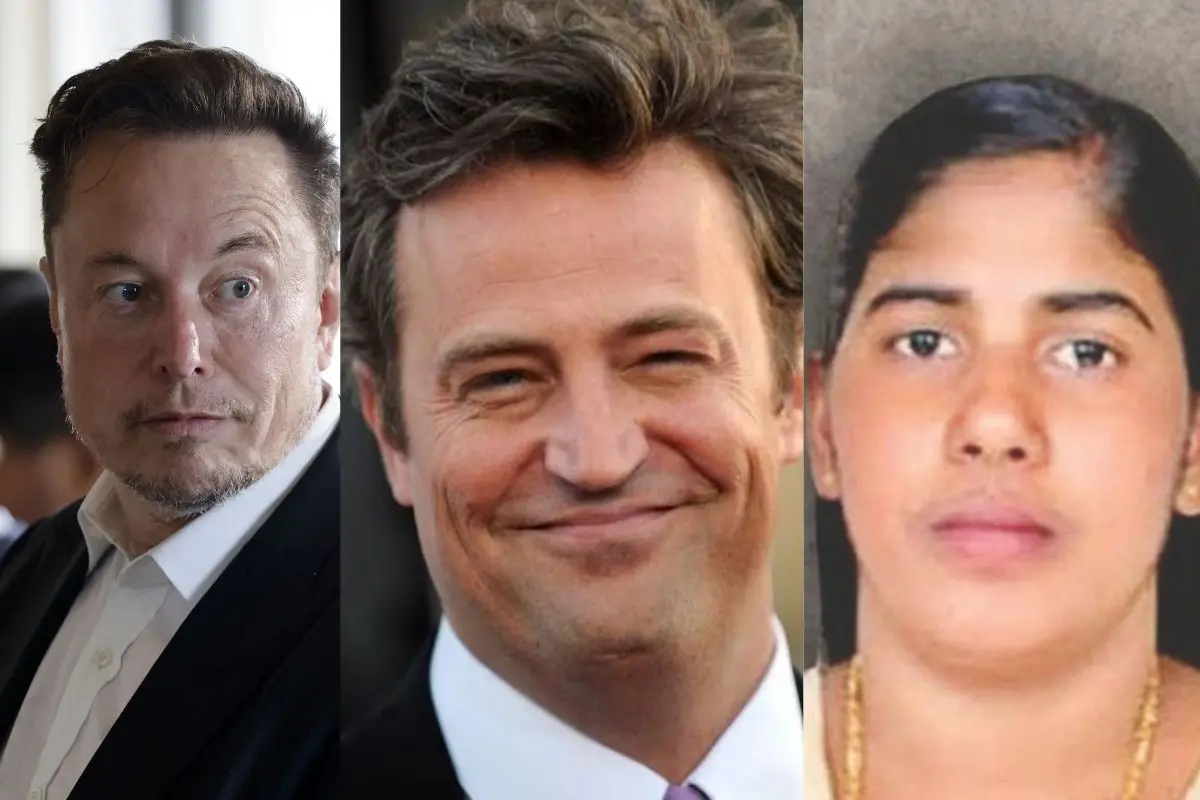
Nimisha Priya, a nurse from Kerala, is currently at the centre of national and international headlines after being sentenced to death in Yemen. Presently, Yemeni authorities have postponed her execution, due to international intervention.
Factual matrix lies in a small compass. Nimisha, a 38-year-old nurse from Kerala’s Palakkad district, moved to Yemen in 2008 for employment and later began running her own clinic in Sanaa, the Yemeni capital. Her business partner in Yemen was Talal Abdo Mahdi, a Yemeni national.
In July 2017, Nimisha Priya was accused of murdering her Yemeni business partner, Talal. Reports claim she injected him with a narcotic drug Ketamine in a bid to recover her passport and escape his alleged harassment, but he died from an overdose.
Following Talal’s death, his body was dismembered and disposed of in a water tank. Nimisha Priya was caught near the Yemen-Saudi border while trying to flee. Nimisha Priya continues to be imprisoned in Sanaa, a city under Houthi control and beyond the direct diplomatic reach of India.
In an interview with The News Minute (TNM) in August 2020, Nimisha Priya recounted that she faced physical torture, death threats, and harassment at the hands of Talal. Her version of the events is that there was a jail near her clinic, where Talal was frequently jailed based on her complaints. The warden of the jail knew her, as he had also been a patient at her clinic. Since there was no way of escape from Talal, especially without her passport, the jail warden told her to try and sedate him. He offered her help by saying that once he is sedated, he will somehow coerce him to return her passport.
So when she got an opportunity, she injected Talal with Ketamine, as he was a regular substance user. But, the Ketamine administered was in excess, leading to his sudden death. With the help of another nurse called Hanan, it was decided to quickly dispose of the body. Meanwhile, a panicky Nimisha Priya took sedative tablets. It was Hanan who chopped his body and disposed of it in the water tank, claims Nimisha.
While Nimisha Priya was awarded the death penalty, Hanan, who is also a co-accused in the case, has been sentenced to life imprisonment.
The Yemeni family insists that Nimisha Priya's actions—particularly the Ketamine administered murder of Talal followed by dismembering and hiding the body—are inexcusable, regardless of any dispute.
Nimisha Priya, being a qualified and practising nurse, would have been familiar with the uses of different kinds of drugs. Ketamine injection is used alone or together with other medicines to produce loss of consciousness before and during surgery or a medical procedure. It belongs to the group of medicines called general anaesthetics. Ketamine is a dissociative anaesthetic drug and has approved medical use. Much of the illicit supply of the drug is diverted from veterinary sources. When used for anaesthesia, ketamine is given as an intravenous injection (IV) or as an intramuscular injection (IM).
Ketamine can distort sensory perception and impart a feeling of detachment from oneself and the environment. Since the 1970s, ketamine has been used as an anaesthetic during both human and veterinary medical procedures. In the illicit market, ketamine is commonly encountered as either a clear liquid or a white powder, sometimes pressed into capsule form. Diverted pharmaceutical ketamine is sometimes evaporated down from a liquid solution to powder form.
In recent years, ketamine has gained popularity as a “club drug” used by teenagers and young adults at raves or parties. It is also known to be a “date rape” drug as it causes short-term memory loss. It is also known as ‘horse tranquiliser’ or ‘special k’, and is used widely in the veterinary field for a range of animals. It is also known as a ‘battlefield anaesthetic’, because of its wide use in conflict areas.
Ketamine, when used with alcohol or other Central Nervous System (CNS) depressants, can result in profound respiratory depression and death. This is what would have happened to Talal.
Abuse of large doses of Ketamine can also lead to powerful visual hallucinations that are intensified by environmental stimuli. Coma and deep unconsciousness can occur. When higher doses of ketamine are abused, it is reported to produce vivid dreams and an “out-of-body”, “K-hole” or “near-death” hallucinogenic experience, often reported as terrifying (similar to a bad LSD trip).
Ketamine can be particularly dangerous when taken with other substances. When used with stimulants like cocaine and ecstasy, the extra pressure can overload the heart. Taking Ketamine with depressants like alcohol or heroin can quickly lead to unconsciousness, causing a person to stop breathing or even suffocate in their own vomit. In some instances, though rare, people have been known to die of exposure outside or drown in the bath after taking Ketamine.
The illicit drug market is very active in Yemen. The Houthis fund their violence with lucrative drug smuggling and distribution operations. The Organization for Economic Co-operation and Development (OECD) reports that Houthi-controlled areas of Yemen have become open drug markets. The region is overflowing with thousands of kilograms of illegal drugs such as Captagon (a form of methamphetamine), hashish, and heroin. The Houthis use drug profits to purchase weapons and pay fighters, while exploiting addicted youth as expendable foot soldiers on the front lines of their attacks against Yemenis and international shipping.
The Global Initiative Against Transnational Organized Crime, a Geneva-based NGO, reports that “the Houthi militia oversees the lucrative heroin trade,” and continues to control the cannabis trade as a source of funding and a recruitment tool. The Houthis use narcotics to recruit and control young men and children, using drugs to increase loyalty and dependence. The Houthis give fighters Captagon before fighting to increase their energy and aggression. This drug smuggling is also linked to Iran’s expansive drug production and distribution networks throughout Syria and the broader Middle East.
Among celebrities who use Ketamine is Elon Musk, who has posted on X about his use of ketamine as a potential treatment for depression. Musk’s comments offer greater insight into the use of the drug by one of the world’s wealthiest and most powerful people. Musk denied that he overuses the medication, saying, “if you use too much ketamine, you can’t really get work done. I have a lot of work; I’m typically putting in 16-hour days … so I don’t really have a situation where I can be not mentally acute for an extended period of time.”
Late ‘Friends’ actor Matthew Perry was no stranger to the drug Ketamine. The actor was incredibly open and honest about undergoing a ketamine injection to help fight his depression. "Ketamine felt like a giant exhale," wrote Perry. "They'd bring me into a room, sit me down, put headphones on me so I would listen to music, blindfold me, and put an IV in." The IV contained Ativan - commonly referred to as Lorazepam - which is used to treat seizures and pre-surgery anxiety. These two together caused Perry to hallucinate often while he was receiving the Ketamine IV dose.
Perry also revealed, "I often thought that I was dying during that hour. ‘Oh,' I thought, ‘this is what happens when you die. Yet I would continually sign up for this, because it was something different, and anything different is good."
He summed up his entire ketamine experience by writing, "It felt like being hit in the head with a giant happy shovel," and how he felt that, "Ketamine has my name written all over it - they might as well have called it 'Matty'. "
Time only will tell if Nimisha Priya is destined to say- Ketamine has my name written all over it.
The author is former Director General of National Academy of Customs, Indirect Taxes & Narcotics