Kerala's artificial turfs: A risky game for bones, muscles and even mind
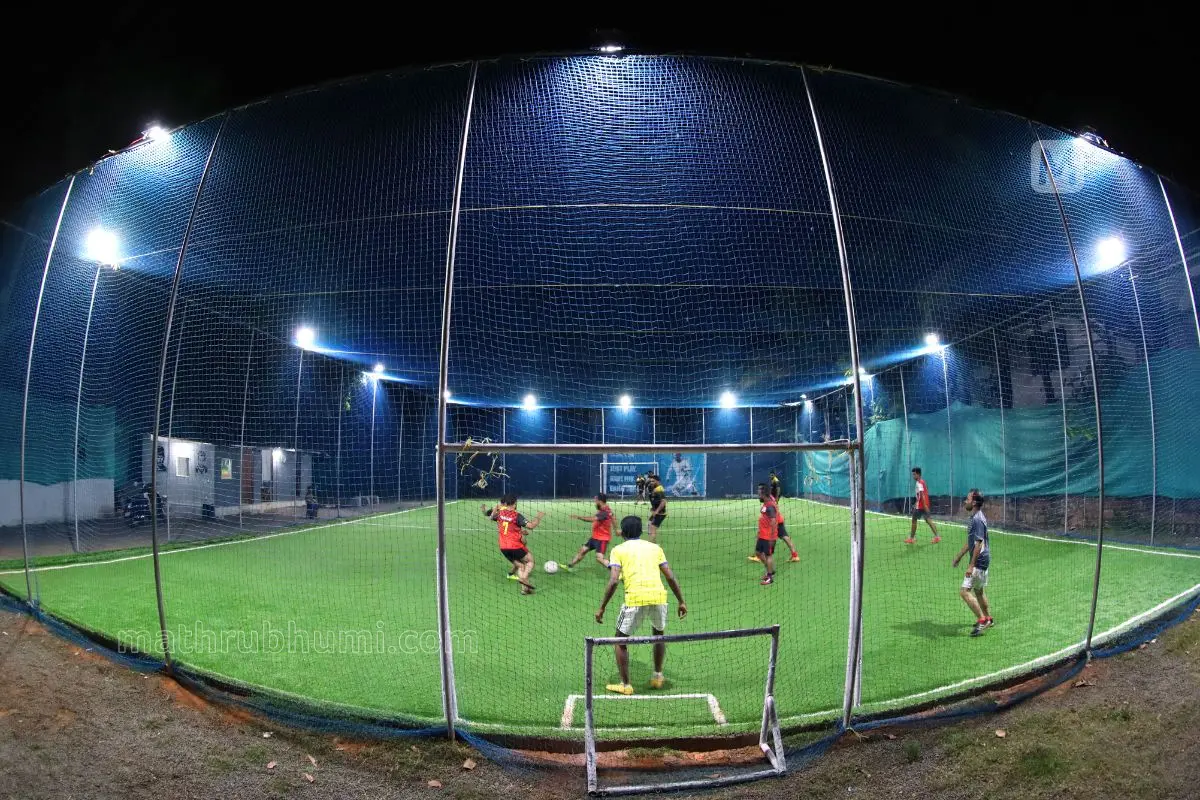
A post on a popular Malayalam meme page recently caught attention after claiming that the rise of artificial turfs has turned into a “cash cow for orthopaedic doctors.” The comment section soon filled with stories from netizens who agreed — saying turf football is leaving many with sore knees, muscle pain, and even serious ligament injuries.
Many pointed out that most turfs in Kerala are not built properly. On natural grounds, players said they rarely feel calf, hip, or shin pain, even after hours of play. But just one hour on turf is enough to bring on sharp strain and stiffness. Some claimed they had injuries like Anterior Cruciate Ligament (ACL) tears, where the ligament connecting the thigh bone to the shin bone gets stretched or torn. These injuries often happen when players stop suddenly, twist, or change direction too fast.
Another injury mentioned by many is a meniscus tear, which affects the cartilage in the knee and causes swelling, pain, and a locking sensation. One online comment summed up the frustration with a touch of humour: “Soon we’ll even have a new kind of doctor — a turf specialist.”
Turf injury victims speak out
Real-life accounts shared by turf injury victims in Kerala to Mathrubhumi English paint a worrying picture.
Thrissur-based Beril Jaison said he still hasn’t fully recovered from a knee ligament tear in his left leg, sustained during a turf football game three years ago. “When I jumped and landed, the surface being hard, tear happened,” he said. Beril, who avoided surgery and opted for physiotherapy instead, said about 70% of his leg is now fine though he still feels some discomfort. Currently in Dubai, he plans to seek further treatment if the problem persists.
In Kannur, Amalraj KR suffered a grade 2 ACL tear, grade 1 MCL injury, and a subcortical fracture in September while playing a turf football match. The injury occurred when he twisted his right knee during landing after a jump. “I am undergoing physiotherapy and now sleep wearing knee braces and continue muscle-strengthening exercises,” he said, adding that his next MRI is scheduled in 20 weeks.
Amalraj, a professional photographer, said the injury has affected his work since he cannot stand for long periods, and the treatment expenses have been a challenge.
Kozhikode-based Barath PA highlighted another concern — extreme surface heat. “One of the common issues is the heat trap during a sunny day. Once while playing a game during daytime, the heat generated from the turf began to increase my fatigue. The heat not only made it more tiring but also caused tiny burns when I fell on my knees,” he said. He added that some turfs have too many rubber crumbs, which affect bounce and running, while those without crumbs feel “like a layer of glitter on cement,” offering no cushioning and feeling hard. Barath has now switched to a mud ground.
From Malappuram, Adil Saddath said he could clearly feel the difference between natural grass and turf after each game, experiencing pain and muscle discomfort in his legs. Though he hasn’t needed medical care, he said he often had to rest for long periods to recover from the pain.
Some players, however, say that proper warm-up and cool-down routines, the right footwear, and well-maintained surfaces can help reduce injuries.
What experts say
Orthopaedic experts, during an interaction with Mathrubhumi English, expressed concern over the worrying trend, warning that artificial turfs pose a risk to bones and muscles.
“The increased friction and reduced shock absorption can lead to ankle sprains, knee ligament injuries, and overuse problems such as tendinitis (irritation of a tendon). The surface also retains more heat compared to natural grass, heightening the risk of fatigue, dehydration, and reduced performance,” Dr Muhammed Nazeer, Senior Consultant at the Department of Orthopaedics, KIMSHEALTH Thiruvananthapuram, said.
However, he noted that modern turfs are comparatively safer. “Proper footwear, regular maintenance, and adequate rest remain crucial to keep athletes safe,” he said.
According to Dr Prince Shanavas Khan, Senior Consultant, Orthopaedics, at Apollo Adlux Hospital, Angamaly, playing on artificial turfs can also cause foot, toe, and stress-related injuries due to the hard surface and limited flexibility. “Repeated movements on such grounds may strain the Achilles tendon and increase the risk of minor bone cracks. Athletes should be cautious about overtraining on these surfaces, as constant impact may lead to long-term joint or muscle problems,” he said.
Dr Nazeer added that awareness about proper warm-up routines, hydration, and turf quality can reduce injury risks and help athletes perform more safely.
What studies say
Studies comparing artificial turf surfaces to open fields, such as natural grass or soil, suggest that artificial fields are often associated with a higher risk of players getting hurt. They also link a higher overall rate of injuries to the legs and feet on artificial turf surfaces.It was observed that when a field was converted to artificial turf, there was a notable increase in injuries to the arms and hands, as well as a higher occurrence of sprains in the legs and feet.
Studies also highlight that using the wrong shoes — such as grass-specific boots on turf — contributes to slips, twists, and sprains. Artificial turf also loses its cushioning over time as it ages, though adding rubber material can help reduce muscle strains.
Not just physical injuries
Arun Jose, a PhD scholar in sports psychology at Jain University, told Mathrubhumi English that the space and setting of a field have a major influence on a player’s performance.Jose, who works as a consultant with several sports teams, including state squads, said that long hours of practice on artificial turfs could affect players’ accuracy and judgement when they shift to natural grounds.
“The capacity of a player varies as friction and pitch texture (grass) are different in an ordinary playground. This leaves many players trained on artificial turf under stress and panic, increasing the chance of injury when they play on natural grounds,” he said.
He pointed out that many who excel on artificial turf often struggle on natural ground. “This performance difference is also forcing many to be disappointed and quit from the career itself. Also it’s difficult to coach and transform those who have played on artificial turf for long years and to adapt them to natural ground. In my opinion, it’s creating loss of years, especially as in sports young age promises a better career ladder and performance,” he said.
Government aware
The Kerala government had last year announced plans to bring sports turfs under regulation, following rising concerns about player safety. Sports Minister V. Abdurahiman told the Kerala Assembly that steps would soon be taken to ensure the quality and safety of privately constructed turfs across the state.
The move came after a surge in complaints about poor-quality turfs causing player injuries and disturbing nearby residents with excessive noise and lighting. However, on the ground, these promised measures are yet to take shape.
It may be noted that the Aluva Municipal Corporation is presently facing flak from opposition groups for its plan to turn the municipal ground into an artificial turf. One of the major issues raised is that turf pitches could increase the chances of players getting injured. They also allege the move may take away open spaces used by residents for other sports.