Elephant involved in Koyilandy rampage had history of aggression, signs of musth: Report
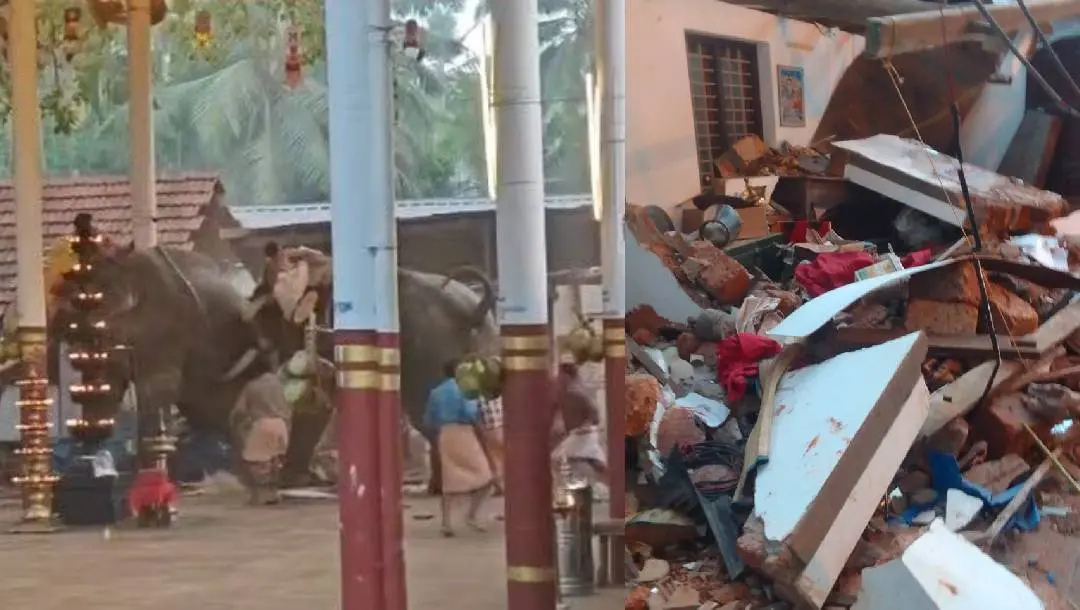
Kozhikode/Thiruvananthapuram: A report has highlighted serious lapses in the incident at Kuruvilangad Manakkulangara Temple, where an elephant went on a rampage. According to the report, the elephant Guruvayur Peethambaran, had a history of aggressive behaviour towards other elephants. A blood test also indicated the possibility of musth. In addition, the report by the Forest Conservator noted that the elephant was not restrained with chains during the procession.
Following the tragic incident, the Forest Department launched an investigation, leading to the submission of the report to the Forest Minister.
After the accident, testosterone levels of Peethambaran and another elephant Gokul were tested. The findings revealed that Peethambaran had four times the normal level of the hormone, increasing the likelihood of musth-related aggression.
The report also pointed out that Guruvayur Peethambaran had gone on a rampage five times before and had previously attacked other elephants. It concluded that such an elephant should not have been included in the temple procession. Furthermore, fireworks were reportedly set off carelessly within the temple premises, and the loud noise is believed to have agitated Peethambaran. The report also noted that the mandatory distance between elephants was not maintained.
The rampage occurred during a festival at Koyilandy Kuruvangad Manakkulangara Temple. As the procession reached the temple premises, firecrackers were set off, triggering Peethambaran’s aggression. The elephant then attacked another elephant nearby, causing panic among onlookers who fled in fear.
The enraged elephants damaged the temple’s roof and office building. Three people lost their lives after being trapped under the collapsed structure and in the ensuing chaos, while around 30 others sustained injuries. A similar incident had taken place at the same temple a decade ago.