This Kerala Piravi, Malayalis decode Malayalam words English cannot truly capture
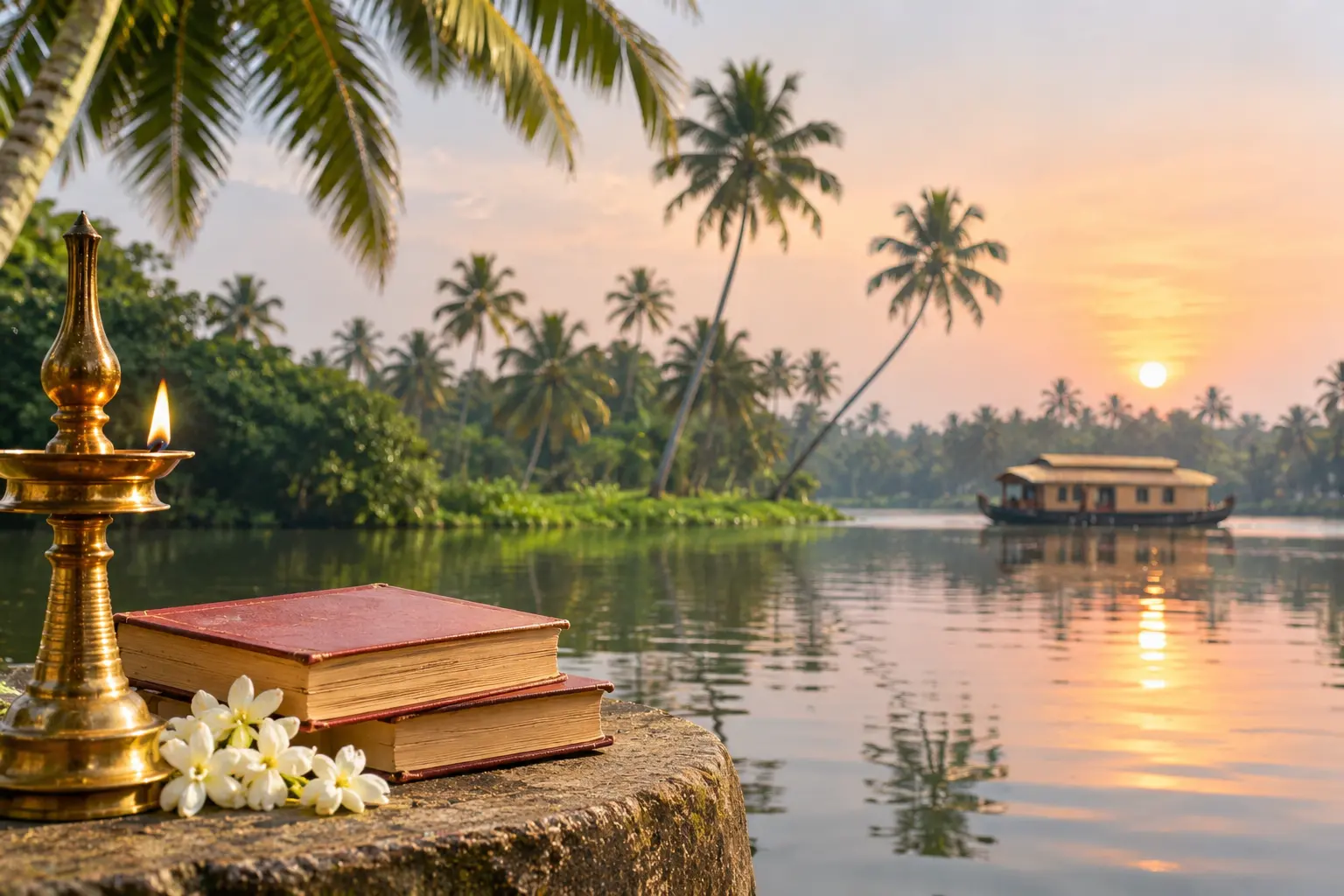
Have you ever tried explaining 'Pinakkam' to someone who does not speak Malayalam? Or described the feeling of 'Nombaram' only to give up and say, "It's just not the same in English"? Some words are easy to translate but difficult to explain. They carry memories, emotions, relationships and small pieces of culture that no dictionary can fully capture.
Malayalam is full of such words. They are woven into everyday conversations, family relationships, childhood memories and even the silences between two people. As Kerala celebrates Kerala Piravi on November 1, marking 70 years since the state's formation, we asked a few Malayalis to share the words they believe English can never fully capture. Their answers offer a glimpse into the emotional richness of a language that often says much more than its literal meaning.
For Uthara Dinesh, a journalist from Kozhikode, the word 'Pinakkam' comes to mind immediately. It is often translated as 'disagreement', 'sulking' or 'falling out'. But, as she points out, none of these expressions quite captures what it feels like.
"Some words are more than just their meanings, and pinakkam is one of them. It's not exactly anger, not quite sadness and definitely not hatred," she says. Think of two people who care deeply about each other but have fallen out over something. One wants to talk but chooses silence. The other is expected to notice the change in behaviour and make the first move. There is hurt, stubbornness and, somewhere beneath it all, affection. That, Uthara believes, is 'Pinakkam'. Sometimes, even being upset with someone shows how much they matter.
She also brings up 'Ethramathe', which roughly translates to 'to what extent'. Yet, in an emotional context, it can express the depth of something that is difficult to measure. It is the kind of expression that leaves room for feelings too vast to be quantified.
Veteran journalist and documentary filmmaker R K Radhakrishnan takes a slightly different route, drawing attention to words that describe some of our most familiar everyday moods. His favourite is 'Madi', a word often loosely translated as 'laziness'. But Radhakrishnan believes that explanation falls short. He describes it as something between ordinary laziness and depression: a state in which a person isn't necessarily unhappy but simply has no particular desire to do anything. It is being content to watch the world go by, without feeling the need to participate.
Then there is 'Kothi'. Most Malayalis would immediately associate it with 'craving', particularly for food, perhaps the irresistible desire for a plate of hot porotta and beef curry or a favourite childhood snack. But the word can extend beyond food, describing a longing for a person, an experience or something one desperately wants.
Radhakrishnan also points to 'Kushumbu', which can be loosely translated as 'jealousy'. It is not necessarily the bitterness associated with envy. Depending on the situation, it can carry a playful, mischievous quality, the kind that often finds its way into conversations between friends and loved ones.
For Nandha Kumar from Paravoor, however, one word carries an entire world of emotions: 'Nombaram'. It is not merely 'sadness'. It is the ache that arrives when memories of someone deeply loved rush back, when so much is left unsaid, or when something once considered one's own slowly moves away. Nandha describes 'Nombaram' as an emotion that brings together love, memories, loss and sometimes even a little happiness. English offers words such as 'pain', 'sadness' and 'heartache'. But none can fully capture it.
Some sorrows don't bring tears, and some emotions refuse to fit into sentences. 'Nombaram' names those feelings. It can be a pain that breaks the heart, but it can also be a beautiful reminder of how deeply one has loved.
Nandha also highlights 'Gruhathurathwam' or 'nostalgia'. It is that familiar longing for a childhood home, the mango and jackfruit trees in the courtyard, the smell of rain-soaked earth, the taste of a meal served by one's mother and the carefree days when life seemed much simpler.
These are memories that time cannot return, even when the heart desperately wants to revisit them. The word captures the happiness and sadness of remembering a life that has slowly become part of the past. It is not merely an attachment to old memories, but a deep connection to the people and places that made us who we are.
Surya, a homemaker from Thrissur’s Kara, meanwhile, brings a historical and cultural dimension to the conversation with 'Hiranyagarbham'.
Literally translated as 'Golden Womb', the word has roots in Vedic philosophy, where it refers to the golden cosmic embryo associated with the origin of the universe. However, its significance in Kerala's history, particularly in the Travancore royal tradition, is considerably more complex.
Surya points to the elaborate 'Hiranyagarbham' ritual associated with Travancore rulers. The ceremony involved a symbolic rebirth through a golden vessel and was linked to the rulers' claims to elevated ritual and social status. For Surya, the word brings to mind Kerala's historical power structures, royal traditions and customs that may seem unusual to a contemporary audience.
A literal translation, she believes, cannot convey the historical and cultural weight carried by the expression.
Perhaps that is what makes Malayalam so special. Its words do not simply describe what we feel; they often carry the stories behind those feelings. A 'Pinakkam' can reveal affection hidden behind silence. A 'Nombaram' can bring together grief and gratitude. And a single word like 'Gruhathurathwam' can transport someone thousands of miles away to the courtyard of their childhood home.
This Kerala Piravi, perhaps the best celebration of Malayalam, reminds us that not everything needs to be translated. Some words are meant to be understood, remembered and felt. And for a Malayali, some feelings will always sound more complete in Malayalam.