Mathrubhumi impact: Kerala Govt revises attendance punching system after irregularities
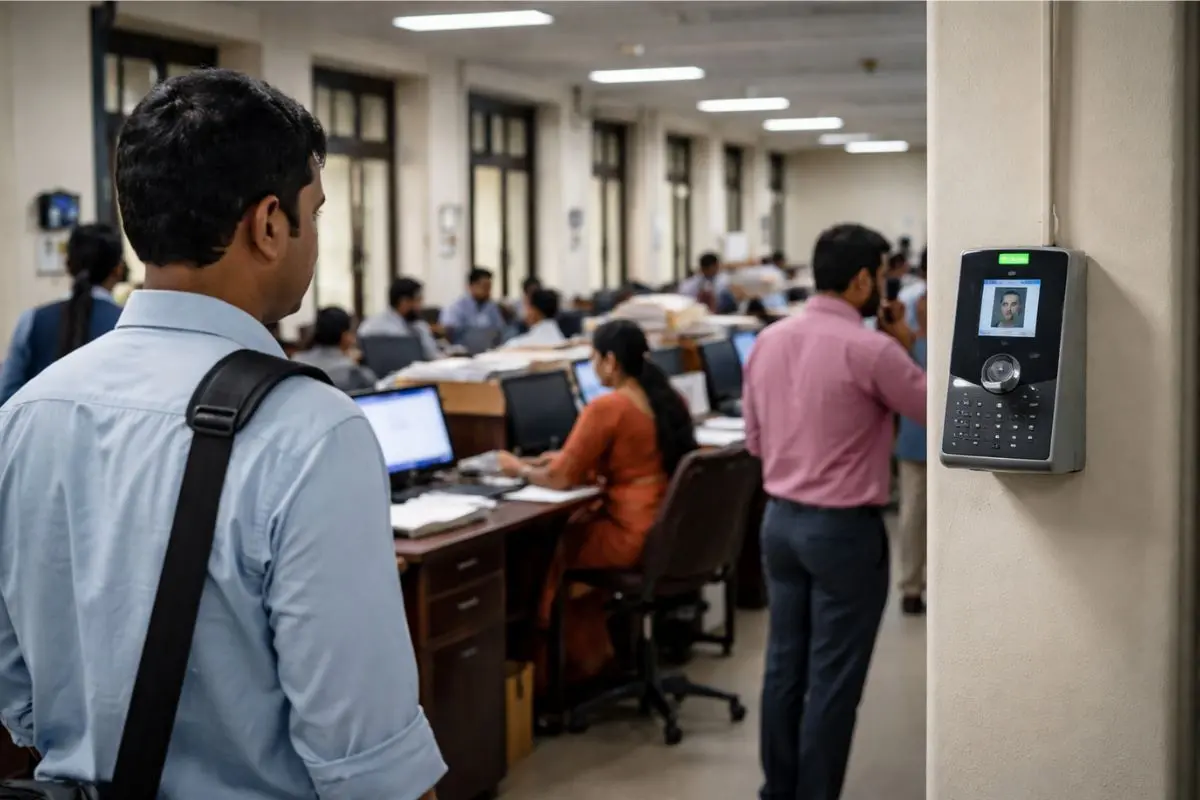
Thiruvananthapuram: Government offices in Kerala are implementing stricter rules for biometric attendance after reports of irregularities surfaced. Employees will now be required to punch in only after entering the office premises, with the previous 150-metre Wi-Fi detection range reduced to 10 metres.
The move follows a report by 'Mathrubhumi News' highlighting misuse of the attendance system in several offices. Initial reactions from the Revenue Minister and visual reports from the District Collectorate in Thiruvananthapuram prompted immediate administrative action.
According to the Cooperative Registrar, all departments have been instructed to comply with the revised guidelines. The face recognition-based attendance system, previously allowing biometrics within a 150-metre Wi-Fi radius, has been limited to a 10-metre range. Subsequently, this was adjusted to 25 metres to ensure all employees could register their attendance without disruption, while still preventing irregularities.
Also read| Aadhaar-based punching to mark attendance set to be made mandatory for college teachers in Kerala
Registrar Sajith Babu IAS clarified that the new directive mandates punching only within office premises, preventing employees from clocking in remotely or outside office hours. The directive is being implemented across all government departments immediately.
Officials emphasised that these measures aim to curb fraudulent practices while maintaining transparency in employee attendance. The updated system and stricter limits are expected to bring uniform compliance across government offices statewide.
Mobile attendance system
Kerala government employees were required to install the Aadhaar Enabled Biometric Attendance System (AEBAS) app and the Aadhaar Face RD app on their Android mobile devices. After logging in, staff took a clear selfie and uploaded it through the app to register their attendance.
The introduction of this mobile system aimed to replace the earlier arrangement, where employees had to queue at stationary punch machines, which often caused delays and inconvenience. The transition to mobile attendance was coordinated by the State IT Cell, with department heads serving as nodal officers to ensure smooth implementation across government offices.