Kerala CM's unusual tax lesson: What Chanakya's butterfly has to do with government revenue
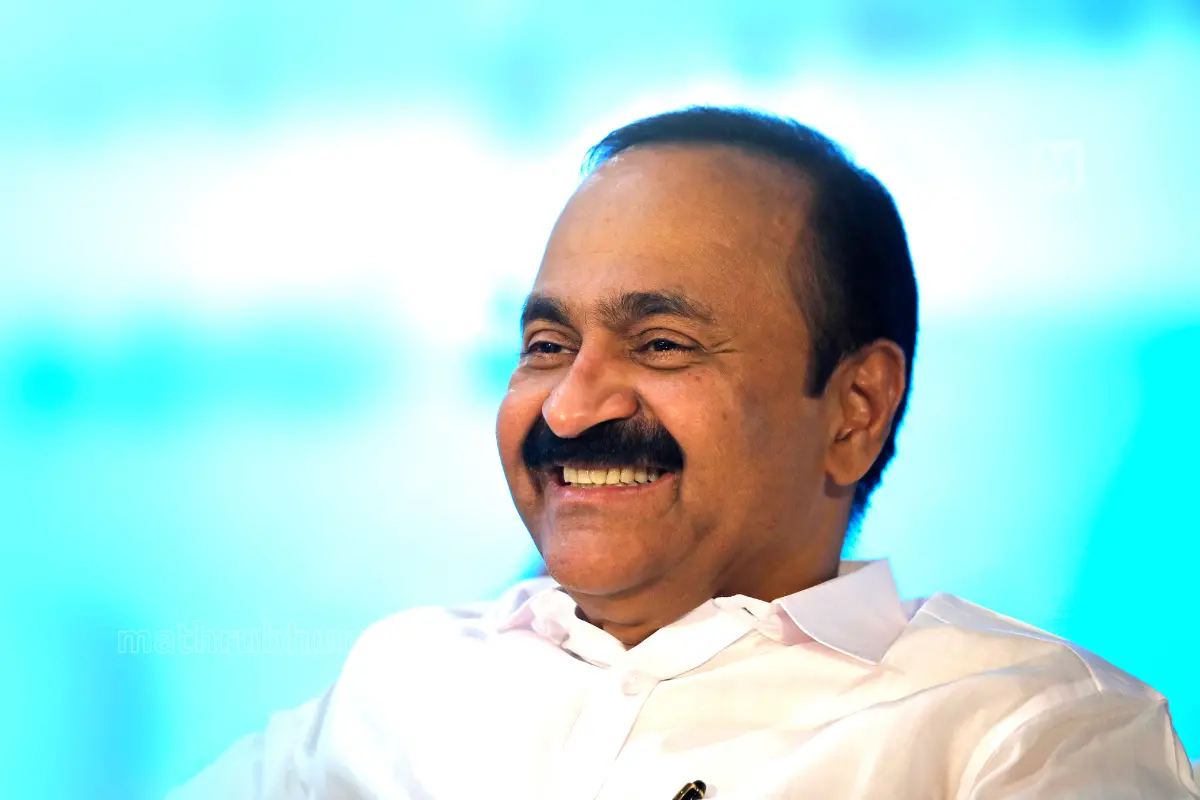
Thiruvananthapuram: Kerala Chief Minister V D Satheesan on Wednesday, November 4, invoked an ancient principle from Chanakya's Arthashastra to explain his government's approach to taxation, arguing that increasing tax rates is not the only way to boost government revenue.
Speaking at a press conference after a Cabinet meeting in Thiruvananthapuram, Satheesan compared effective tax collection to a butterfly drawing nectar from a flower without disturbing it. He said the idea was to generate more revenue by encouraging economic activity rather than placing an additional tax burden on people.
The chief minister said he had repeatedly referred to the principle during his earlier tenure as an MLA but could implement it only after taking charge of the Finance portfolio.
‘A butterfly extracting nectar’: What Chanakya's principle means
Explaining the analogy, Satheesan said taxation should be structured in a way that allows the government to collect revenue without disrupting economic activity.
"That is why I had once said that it should be done like a butterfly sucking nectar from a flower without the flower even knowing it. Do you now understand what I meant. I did not come up with that idea. It is mentioned in Chanakya's Arthashastra," he said.
He recalled that people had made fun of him when he first raised the idea in the Assembly. However, he said he was interested in the concept and eventually put it into practice after becoming Finance Minister.
Chanakya, also known as Kautilya, was an ancient Indian philosopher, economist and political adviser associated with the Mauryan period around the 4th century BC. He is traditionally credited with writing the Arthashastra, a text dealing with governance, taxation, economics and statecraft.
How electric vehicle tax cuts became an example
Satheesan cited the reduction in taxes on electric vehicles as an example of his approach to revenue generation.
He said the decision had attracted criticism at the time but was followed by a significant increase in sales. Several retail outlets reportedly sold out their stocks within one or two months and had to bring in additional vehicles from outside the state.
The chief minister argued that maintaining the earlier tax rates would not necessarily have generated higher revenue.
"What would we have got if the existing tax had continued. We got more tax because sales increased. That is one approach without increasing taxes. That is our solution. Increasing taxes is not the solution," he said.
His argument was that lower tax rates could encourage purchases, expand market activity and potentially increase overall tax collections.
Kerala reports 27% GST collection growth in October
The chief minister also highlighted Kerala's GST collection figures, saying the state recorded 27 per cent growth in October, compared with the national average of 13 per cent.
Kerala had recorded negative 2 per cent growth in GST collections during October last year, according to the figures cited by Satheesan.
He also said the government had pumped money into the market during the Onam season to stimulate economic activity and encourage consumer spending.
However, Satheesan said the government was not satisfied with the existing performance and wanted to attract more investments.
"But I am not satisfied. We are not satisfied. We have to improve. We need more investments, and we will stimulate the economy," he said.
He added that wholesale and retail businesses were performing well but stressed the need for further economic expansion.
Can lower taxes actually increase government revenue?
Satheesan's remarks highlight a taxation approach that focuses on expanding the tax base rather than increasing tax rates.
The principle is that reducing taxes on certain goods or services can encourage more people to purchase them. Higher sales can then generate additional tax collections, potentially offsetting the revenue lost through lower rates.
However, the outcome depends on several factors, including consumer demand, the scale of the tax reduction, market conditions and the extent to which additional sales translate into taxable transactions.
The electric vehicle example cited by Satheesan reflects the state's argument for using tax incentives to encourage market growth. Establishing the overall fiscal impact would require comparing revenue collected before and after the tax reduction.
Kerala's reported 27 per cent GST growth in October is another indicator cited by the chief minister to highlight the state's revenue performance. However, sustaining such growth will depend on consumption, investment, business expansion and tax compliance.
The broader policy challenge is to balance revenue generation with economic growth while ensuring that public finances remain sustainable.