In Karkidakam, Kerala echoes with daily Ramayana recitals
Karkidakam, the final month of the Malayalam Kollavarsha calendar, is often marked by heavy rains and thunderstorms that cast a shadow over nature. According to olden-day beliefs, this season was associated with rising unemployment and poor harvests, making hardship a common part of life. Perhaps it is for this reason that the month came to be known as Panja Karkidakam, the impoverished Karkidakam. In such trying times, people believe that it is only the thought of the divine that brings peace to a troubled mind.
Puranic scholars interpret the Ramayana as the ‘Ayana’, or journey, of Lord Rama. But beyond the literal meaning lies a deeper philosophical insight. In Puranic tradition, the syllable ‘Ra’ is often associated with ego or worldly attachments, elements that must be dissolved on the path to liberation. Thus, many believe the Ramayana also serves as an allegorical journey of dissolving the ‘Ra’ within oneself. When one internalises the values embodied by an ideal and righteous incarnation like Rama, it is said that the ‘Ra’, symbolising ignorance or ego, begins to dissolve, at least to some extent.
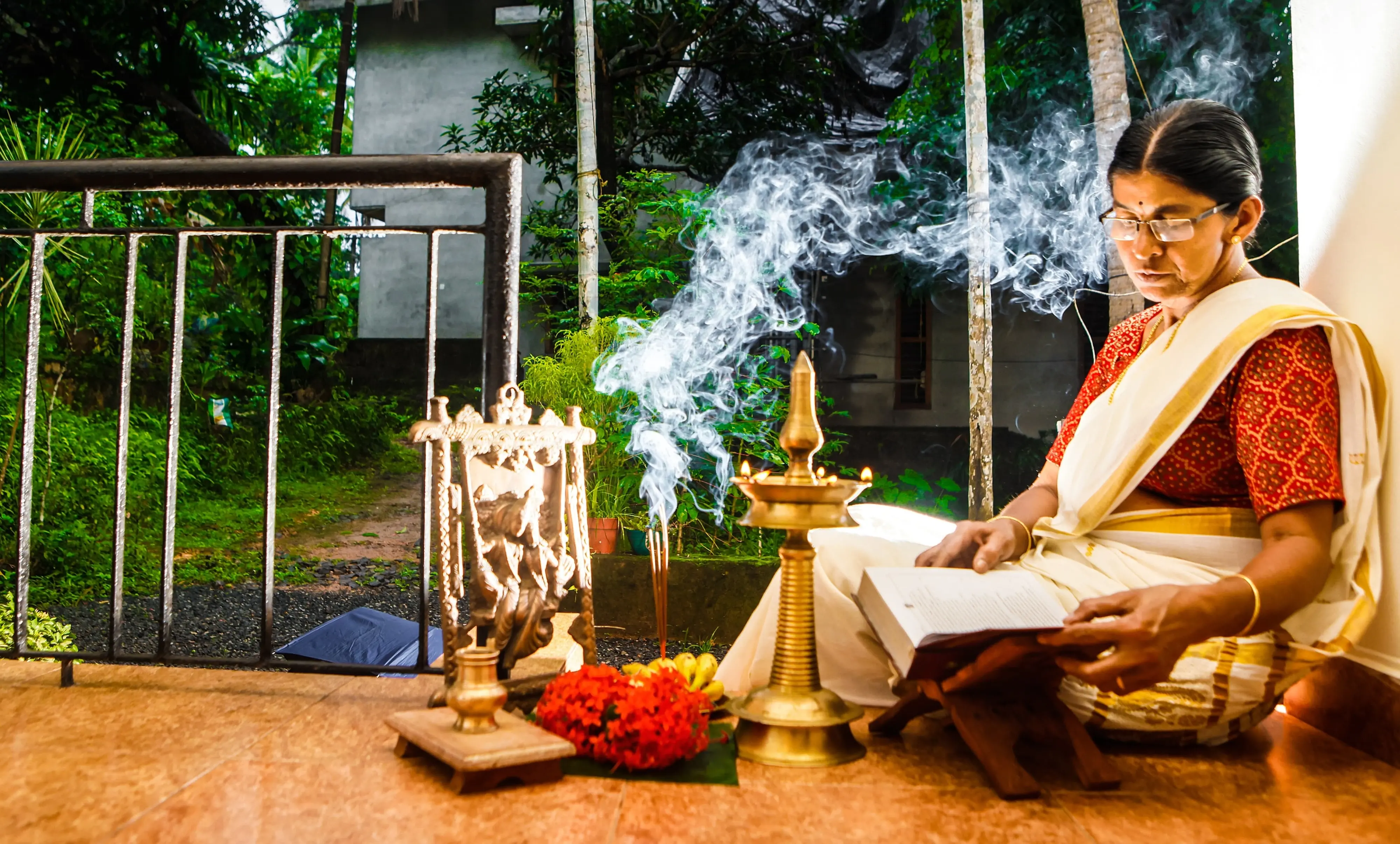
On the first day of the month of Karkidakam, Keralites of all ages begin reciting the Ramayana before the traditional lamp lit in their homes. As the dark, rain-drenched evenings of Kalla Karkidakam set in, the gentle verses of the epic bring tears to the eyes of listeners, helping them forget many of their sorrows. In those quiet, prayerful moments, the inseparable bond between Karkidakam and the Ramayana comes to life.
The Ramayana should never be recited while sitting directly on the floor or placing the book on the ground. Tradition holds that one should sit on an aavana palaka (a sacred wooden seat used in rituals), a deer hide, or a clean, sanctified pedestal, not higher than the lamp, and face north while reciting.
According to astrology, Karkidakam is the fourth sign in the twelve-sign cycle beginning with Medam. It is regarded as a sign of motherhood, family, and tradition. The Punartham star that falls in Karkidakam is also believed to be associated with Lord Rama. Following the efforts and experiences of the past eleven months, Karkidakam serves as a transitional period, a time to reflect, rejuvenate, and prepare for the new year that begins with Chingam. It is a month for introspection and laying down the foundation for plans.
In earlier times, the rains typically continued from Edavapathi through the month of Karkidakam, bringing agricultural activity to a standstill. With the fields waterlogged and work paused, farmers and labourers would get a rare period of rest. This is why Karkidakam came to be known as Panjamasam, the month of scarcity and reflection. During this time, people focused on caring for their health and conserving energy, preparing themselves for the vigorous work that would resume with the arrival of Chingam, the month that marks new beginnings in the agrarian calendar.
Dakshinayana, the celestial southward journey of the sun, considered the sacred time of the ancestors, begins with the month of Karkidakam. It is during this month that Karkidakavavu is observed, a day dedicated to remembering and offering respect to our departed forebears. Through these ancestral rites, one finds a deeper sense of devotion and fulfilment in performing one’s sacred duties.
Thus, Karkidakam becomes more than just a season of rest or reflection; it is a time to heal relationships, seek forgiveness, and renew spiritual bonds. As the recitation of the Ramayana echoes through homes lit by gentle lamps, it binds individuals and families in faith and hope.