Jet Airways employees win long battle for PF and gratuity as tribunal brings hope
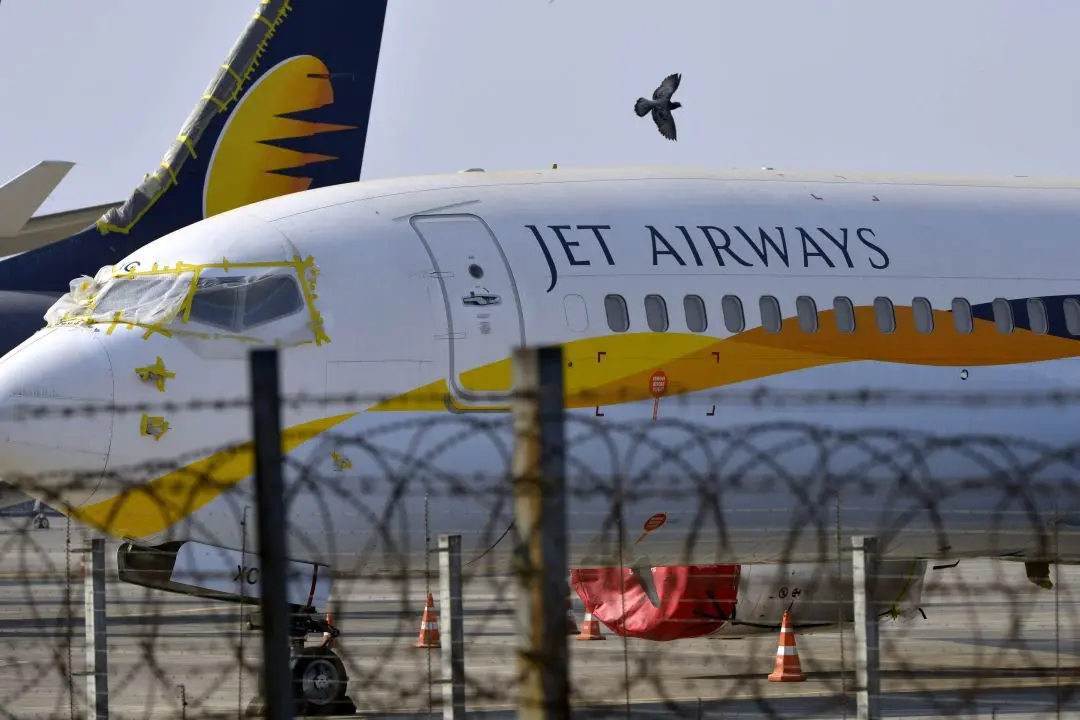
For hundreds of former Jet Airways employees, a legal battle that stretched over several years has finally brought a measure of relief. In a significant ruling, the National Company Law Appellate Tribunal (NCLAT) has dismissed an appeal filed by the State Bank of India (SBI), clearing the way for the payment of provident fund (PF) and gratuity dues to the airline's former employees as the company undergoes liquidation.
The decision is being seen as an important victory for workers' rights, reaffirming that statutory retirement benefits cannot be treated like ordinary assets that are divided among creditors during insolvency proceedings.
A major relief for former employees
Jet Airways, once one of India's leading private airlines, ceased operations in 2019, leaving thousands of employees without jobs. Many former pilots, cabin crew, engineers, ground staff and administrative employees have spent years waiting not only for salaries but also for retirement benefits that they had earned through years of service.
With the latest ruling, hundreds of these former employees have moved a step closer to receiving their long-pending provident fund and gratuity payments.
Employee representatives have claimed that the total amount due towards provident fund and gratuity exceeds ₹275 crore. For many families, these payments are not simply financial settlements but essential savings meant to support them after losing their livelihoods.
Why the tribunal ruled in employees' favour
The dispute centred on whether provident fund and gratuity dues should be included in Jet Airways' liquidation assets, which are used to repay banks and other creditors. The tribunal upheld an earlier order of the National Company Law Tribunal (NCLT), which had ruled that these statutory employee benefits are protected under Indian law and cannot be treated as part of the company's liquidation estate. In simple terms, this means that employees' provident fund and gratuity must be paid before the remaining assets are distributed among creditors under the Insolvency and Bankruptcy Code (IBC).
The NCLT had earlier observed that the liquidator is legally required to pay these dues under the Employees' Provident Funds and Miscellaneous Provisions Act, 1952 and the Payment of Gratuity Act, 1972, regardless of the company's financial condition.
How the legal battle began
The case was initiated by 296 former Jet Airways employees, many of whom were members of the Jet Airways Maintenance Engineers Welfare Association (JAMEWA). They approached the tribunal seeking the exclusion of provident fund, gratuity and certain salary-related dues from the company's liquidation assets. The employees argued that these benefits are protected by law and should not be subjected to the priority-based repayment system followed during insolvency proceedings. The tribunal agreed with this argument and also rejected objections raised by SBI and the airline's liquidator. Importantly, the tribunal clarified that employees' entitlement to provident fund and gratuity does not depend on whether the company had maintained separate funds for these payments.
A victory
Legal experts believe the ruling reinforces an important principle under India's insolvency framework, that employees' statutory retirement benefits deserve special protection. Provident fund and gratuity are considered social security benefits that employees build over years of service. They are not discretionary payments made by employers but legal entitlements meant to provide financial security after retirement or loss of employment.
By protecting these dues, the tribunal has reaffirmed that workers' rights cannot be ignored even when a company collapses financially. The ruling could also serve as an important reference in future insolvency cases involving financially distressed companies and their employees.
End of Jet Airways' revival efforts
Jet Airways has remained at the centre of one of India's longest corporate insolvency cases. After the airline suspended operations in 2019, several attempts were made to revive the company under the Insolvency and Bankruptcy Code. The Jalan-Kalrock Consortium had won the bid to revive the airline, but the revival plan ran into repeated delays. The consortium failed to infuse the promised funds and clear outstanding employee dues, leading to prolonged legal disputes. In November 2024, the Supreme Court ordered the liquidation of Jet Airways, bringing an end to hopes of reviving the once-iconic airline.
Since then, the focus has shifted to selling the airline's remaining assets to maximise recovery for creditors.
Justice after years of uncertainty
For former Jet Airways employees, the latest tribunal decision is about much more than a legal victory. Many spent years facing financial hardship after losing stable careers almost overnight. Some exhausted their savings, while others struggled to find comparable employment in an aviation industry that was itself dealing with economic challenges and the impact of the pandemic. Although the liquidation process is still underway and the detailed NCLAT order is awaited, the judgment offers long-awaited recognition of the employees' legal rights.
For hundreds of former Jet Airways staff, the ruling represents not just the possibility of receiving their long-pending dues, but also a sense that, after years of uncertainty and legal battles, justice may finally be within reach.