Parallel exchange case: Crime Branch unearths international conspiracy to destabilise nation
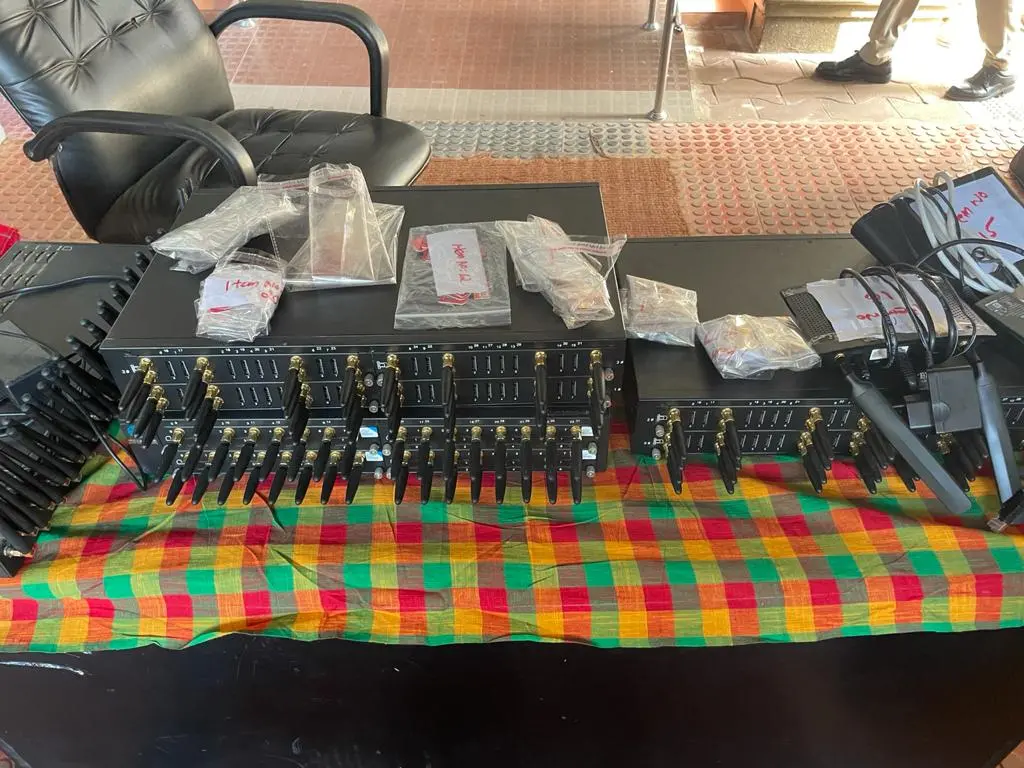
Kozhikode: The investigation into the parallel exchange case has exposed an 'international conspiracy' to destabilise the nation as per the statements of the arrested .Nearly five hundred such parallel exchanges have been busted across the state and the investigating officers said, such exchanges have been operational in India for over ten years now; but it became more active in the last few years. The suspected involvement of extremist elements in the case makes it even more serious.
It is learnt that there is a Chinese connection to the intriguing parallel exchange case.The Subscriber Identity Module Box (SIMbox), a device used as part of a Voice Over Internet Protocol (VoIP) gateway installation in the unit, that works as parallel exchange', has been procured free-of-cost from China. The arrested had visited China to get this device mainly from three companies, Dinstar, Skytel and Goyibe. A SIMbox costs Rs 80,000 to Rs 3 lakhs depending upon the number of SIM cards it can contain.
The investigating officers say, China provides these devices for free to promote all sorts of antisocial activities to weaken the nation. Hawala money to the tune of crores of rupees and drugs have been pumped into the nation on a large scale from China. Two currency counting machines were also seized from Ibrahim Pullattil, an accused in the case. It evokes suspicion of huge hawala deals and the crime branch eyes a thorough probe into it.
The accused got fake SIM cards from Odisha and Bihar to activate the SIMbox. After activating the Simbox, they sold 'call routes' to people from various nations, mainly Dubai, Tanzania, Uganda, Eritrea, Indonesia, Pakistan, Bangladesh, Afghanistan and China.
According to police, Ibrahim Pullattil sold a 'call route' to a Pakistani national and two routes to Chinese nationals for Rs 20 lakhs. After receiving the payment, the buyers were directed to download a software to link its IP with the IP of the SIMbox.
Once linking is done, a buyer can make calls. The call made using VoIP goes through the SIMbox and a reaches the recipient as a local call. Since it is converted into a local call it would be extremely difficult to trace the origin of the same.
These exchanges have been unearthed not just in Kerala but across the nation and the Keralites arrested over the case have links with the accused in similar cases in Tamil Nadu, Karnataka and Andhra Pradesh.
In the last few months, over 500 such parallel exchanges were spotted across the state over a tip-off received from the Telegana police. The Telegana police developed a software to trace such exchanges after realising the seriousness of the crime that may harm national security. The Crime Branch told Mathrubhumi.com that there could be hundreds of untraced exchanges still in the state.
Considering the depth and spread of the crime, Crime Branch has its own limitations in ensuring an effective probe and there were reports that the National Investigation Agency (NIA) would take over the investigation.
The Kozhikode Crime Branch team will visit Telangana in the coming days to take Russel, another accused in the case, to get more information on his links with the arrested persons. He is undergoing imprisonment in Telangana after he was convicted earlier over a similar parallel exchange case.
"In fact, it is a very serious issue that affects our national security. This has to be addressed properly and an effective mechanism should be developed on war-footing to monitor such anti-national practices. Otherwise, we may have to pay a huge price," said an investigating officer.