Historian M G S Narayanan: A scholar who shaped Kerala’s historical studies
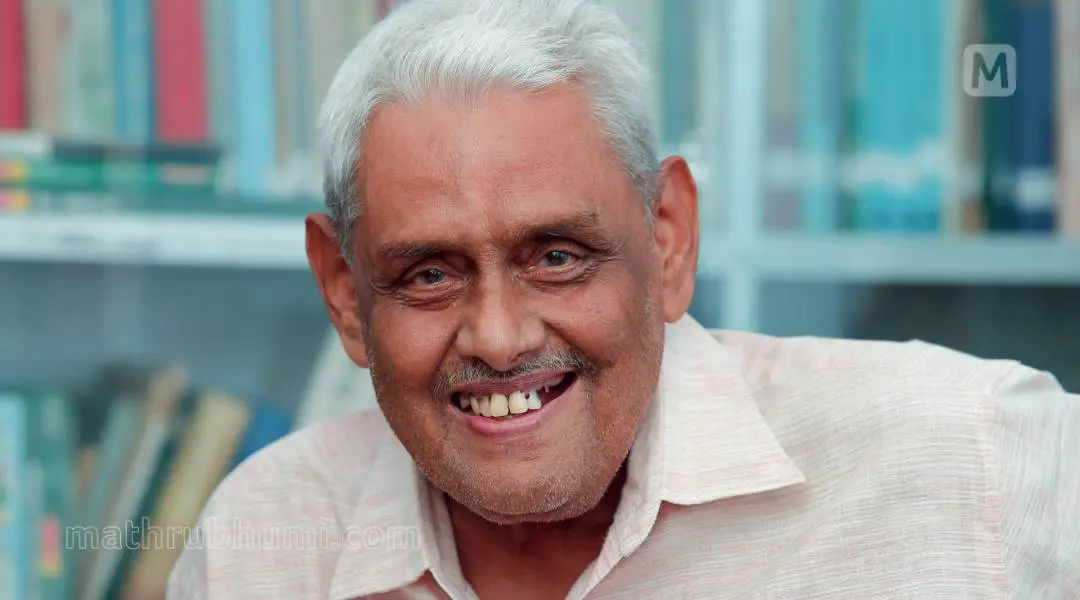
Noted historian M.G.S. Narayanan passed away in Kozhikode on Saturday morning. He was 92. Widely regarded as a towering figure in Indian historical scholarship, Narayanan played a key role in shaping the academic and cultural landscape of Kerala through decades of dedicated teaching, research, and institutional leadership.
Born on 20 August 1932 in Ponnani (Malappuram, Kerala), Muttayil Govindamenon Sankara Narayanan received his education in Parappanangadi, Ponnani, Kozhikode, Thrissur, and Madras. He earned a Master’s degree in History from Madras Christian College in 1953, securing First Class and First Rank in the University of Madras. He began his academic career teaching at Guruvayurappan College, Kozhikode, and later held a UGC Research Fellowship. In 1973, he was awarded a Ph.D. by the University of Kerala.
What was his role in Kozhikode's academic landscape?
He joined the Postgraduate Centre of Kerala University at Kozhikode in 1965. After the University of Calicut was established in 1968, he served in the Department of History as Lecturer, Reader (1973), and Professor (1976), and became Dean of the Faculty of Social Sciences and Humanities. He headed the department from 1970 until his retirement in 1992. During this period, he helped set up a specialised library and a museum of Kerala History and Culture, conducted workshops and summer institutes, modernised the syllabus, introduced the semester system, and launched departmental publications.
What were his international academic appointments?
Narayanan was Commonwealth Academic Staff Fellow at SOAS, University of London (1974–75); Visiting Fellow at the Universities of Moscow and Leningrad (1991); and Visiting Research Professor at Tokyo University of Foreign Studies (1994–95). He also served as Visiting Professor at the School of Social Sciences, MG University, Kottayam (1992–93), and at Mangalore University (1996). He was First Member Secretary of the Indian Council of Historical Research (ICHR), New Delhi (1990–92), Chairman of ICHR (2001–03), and Chairman of the Technical Advisory Committee for Kerala State Archives (2004–05).
How was he involved in history congresses and academic bodies?
Since 1969, Narayanan was closely associated with the Indian History Congress. He was a member of the Executive Committee from 1974, Local Secretary in 1976, President of Section I – Ancient India in 1978, Joint Secretary for several years, and General Secretary from 1983 to 1985. In 2001, he served as President of the Indian History and Culture Society. He actively contributed to the formation and development of the South Indian History Congress, the Epigraphical Society of India, and the Place Name Society of India, and held executive and presidential roles in these organisations.
What editorial roles did he undertake?
He was a member of the Editorial Committee of the Journal of Indian History and Indian Historical Review, and served on the Editorial Board for history textbooks in the NCERT. He was part of the Team Project on Socio-Religious Movements at the Institute of Advanced Studies, Shimla. He had expertise in ancient scripts including Brahmi, Vattezhuttu, and Grantha, and languages such as Tamil and Sanskrit. He regularly wrote and broadcasted in Malayalam and English.
Which were his major publications?
His research papers were compiled into several volumes: Cultural Symbiosis in Kerala (1972), Aspects of Aryanisation in Kerala (1973), Re-Interpretations in South Indian History (1977), and Foundations of South Indian Society and Culture (1994). He co-authored chapters with his student Dr Kesavan Veluthat in Agni, the Vedic Ritual of the Fire Altar (Berkeley, 1983) and Kerala Through The Ages, Part I (1976), published by the Government of Kerala. As General Editor of the Calicut University Historical Series, he brought out three volumes of historical sources, including Vanjeri Grandhavari (1987), which he edited. He was Chief Editor of Malabar (1994), a collection of extracts from a century of research. His doctoral dissertation was printed under the title Perumals of Kerala (1996), with a revised edition underway titled Brahmin Oligarchy and Ritual Sovereignty – Perumals of Kerala.
His Malayalam works include India Charitra Parichayam (1969), Sahitya Aparadhangal (1970), Kerala Charithrathinte Adisthana Shilakal (1971 and 2001), Kozhikkodinte Katha (2001), Secular Jaatiyum Secular Matavum (2001), and Janadhipathyavum Communisavum (2004). He also contributed essays on history and literature to key journals and magazines.
What were his academic contributions and findings?
Narayanan published 112 research papers in both national and international journals and participated in numerous workshops and seminars in India and abroad. He guided six Ph.D. scholars and several M.Phil candidates. He served as observer during the Kodungallur excavations in Kerala (1969–70), and found and published a Brahmi inscription of Bindusara from Sanchi, as well as several medieval Vattezhuthu inscriptions from Kerala.