Growing vegetables wasn't enough; Malayali woman in Canada gets special permit to raise 186 chickens
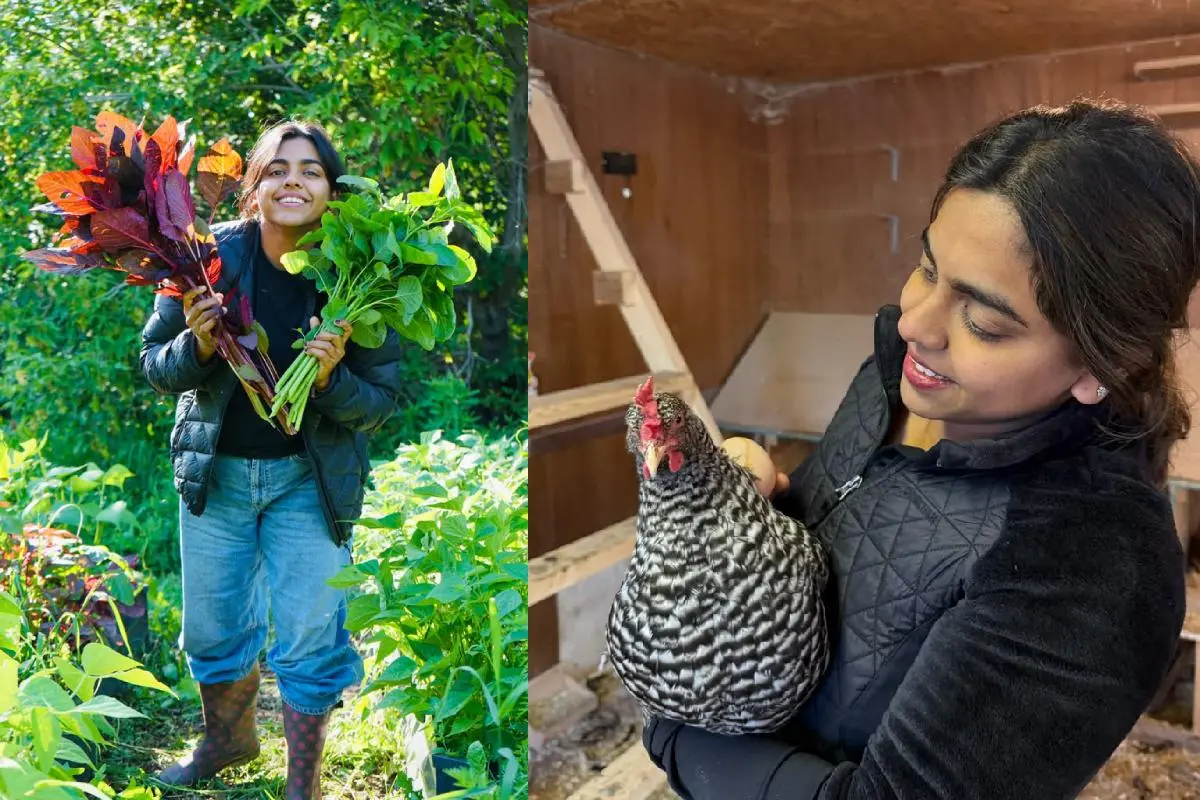
For Muhsina, farming is more than a hobby. Six years after moving from Kerala to Canada, the young Malayali woman continues to work in the IT sector while running a farm that produces organic vegetables and fresh eggs. With a heated greenhouse helping her overcome Canada's harsh weather, she has created a small agricultural space that brings together farming practices from Kerala and her adopted country.
One of the most unusual aspects of her farm is its poultry unit. While local regulations generally permit residents in the area to raise only 80 chickens, Muhsina obtained special permission to keep 186 birds. The poultry unit provides organic manure for her vegetable cultivation and supplies more than 100 fresh eggs a day.
From Kochi to Canada: A journey rooted in farming
Born and brought up in Kochi, Muhsina developed an interest in farming through her mother, who maintained a small kitchen garden and encouraged natural food habits. Her mother's death from cancer when Muhsina was in Class 12 was a turning point. She gradually turned towards a more natural lifestyle, with farming becoming an important part of it.
Her professional journey began with Infosys, followed by Tata Consultancy Services (TCS). However, her IT career never came in the way of her interest in agriculture. After marriage, she moved to Alappuzha, where she continued growing vegetables in the balcony and on the terrace of her home.
Six years ago, she moved to Canada with her husband, Thansil. There, she continued both her profession and farming. Interactions with local farmers helped her understand the Canadian soil and learn how to improve its fertility.
The high cost and limited availability of organic manure initially posed a challenge. She eventually decided to raise chickens, addressing the manure requirement while also creating a source of fresh eggs.
Kerala vegetables meet Canadian greens
Muhsina has set up a heated greenhouse to grow vegetables despite the cold Canadian climate. The farm produces familiar Kerala vegetables such as okra, tomatoes, ash gourd, spinach, beans and pumpkin. It also grows Canadian greens, including lettuce and spinach.
The main harvest season runs from June to October. She sells vegetables and eggs directly to customers and through Facebook Marketplace. Her produce has found buyers among both Malayalis and Canadian residents.
Her farming activities have also received considerable support from her family. Her husband and father-in-law built the greenhouse and chicken coop themselves, helping her avoid Canada's high construction costs. Her in-laws continue to support her work, with her father-in-law actively helping on the farm even at the age of 70.
An 88-year-old neighbour's lesson in farming
An elderly Canadian neighbour has been another major influence on Muhsina. At 88, the farmer continues to cultivate 40 acres of land, despite having financially successful children with high-paying jobs.
His commitment to farming has taught her the value of staying active and finding purpose in work, even in old age. She believes that remaining inactive can make people vulnerable to health problems and sees his approach to life as one of the important lessons she has learnt in Canada.
For Muhsina, working on the farm also offers physical and mental benefits. She says farm work with her family gives her more energy than exercising at a gym. While her IT job keeps her mentally engaged, farming helps her remain physically active.
Plans to expand the farm
Muhsina has so far funded the farm's greenhouses and basic infrastructure from her own income. She now hopes to expand vegetable cultivation to one acre and build more greenhouses in the coming years.
Her two children, aged four and one-and-a-half, are also growing up close to nature. She considers it important for them to understand where food comes from and the effort farmers put into producing it.
She also believes Kerala needs greater public participation in kitchen gardening and organic farming. Small efforts to grow pesticide-free vegetables at home can contribute to household food security, she says. Recognising and appreciating those who cultivate vegetables at home, even through small gestures, can encourage more people to take up farming.
This article is based on an original Malayalam feature written by Anu Devasia and published on Mathrubhumi.com.