Curious questions, notes and no phones: Kerala CM, ministers become students on Teachers’ Day eve
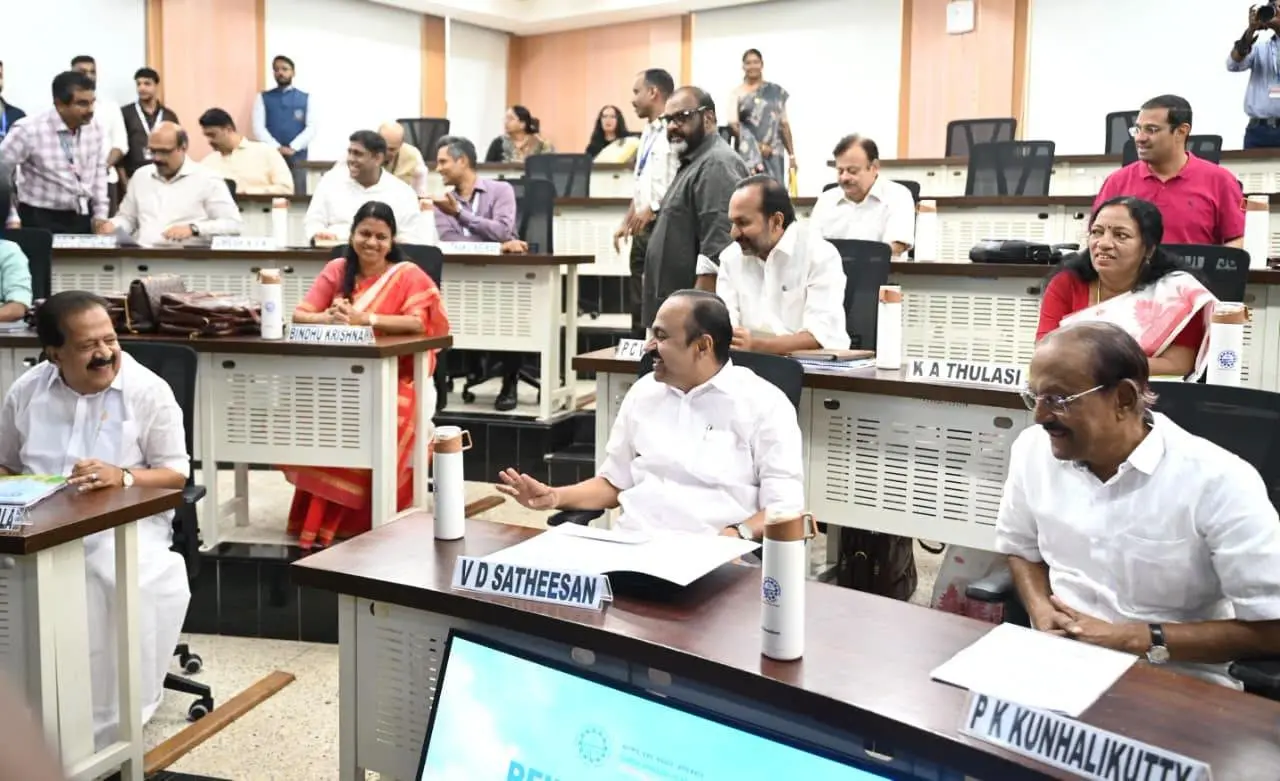
In a striking role reversal on the eve of India’s Teachers’ Day, Kerala’s political leaders traded their administrative desks for classroom benches. On Friday, Chief Minister V.D. Satheesan and twenty of his cabinet ministers arrived at the Indian Institute of Management Kozhikode (IIMK) for a unique two-day leadership school. There was no political grandstanding, no long speeches, and certainly no ringing mobile phones. For forty-eight hours, the rulers of the state became obedient students, listening to professors and taking diligent notes.
Fines and focused minds
The transition from powerful administrators to disciplined learners was swift. IIM Kozhikode maintains a strict academic code, and the visiting cabinet received no special exemptions. Anyone whose mobile phone rang during a lecture faced an immediate fine of one thousand rupees. To avoid any embarrassing penalties, most ministers chose to leave their devices outside with their personal staff.
Inside the lecture hall, the classroom dynamics were fascinating. Chief Minister V.D. Satheesan emerged as the star pupil, sitting with his notebook and carefully writing down key points. He asked serious questions throughout, focusing heavily on public health and disaster management. Meanwhile, Home Minister Ramesh Chennithala proved to be the most inquisitive student in class. Chennithala raised questions in every single session, earning applause from his peers for his keen interest.
Lessons for a changing state
The lessons were far from academic theories; they tackled real-world challenges. On their first day, the ministers sat through more than five hours of intense sessions. They studied artificial intelligence and governance with IIMK Director Debashis Chatterjee. They also discussed healthcare, ageing, and climate resilience with global experts.
During a session on climate adaptation by Professor Rajib Shaw of Japan’s Keio University, the discussion became lively. When Shaw explained that Japanese weather predictions are ninety-eight percent accurate, Minister T. Siddique pointed out that in Kerala, warning alerts often arrive only after a landslide has occurred. Yet, the interaction bore fruit, as Siddique secured a partnership with Keio University to help make Wayanad more climate-resilient.
The retreat concluded on Saturday, September 5, with the ministers receiving their official completion certificates. Swapping power for a pen, even for a short weekend, has given Kerala's leaders fresh perspectives to take back to their offices.