Congress broke tradition to elevate VD Satheesan; he built Team UDF from Opposition bench in Kerala
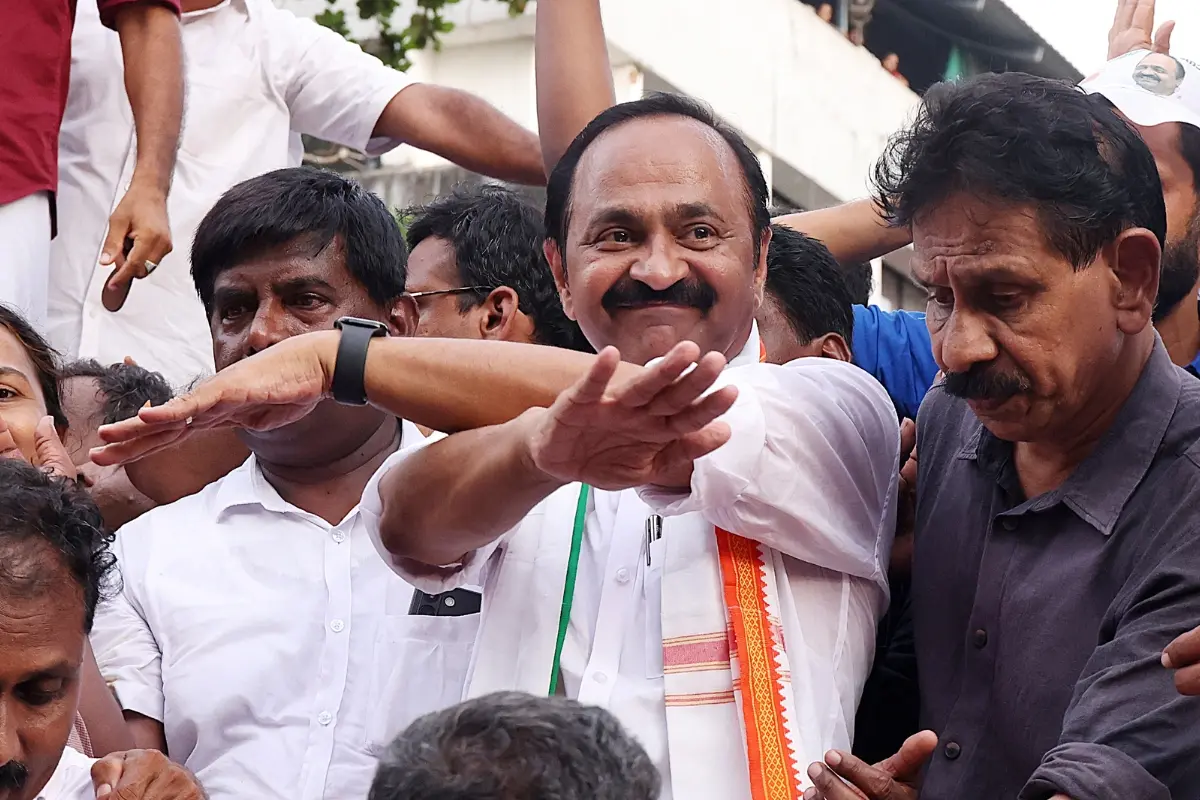
Celebrations have broken out across Kerala following the Congress High Command’s decision to appoint V.D. Satheesan as the state’s next Chief Minister. The 61-year-old leader, who faced an initial electoral defeat in 1996, led the United Democratic Front (UDF) to a historic 102-seat victory, successfully avoiding a self-promised “political exile”. His rise marks a significant departure from decades of traditional politics, signalling a generational shift within the Congress party.
From first-time failure to the state’s top job
The journey to the Chief Minister’s office began with a loss for Satheesan in the Paravur constituency in 1996. However, he eventually turned that seat into a personal stronghold, winning it for a sixth consecutive term in the latest election. Despite his growing reputation as a skilled debater and voracious reader, he remained outside the party’s central power circle for years, even being overlooked for a ministerial post in 2011.
His fortunes changed in 2021 after the Congress-led UDF suffered a heavy defeat. In a bold move, the Congress national leadership bypassed senior veterans to appoint Satheesan as the Leader of the Opposition (LoP). This decision followed a series of one-on-one meetings where a majority of newly elected MLAs expressed a desire for fresh leadership. This shift mirrored a similar change in 1967 when K. Karunakaran was elevated to lead the party.
A bold departure from traditional power plays
Upon taking charge as LoP, Satheesan broke with long-standing political customs in Kerala. Rather than seeking the public blessings of powerful caste and community leaders — a traditional first step for many senior politicians — he chose to maintain a strictly secular distance. He argued that while such organisations have every right to voice their opinions, they should not dictate political candidate selection or party affairs.
Inside the Congress party, he launched a direct assault on the factionalism that had divided the organisation for decades. He publicly challenged the dominance of internal power groups linked to senior figures, arguing that these rivalries were more damaging than any external political opponent. By focusing on merit and weakening these internal groups, he worked to transform the Congress from a collection of separate camps into a unified professional body.
Forging a united front through ‘Team UDF’
Satheesan’s most significant strategic change was the introduction of the “Team UDF” concept. This slogan was designed to give equal importance and space to all alliance partners, including the Muslim League and various Kerala Congress factions. By bringing rival leaders onto the same platform and reducing public infighting, he managed to rebuild morale among workers who had previously felt the party was a sinking ship.
He also revitalised the party’s grassroots structure. Instead of relying on high-profile roadshows alone, the party reactivated booth committees and assigned senior leaders direct responsibility for local-level progress. Satheesan himself spent the campaign criss-crossing the state to support local candidates rather than staying confined to his own safe seat.
Transforming the language of political opposition
The Chief Minister-designate also changed how the opposition functioned within the Assembly and the public sphere. He moved away from purely emotional or rhetorical attacks, opting instead for a policy-based approach. His team consulted experts to prepare alternative solutions for issues like healthcare, unemployment and the economy before launching public outreach programmes.
In the Assembly, his speeches were noted for being direct, sharp and backed by meticulous preparation. This style often forced multiple government ministers to respond to him at once. By positioning the Congress as a “real Left” alternative rooted in Nehruvian socialism, he was able to attract support even in traditional Left strongholds. His steady string of victories in by-elections and local polls since 2022 eventually built the credibility that led to the UDF’s record-breaking performance this year.