CMFRI launches mobile app to encourage public participation in marine fisheries research
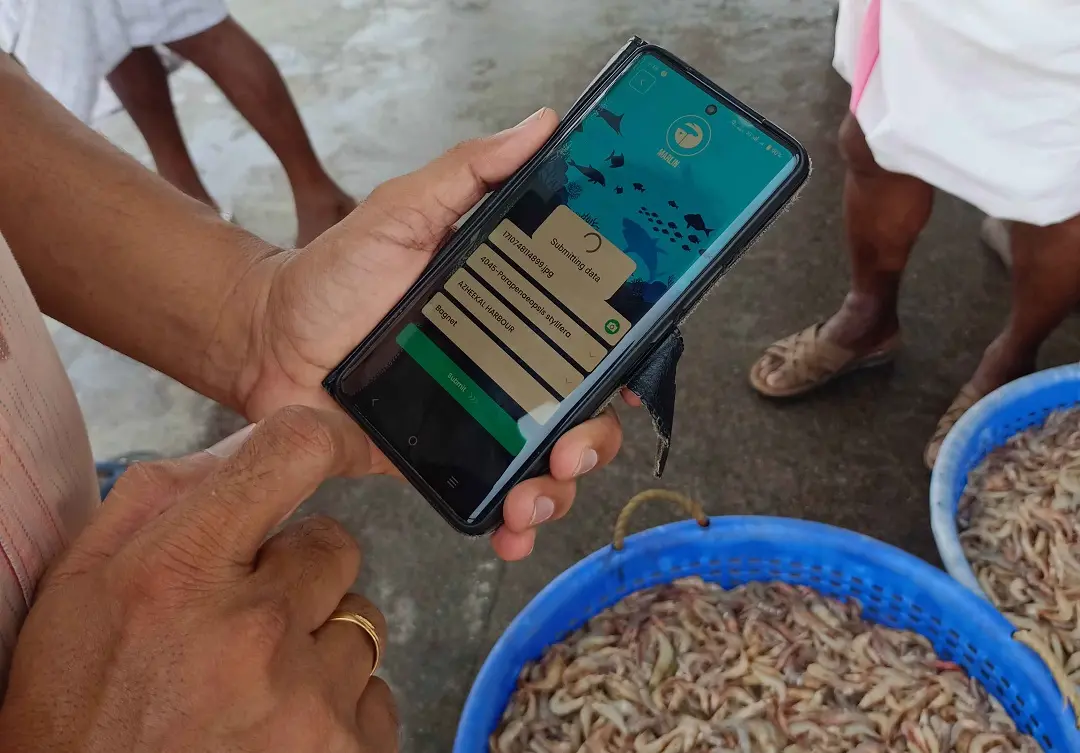
The ICAR-Central Marine Fisheries Research Institute (CMFRI) has launched an innovative mobile app 'MARLIN@CMFRI' to promote citizen science initiatives in marine fisheries research. This app, serving as a comprehensive media-sharing platform, is set to revolutionize marine fishery research, species identification, and assessment efforts within India's Exclusive Economic Zone (EEZ).
'MARLIN@CMFRI' enables the public to easily upload photos of marine fish species encountered in the vast expanse of the Indian EEZ, contributing to the development of a visually rich repository of marine fishery resources. Users are encouraged to provide species details, ensuring the scientific enrichment of the database and facilitating accurate species identification. This data will support the development of an advanced, AI-powered system for automated identification of marine fishery resources.
Geotagging is a crucial feature of this mobile app, allowing users to pinpoint the precise location where each marine species was landed. This enhances the accuracy of the database, providing vital information for researchers and conservationists studying the distribution patterns of various species within the Indian EEZ.
"The app serves as a collaborative platform bringing together individuals passionate about marine conservation," stated Dr A Gopalakrishnan, Director of CMFRI. By bridging the gap between citizen science and cutting-edge technology, 'MARLIN@CMFRI' empowers every user to contribute significantly to the understanding and preservation of marine biodiversity, he added.
The app was developed under a project led by Dr Eldho Varghese at the Fishery Resources Assessment, Economics and Extension division of CMFRI.
"The knowledge base generated by this application will lead to the creation of an automated system for estimating marine fish landings through visual images captured at landing centers, utilizing advanced AI-driven deep learning algorithms," Dr Eldho Varghese explained. PIB