Can R Sreelekha's resignation unsettle Kerala's first BJP-led Corporation? Numbers explained
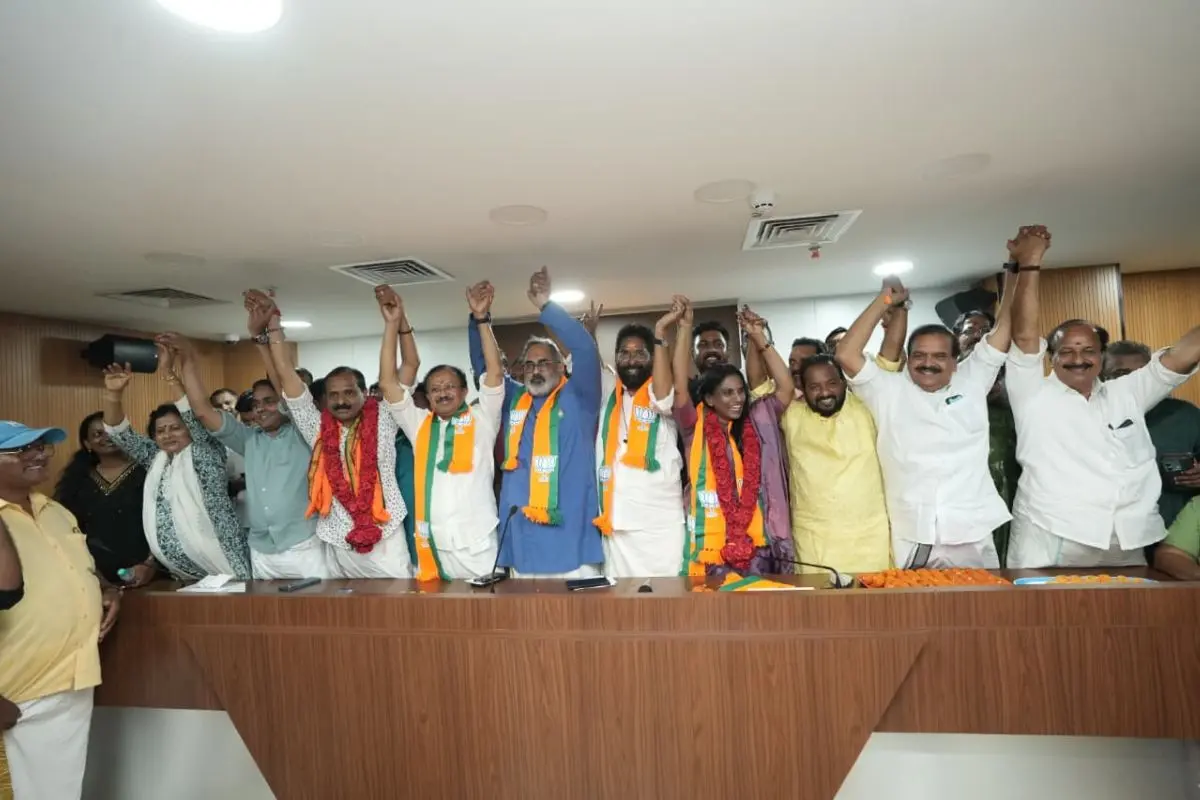
The BJP's control of the Thiruvananthapuram Corporation is facing a fresh numerical challenge after its councillor R. Sreelekha submitted her resignation, potentially stripping the ruling NDA of its absolute majority in Kerala's capital city.
Sreelekha, who represents Sasthamangalam ward, handed over her resignation to Mayor V.V. Rajesh on September 30. She has cited personal inconveniences as the reason for the decision. A copy of the resignation is expected to be submitted to the District Collector on October 5, according to party sources.
But the timing and the political background have put the focus on a larger question: what happens to the BJP's carefully balanced majority if Sreelekha's resignation is formally accepted?
The numbers behind the BJP's majority
The Thiruvananthapuram Corporation has 101 councillors. The BJP-led NDA came to power with 51 councillors, including the support of an Independent councillor.
Sreelekha's exit would bring the NDA's strength down to 50.
That is significant because 50 is one seat short of the halfway mark in a 101-member council. In other words, the BJP-led administration would no longer have the same numerical cushion with which it took control of the corporation.
The BJP itself would be left with 49 councillors, while the Independent councillor's support would take the NDA's stated strength to 50.
There is another complication for the ruling side. BJP councillor R. Sugathan, who represents Vazhottukonam, is currently in jail in connection with a case registered under the Kerala Anti-Social Activities (Prevention) Act (KAAPA).
The numerical position therefore becomes an immediate political issue, particularly if the opposition seeks to test the administration's support through a no-confidence motion.
Why Sreelekha's resignation has drawn attention
Sreelekha has publicly cited personal reasons for her decision. Mayor V.V. Rajesh has also said that her resignation letter referred to personal inconveniences.
The Mayor also said he did not see any pressure from another political party behind the move and rejected the suggestion that the resignation represented a controversy for the BJP-led administration.
However, reports have previously linked Sreelekha's dissatisfaction to the decision not to make her Mayor.
Sreelekha, a retired DGP and former IPS officer, had earlier said that she was brought into the electoral contest after being told that she would be considered for the Mayor's post. She had also expressed dissatisfaction over not being given the position.
That claim has become part of the discussion surrounding her resignation, although the stated reason in the resignation letter is personal inconvenience.
Her earlier public statements add another layer
There is also a notable contrast with Sreelekha's earlier public responses to reports of dissatisfaction within the BJP.
Whenever such reports emerged, she had publicly rejected claims that she was unhappy with the party. Through social media, she accused sections of the media of promoting false narratives for attention and said she remained proud to work for the BJP as a committed party worker, ward councillor and public servant.
She had also suggested that the reports were being circulated by people concerned about the BJP's growth in Kerala and reiterated that she was working in accordance with the party.
Her latest resignation has therefore revived questions that she had previously sought to dismiss publicly.
The reasons for the change, however, remain a matter of interpretation unless she provides a different explanation beyond the personal difficulties cited in her resignation.
What happens if she does not withdraw it?
The immediate issue is whether Sreelekha's resignation proceeds formally.
If she remains firm and the resignation is accepted, the BJP-led NDA would move from 51 seats to 50 in the 101-member council. The ruling side would consequently be one seat short of the halfway mark.
That does not automatically mean that the BJP-led administration falls.
The administration's survival would depend on the composition of the council at the time of any vote and the support available to it. The Independent councillor who has supported the NDA would remain particularly relevant to the numbers.
The opposition, meanwhile, has the option of seeking to test the ruling side's support through a no-confidence motion. The CPM-led LDF and Congress-led UDF are expected to examine that route if the resignation goes through.
Any such move would turn the corporation's arithmetic into a direct political contest.
Why the corporation matters to the BJP
The stakes are larger than one councillor's seat because control of the Thiruvananthapuram Corporation represents a major political milestone for the BJP in Kerala.
The party captured the corporation for the first time, ending decades of Left control of the capital city's civic body. V.V. Rajesh subsequently became Mayor, giving the BJP its first mayoral control of the corporation.
That makes the strength of the ruling council particularly important for the party as it seeks to consolidate its position in Kerala.
Sreelekha's departure, if formalised, would not by itself erase that political achievement. But it would change the arithmetic on which the administration was formed.
For a council that began with only a one-seat majority, even a single resignation has immediate consequences.
The political test ahead
For now, the key issue is not simply whether Sreelekha has submitted a resignation letter, but whether that resignation is formally completed and what follows in the council.
Mayor Rajesh has maintained that the BJP's position in the Corporation will not be affected and that the issues raised by Sreelekha can be addressed.
At the same time, the opposition has a clear numerical reason to scrutinise the development closely.
If Sreelekha leaves the council, the BJP-led NDA will have to operate without the absolute majority with which it took control of Thiruvananthapuram Corporation.
That makes the coming days important for the administration — not because a change of power is automatic, but because the margin for managing dissent, absences and floor tests will become narrower.
For the BJP, which regards control of Kerala's capital corporation as a landmark breakthrough, keeping that administration intact will now involve managing both the political concerns surrounding Sreelekha and the arithmetic of a 101-member council.