Master Mariner on Kerala ship mishaps: 'Maritime accidents are caused by chain of failures'
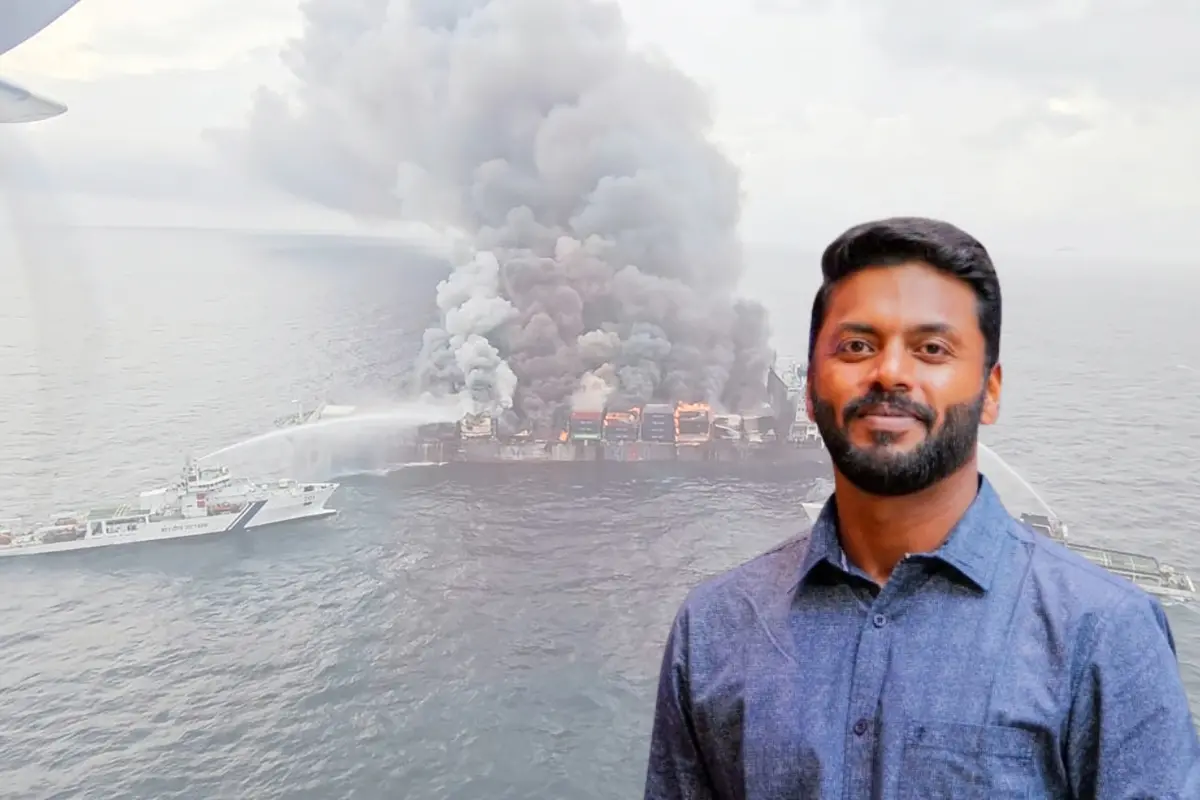
The Kerala coast has seen a worrying number of ship accidents recently. There have been three such cases in just a few weeks, which is raising serious concerns about maritime safety, the environment, and trade.
On Thursday morning, June 12, a fire started in a container on the MV Interasia Tenacity. This ship, which flies the Singapore flag, was heading towards Nhava Sheva port near Mumbai. The crew quickly told the Indian Coast Guard after seeing the fire around 8:40 AM in a single container on the ship's deck. Officials have confirmed the fire was put out without further damage.
This event happened just three days after another Singapore-flagged ship, the MV Wan Hai 503, caught fire on June 9 after a container exploded off the Kerala coast. That ship was on its way from Colombo to Mumbai when the fire began.
Before these incidents, on May 25, the MSC Elsa 3, a Liberian-flagged ship, sank about 14.6 nautical miles off Thottappilly, Alappuzha. This led to the loss of cargo and caused importers to take legal action.
In light of this concerning trend, Mathrubhumi English conducted an exclusive interview with Captain Tijo Joseph K, a Master Mariner in the Merchant Navy, to gather his expert views.
Excerpts from the interview:
1. How prepared are ships today to handle accidents like fire, flooding, or system failures while sailing near coasts like Kerala?
Compared to earlier times, ships today are better prepared to handle emergencies like fires, flooding and/or system failures. But we still have more scope for improvements and (International Maritime Organization) IMO is working towards bridging these gaps and improving the systems.
All ships are equipped with Fire detection systems, including cargo Hold smoke detection system and sensors which provides pre-warnings and alerts in case of a fire inside cargo hold (the designated area within a ship or aircraft where goods are stored and transported.). Fire alarm systems provided in the engine room and cargo spaces are activated based on these pre-warnings and alerts. These fire detection systems and firefighting equipment, including fire extinguishing medium, are regularly serviced as per flag State requirements and IMO guidelines to ensure proper and effective functioning. Port State Control inspections also concentrate on these equipment to ensure effective functioning. All crew on board Ships have either basic or advanced firefighting training ashore at regular intervals and follow up with routine drills on board as per (International Convention on Standards of Training, Certification and Watchkeeping for Seafarers) STCW requirements.
In the case of a container vessel, since they carry various types of hazardous cargo both inside cargo holds and on deck, the complexity of fire fighting is on a higher side. To add more to this if the cargo is not properly declared or mis-declared by the shipper, the severity increases as the firefighting procedure and emergency procedures adapted will not be for the actual cargo in the unit.
In case of a fire inside a container loaded inside a cargo hold, it is a bit difficult to access the area and fight the fire, in comparison to a cargo loaded on deck. There is a possibility of delayed detection as fires can smolder undetected for hours.
The age of a ship as well as the age/condition of the container used to carry the cargo plays a vital role in safe carriage without any fire incidents.
Ships are equipped with water-tight compartments to contain flooding. During the stage of construction itself, a proper damage control plan is formulated with various calculations and details to assist in case of a flooding incident. These damage control plan and booklet is kept in an easily accessible place on a ship. Ship are provided with water ingress alarm systems / bilge alarms system and console, to ensure pre-warning is received in case of any water ingress to cargo holds and bilges. All tanks and bilges on board are sounded on a daily basis to ensure no water ingress happens unnoticed. Ships are equipped with a dewatering system including ballast/ bilge pumps, associated pipelines and eductor systems.
A slight concern on container ships is the large, open cargo holds that are vulnerable if structural damage occurs, and ship starts taking in water. The water pumped in for extinguishing a major fire can also affect the stability of vessel as the cargo holds get filled with water.
New vessels are fitted with redundant navigation systems with backups available for GPS, Radar, AIS, ECDIS, etc. Various types of machinery including main engine and auxiliary engines, and few vital systems on board have backups or alternative power sources. All ships have Emergency generators which provide power if auxiliary engines fail.
A few limitations to point out is that older ships may not have up-to-date control systems or redundancies. Latest digitalization for navigation and cargo tracking means greater risk from cyberattacks.
To ensure proper and effective functioning of these systems on board various IMO regulations and strict international safety rules are in place. Ships undergo regular Port State Control inspections and terminal safety inspections in foreign ports. Ships are regularly surveyed and certified by Class and flag state requirements. Similarly, IMO is working towards improving the safety of container vessels by introducing measures like:
- Improved container fire suppression technologies
- Stricter hazardous cargo regulations
- More automated monitoring and AI-based early warning systems.
- Improved crew fatigue management for emergencies.
2. What kind of cargo-related mistakes can lead to mishaps at sea? Is misdeclared cargo a big concern in the industry?
Cargo-related mistakes are a major concern in the shipping industry and have been linked to some of the most devastating incidents at sea. Some of the major issues are:
- Packaging – damaged or non-compliant packaging, especially for heavy or dangerous goods is a real concern. The status of the container used for carriage is important as it may cause cargo spillage or container damage during rough seas, which may lead to fire, contamination, or reactions onboard.
- Cargo securing (Lashing) - Improper securing of containers or cargo inside containers pose a severe threat of cargo shifting during transit, leading to vessel instability. This may lead to loss of cargo to sea posing severe environmental risk.
- Wrong weight declaration - Incorrect weight (either under or over actual weight) directly affects ship stability. This can cause stack collapses, which may result in loss of cargo to sea, or listing of the vessel. Even though strict guidelines with respect to Verified Gross Mass (VGM) regulation are in place, which requires containers to be weighed before loading, there are few lapses found.
- Incorrect stowage and segregation - Dangerous goods not stowed according to compatibility can create chain reactions during fires or leaks.
- Temperature-controlled cargo failures - Perishable or hazardous materials requiring temperature control loaded into malfunctioning or unmonitored reefer containers, will cause damage to cargo, chemical instability in case of (International Maritime Dangerous Goods Code) IMDG units, which may end up as container fires.
- Misdeclared or undeclared dangerous goods - There have been instances where shippers intentionally or unintentionally label hazardous cargo as harmless goods to avoid extra fees or stringent transport regulations. This is a big danger, as proper precautions required during transit will not be followed due to lack of declaration, and in case of a fire, makes emergency response harder because the crew is unaware of the exact content of the cargo.
Some carriers now refuse certain cargo types or use AI screening to flag suspicious declarations. Introduction of Digital cargo tracking & AI is in place to reduce inconsistencies in declarations. Audits and inspections are in place to ensure stricter documentation enforcement.
3. Who is legally responsible if an accident happens—ship captain, company, or someone else?
Legal responsibility for a maritime accident depends on the cause based on the findings of the investigation. These are some possible scenarios:
- Ship Captain (Master) is responsible for safe navigation and operation of the vessel, overseeing safe loading, stowage and carriage of cargo, ensuring compliance with safety regulations and managing the crew. A Master is normally only held legally liable:
When there is evidence of gross negligence,
When safety procedures were not followed under his command,
When they fail to act in emergencies or do not report an incident.
- The shipping company (Owner/Operator) is responsible for hiring a competent crew and ensuring proper training, maintenance of the ship, safety equipment, and compliance with international regulations.
The ship owner is legally liable:
When the accident is traced to systemic failures like badly maintained vessels, inadequate training and improper management of crew.
When the company knew the risks but failed to act efficiently.
When they pressurise the captain to proceed in unsafe conditions.
- The cargo shipper or consignee is responsible for declaring cargo type, weight, and hazardous contents correctly. He has to ensure proper packaging and labelling standards are followed.
Cargo shipper is legally liable:
When cargo is misdeclared, improperly packed, or causes an onboard incident like fire/explosion.
Negligence or fraudulent documentation leading to damages or fatalities.
- Third parties (Charterers, port authorities, classification societies)
These parties may also bear partial liability basis the final findings of an investigation by Flag State, Port state and National courts:
Charterer: If they issue unsafe voyage instructions.
Port or terminal: If improper loading occurred under their supervision.
Classification society: If they incorrectly certified an unseaworthy vessel.
4. Sometimes, media reports blame captains immediately. How accurate is media reporting in such cases?
A Captain is the face of a vessel, and is usually the first one to blame, but accidents are often caused by a chain of failures—technical, human, environmental, or organizational, and only a detailed investigation spread over weeks/months can clarify root causes. Initial media reports are useful for basic awareness, but they should not be fully relied upon for accurate fault attribution due to various reasons like:
- Lack of Maritime expertise with respect to ship operations, shipping-related international regulations, or chain-of-command protocols.
- Misinterpretation of technical language or shipboard procedures is also a possibility.
- Certain major incidents may not only be due to human error or negligence but can be due to lack of proper maintenance procedures, misdeclared cargo, or even software/system faults.
Sometimes certain headlines are created basis above points to create an impact among the common news-reading public, but this might not be the actual reason. The root cause of an incident is identified through investigations led by the flag state and classification societies. Voyage Data Recorders (VDRs), logs, and crew interviews are examined. Legal responsibility is carefully assigned after assessing all contributing factors—company policy, equipment failure, regulatory compliance, etc. It is always advisable to await official maritime investigation reports for the full picture.
5. What’s the biggest misunderstanding people have about how a ship is navigated or operated?
One big misunderstanding often heard is that the Captain alone "drives" the ship all the time, like a car driver. But in reality, ship navigation and operations are far more complex. It is a team effort with multiple roles and advanced systems.
The ship is usually navigated at sea by deck officers (Chief mate, Second mate, Third mate) who work in shifts (watchkeeping). The captain supervises, makes key decisions, and is informed during critical or emergency situations, but does not steer all day. He navigates the ship during arrival and departure from ports and during critical legs or during heavy traffic. Modern ships use autopilot and integrated navigation systems (like ECDIS—Electronic Chart Display and Information System). The officer sets courses, monitors radar and AIS (Automatic Identification System), and adjusts for weather, traffic, and other factors. Manual steering (via helm) is used mainly during port entry, departure, or emergencies. Otherwise, ships are guided via autopilot along pre-planned routes. Propulsion, power, and many critical systems are handled by the engine department, led by the Chief Engineer. Navigating officers and engine team work independently but must coordinate closely. When entering/leaving port, a local harbor pilot often boards the ship to assist with navigation. The captain still retains legal command, but the pilot advises based on local knowledge.
Few other misconceptions are:
- "Ships can stop quickly" – Ships need miles to slow down or change course, unlike cars or planes.
- "GPS does all the work" – GPS helps, but officers must still interpret weather, currents, traffic, and human error.
6. With more ships passing near Kerala, especially with Vizhinjam becoming a major port, do you feel the region is ready to handle maritime emergencies?
The recent maritime incidents off Kerala coast, including the sinking of MSC ELSA 3 and the fire aboard MV Wan Hai 503, have highlighted the region's need for robust emergency preparedness, especially as Vizhinjam Port emerges as a maritime hub.
Indian Coast Guard (ICG) has set up a jetty at Vizhinjam, enhancing rapid deployment capabilities for surveillance and rescue operations. This facility is strategically located near international shipping lanes, enhancing coastal security and improving response times. Following the MSC ELSA 3 incident, the ICG was able to immediately deploy ships and aircraft equipped with pollution control equipment to contain oil spills, demonstrating a proactive approach to environmental hazards.
Even though Vizhinjam Port has advanced facilities, the rapid increase in maritime traffic necessitates continuous upgrades to emergency response infrastructure and personnel training.
Local communities, particularly fishermen, have expressed concerns over safety and environmental impacts. Effective communication and involvement of these stakeholders are crucial for comprehensive emergency preparedness.
Kerala has made considerable strides in enhancing its maritime emergency response capabilities, particularly with the development of Vizhinjam Port and associated infrastructure. However, the recent spate of maritime incidents indicates a need for ongoing assessment and strengthening of emergency preparedness measures. This includes investing in advanced monitoring systems, expanding response teams, and fostering community engagement to ensure the safety and resilience of the region's maritime activities.
7. Does the increasing traffic off the Kerala coast make your job as a captain more difficult or risky?
Ship traffic along Kerala coast is now twice as that was five years ago. Fishing boats and smaller craft operate in the same corridors, increasing collision risk. The opening of Vizhinjam Port adds a new layer of complexity. The rise in maritime density—amplified by the Vizhinjam Port—makes your job more challenging than ever. The need for precision, technological awareness, and strict compliance is higher. Yet, it's not all downside: improved port infrastructure, better surveillance, and increased regulatory oversight all support safer operations. If you're operating here, expect more intense traffic management, greater situational awareness demands, and frequent coordination with coastal authorities. But you also benefit from rising standards and tools designed to reduce risks—especially if you're proactive and well-prepared. Regulatory directives signal heightened awareness: vessels must report armed guards on board when within 50 nm of the coast, acknowledging dense fishing activity and potential security incidents.
8. How does the international nature of shipping (foreign flag, crew, etc.) complicate or delay legal action in India?
When a foreign-flagged ship with a multinational crew is involved in an incident near Kerala, or anywhere in Indian territorial waters, the path to legal accountability becomes significantly more tangled and time-consuming.
Under the Admiralty (Jurisdiction and Settlement of Maritime Claims) Act, 2017, High Courts can arrest foreign vessels present in their territorial waters (up to 12 nm) to secure maritime claims—covering collisions, environmental harm, injury, cargo damage, unpaid dues, etc. Once arrested, the vessel owner must post security or allow the court to proceed “in rem”—a claim against the ship itself rather than personally. But if the vessel sails away, Indian jurisdiction can’t be enforced, forcing claimants into international coordination or maritime lien over sister ships.
The flag state (e.g., Liberia, Singapore) holds primary responsibility for investigating incidents and enforcing regulations via SOLAS, MARPOL, COLREGs, etc. Indian authorities act as Port State control, inspecting non-compliant foreign vessels in port. They can detain ships for deficiencies, pollution issues and crew welfare, and can initiate legal proceedings but can’t override flag-state jurisdiction entirely. If foreign claimants pursue legal action abroad—in the flag state or another forum—Indian courts may refuse jurisdiction.
The international nature of shipping, flag states, foreign crew and overlapping legal systems creates natural roadblocks. Yet India can act decisively through arrest mechanisms, port-state control, and strategic litigation. Timely action and clear coordination between domestic and international entities are essential to overcome procedural hurdles and get to the resolution.
9. Do you think incidents like recent mishaps will damage Kerala’s image or progress as a global shipping hub?
Environmental disasters like the MSC ELSA 3 spill, leaking oil and chemicals, immediately attract global media attention and environmental scrutiny as international shipping companies and insurers closely monitor emergency readiness.
While these incidents pose a reputational challenge, they don’t outweigh Vizhinjam’s rapid rise as an efficient, deep-water, transshipment gateway. Vizhinjam Port hosted MSC Irina, one of the world’s largest container ship, signaling advanced capacity and modern infrastructure.
If the response is quick, transparent, and companies are compensated, this can reinforce Kerala’s image as a responsible port-state, strengthening confidence.
But perceived delays, hidden risks, or unresolved pollution could dent trust, especially among eco-conscious clients.
With focused crisis management, regulatory reforms, and environmental accountability, Kerala can emerge more credible and globally competitive, turning temporary setbacks into long-term strengths.