Attukal Pongala on March 3: Know rituals, legend and global gathering of devotees
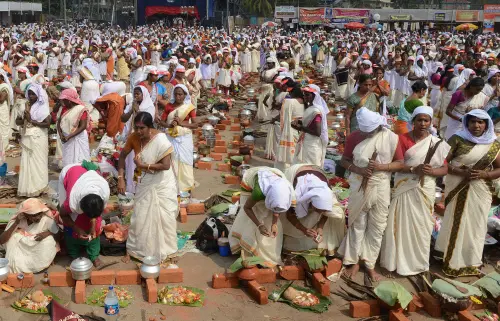
Thiruvananthapuram: The Attukal Pongala festival, celebrated at the Attukal Bhagavathy Temple and often called the ‘Sabarimala of women’, is set to take place on March 3 this year. Preparations for the grand festival, which attracts millions of women devotees from across India and abroad, are nearly complete.
The temple is located at the confluence of the Karamanayar and Killiyar rivers, just two kilometres from Thiruvananthapuram city. Attukal Pongala is renowned as one of the largest annual gatherings of women devotees in the world, drawing devotees to offer Pongala, a traditional ritual of devotion and self-surrender to the goddess.
Festival significance and legend
Attukalamma, the presiding deity of the temple, is regarded as the mother form of Adiparashakti, Sreebhadrakali, and is also revered in forms such as Kannaki and Annapoorneshwari. The festival falls on the Karthika day of the Kumbham month (according to the Malayalam calendar), when devotees throng the city to offer Pongala and seek blessings from the Bhagavathy.
According to temple legend, the Mullaveettil Tharavad was the principal family in the Attukal area. One day, while the Karanavar family (head) was bathing in the Killiyar river, a mysterious girl appeared and requested to be taken across at 6 o’clock. After assisting and bringing her home, she vanished. That night, the Karanvar dreamt that the girl was Parashakti, the divine mother, who instructed him to build a temple at the spot she marked with her trident. This site became the Attukal Bhagavathy Temple, bringing prosperity to the region.
Rituals and cultural importance
Pongala, derived from the word ‘ponguka’ meaning “to boil over”, is celebrated as an offering to appease the goddess. Scholars link Attukal Pongala to the legend of Kannaki Devi, who is believed to have burnt the city of Madurai with her eyes in fury; the ritual of Pongala was offered to console her. The festival also honours the goddess in her form as Mahishasuramardini, the slayer of the demon Mahishasura, symbolising the destruction of evil.
Devotees perform the Pongala ritual with strict adherence to tradition. Observing a fast is considered essential, with many devotees maintaining a week-long period of abstinence from fish, eggs, and meat, consuming only vegetarian meals, bathing twice daily, and observing purity of mind and body. On the day before Pongala, devotees traditionally eat only once. Frequent visits to the temple in the lead-up to the festival are also part of the spiritual preparation.
Global gathering of women devotees
Attukal Pongala is unique in its scale, drawing millions of women from across Kerala, India, and abroad. Streets around the temple are transformed into a sprawling sacred kitchen, where women cook offerings in clay pots on makeshift hearths. The festival embodies devotion, equality, and spiritual empowerment, celebrating the divine feminine in Hindu tradition.
Also Read| Heading to Attukal Pongala 2026? Know these key railway changes in Thiruvananthapuram
As Attukal Pongala 2026 approaches, Thiruvananthapuram prepares to host one of the world’s largest annual gatherings of women devotees, reaffirming the temple’s status as a major cultural and religious landmark in Kerala.