'Three years ago this was impossible': Yogendra Yadav on anti-Modi anger at July 20 protest
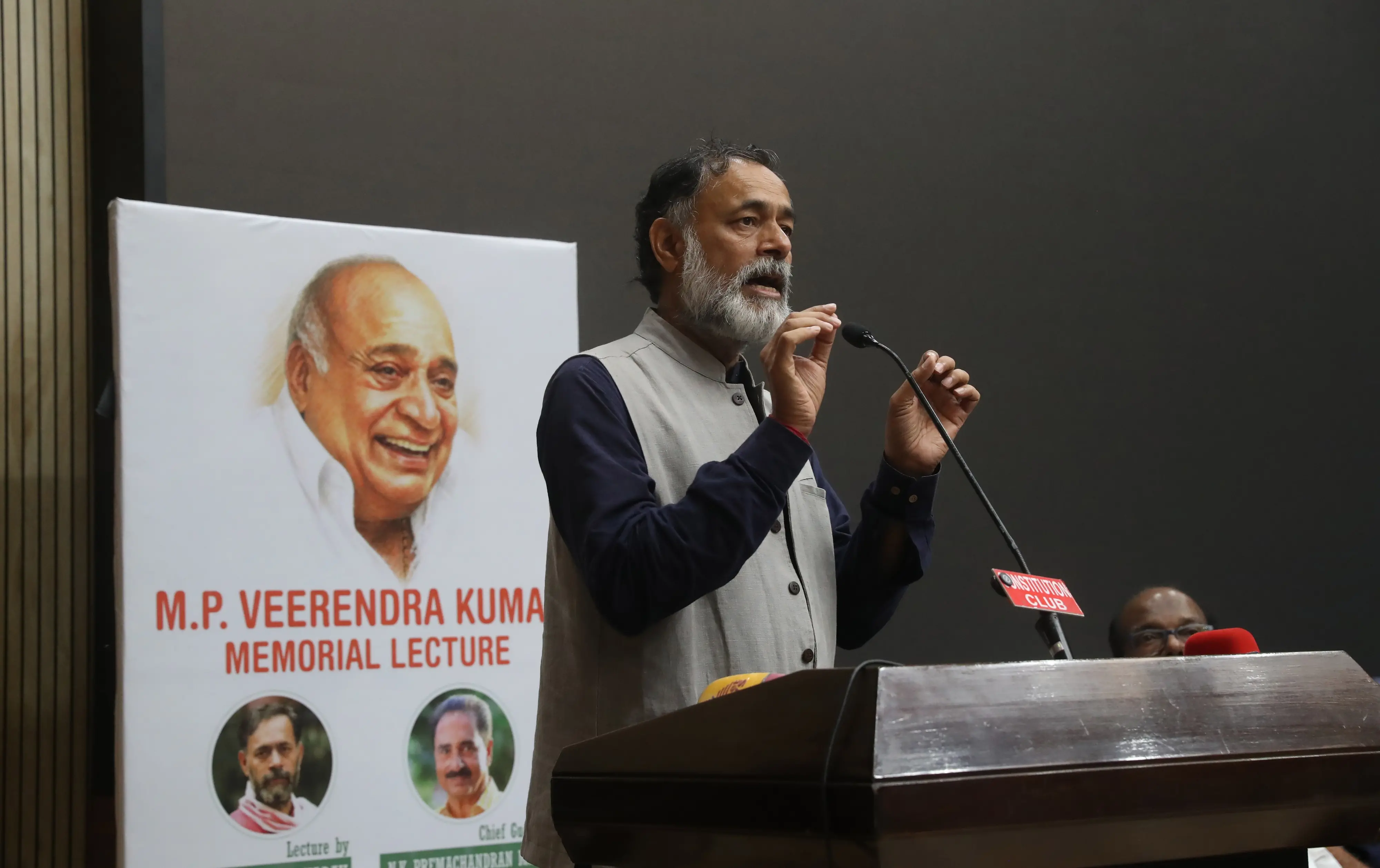
New Delhi: Political activist Yogendra Yadav has said he was taken aback by the level of public anger directed at Prime Minister Narendra Modi during the July 20 protest at Delhi's Jantar Mantar, describing it as something he could not have imagined even three years ago.
Speaking at the M.P. Veerendra Kumar Memorial Lecture on Wednesday, Yadav said the language used by protesters reflected a sharp change in India's political mood and symbolised what he called the emergence of a new phase of public resistance.
"I could not imagine these words being spoken about the prime minister even three years ago. Three years ago this would have been impossible. The kind of anger that you see there—that is what resistance looks like," Yadav said.
ALSO READ | Yogendra Yadav says strength of Jantar Mantar protest lies in its organic nature, not numbers
Without repeating the slogans he heard during the protest, Yadav said he was struck by the intensity of public frustration and viewed it as evidence of a shift in the country's political landscape.
Referring to the July 20 march, Yadav claimed the turnout was far larger than organisers had anticipated.
"We thought perhaps 10,000 or 15,000 people would come. The drone images suggested the crowd was well over one lakh," he said.
He argued that the protest stood apart from conventional political demonstrations because participants mobilised themselves rather than being brought in through party networks.
"These were not blind followers. These were young men and women who came on their own, spent their own money, and in many cases didn't even tell their parents they were travelling to Delhi.”
Yadav said many young protesters travelled to Delhi at their own expense, some without informing their families, while others walked from New Delhi Railway Station after transport restrictions disrupted access to the protest venue.
'Youth know education no longer guarantees jobs’
Yadav linked the mobilisation to growing dissatisfaction among young people over education and employment.
He argued that students increasingly believe the existing education system is unequal and no longer guarantees meaningful employment after graduation.
"This generation is smarter than ours. They know that a degree today does not necessarily mean a livelihood. They understand the education system is discriminatory and is failing to provide either knowledge or jobs," he said.
According to him, that frustration has evolved into demands for the right to equal and quality education and the right to employment.
Says government response backfired
Yadav also criticised what he described as the government's handling of dissent, alleging that attempts to suppress protests had strengthened the movement instead of weakening it.
He referred to measures such as surveillance, media blackouts and the detention of activists, including Sonam Wangchuk, claiming these actions generated greater public sympathy and encouraged larger participation.
Calling it a "calculation gone wrong", Yadav argued that efforts to curb the movement had instead intensified public resentment.
While acknowledging that the protests expressed anger towards those in power, Yadav said the movement should eventually focus on broader institutional reforms rather than limiting itself to demands against individual ministers.
Describing the current phase as a "politics of resistance", Yadav said he did not necessarily view it as the immediate end of what he termed "electoral autocracy", but as an important step towards "reclaiming the republic."