Women’s Reservation Bill: How Lok Sabha numbers add up and what delimitation may alter
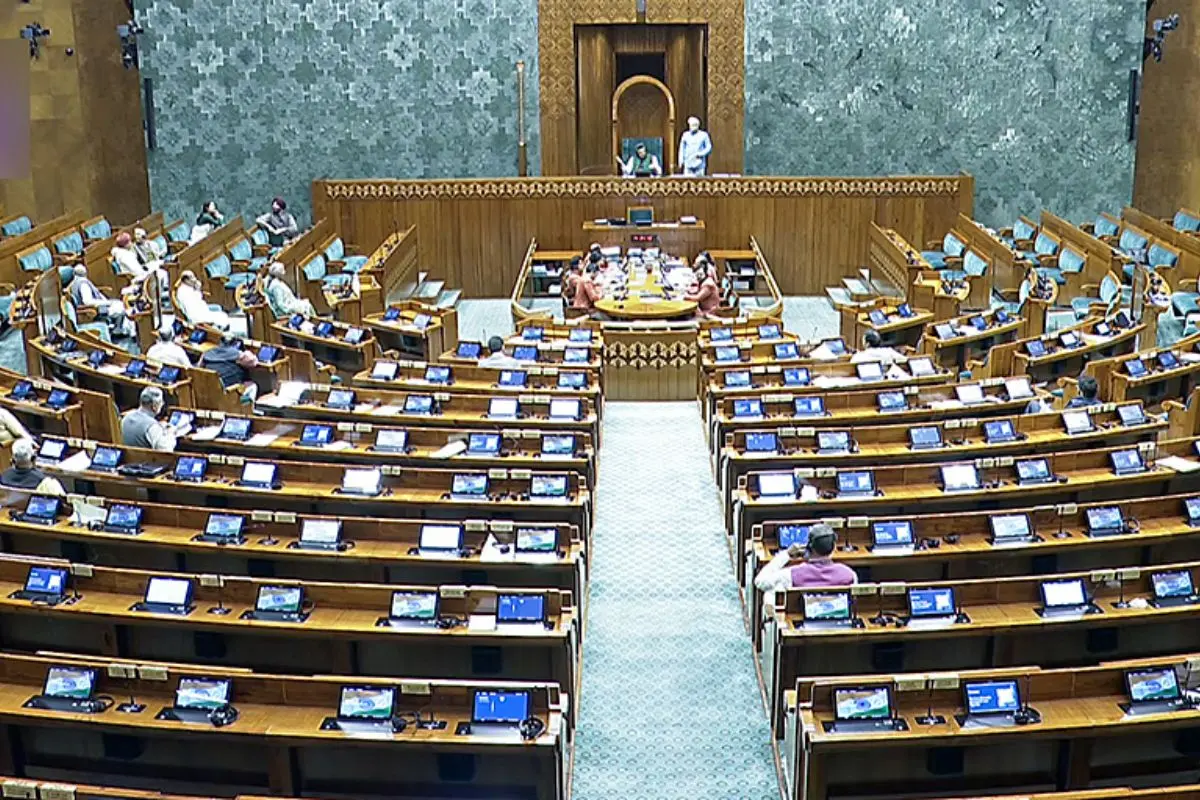
New Delhi: The Centre is set to push forward discussions on the Women’s Reservation Bill, formally known as the ‘Nari Shakti Vandan Adhiniyam’, during the special session of Parliament, reigniting debate around representation, delimitation, and political balance across states.
Touted as a landmark step towards women’s empowerment, the Bill proposes reserving 33% of seats in the Lok Sabha and state legislative assemblies for women.
Prime Minister Narendra Modi described the move as a “historic step”, emphasising that respect for women reflects the nation’s values.
However, beyond the symbolism, the legislation has opened up complex questions around electoral arithmetic, constituency redrawing, and regional representation.
What the Bill proposes and why it matters
The Women’s Reservation Bill seeks to amend the Constitution to mandate one-third reservation for women in Parliament and state assemblies.
If implemented, it would significantly alter the composition of India’s legislative bodies, marking the first time such a quota is enforced at the national level.
Under current projections, the Lok Sabha, presently capped at 543 seats, is expected to expand to nearly 850 seats following delimitation. Within this enlarged House, approximately 283 seats would be reserved for women.
While the Bill was passed in 2023 in the new Parliament building, its implementation is tied to the next delimitation exercise, which will be conducted after the Census scheduled for 2027.
This effectively pushes the rollout timeline to around 2034, unless legislative changes are made to fast-track the process.
The delay has become a key point of political contention, with critics arguing that linking the quota to delimitation postpones actual empowerment.
Delimitation: The real battleground
At the heart of the debate lies delimitation, the process of redrawing constituency boundaries based on population changes.
Mandated under Article 82 of the Constitution, delimitation has historically been carried out after each Census.
However, the number of Lok Sabha seats has remained frozen since 1976, when the 42nd Constitutional Amendment suspended seat revision to maintain a balance between states with varying population growth rates.
The Centre has now proposed a fresh delimitation exercise, alongside a Bill to establish a Delimitation Commission.
The panel is expected to be headed by a former Supreme Court judge, with representation from the Election Commission.
The government maintains that delimitation is essential to implement the women’s quota while preserving proportional representation. It has also clarified that no state will be disadvantaged.
Yet, opposition parties remain sceptical. Critics argue that population-based seat redistribution could disproportionately benefit northern states with higher population growth, potentially reducing the relative representation of southern states.
This concern has triggered strong reactions, particularly from southern political leaders. Tamil Nadu Chief Minister MK Stalin has openly protested the move, warning that it could weaken the voice of southern states in Parliament.
The issue has, therefore, evolved beyond gender representation into a broader debate on federal balance and political equity.
Numbers game: Can the Bill pass?
Passing a constitutional amendment requires a special majority, at least two-thirds of members present and voting in both Houses of Parliament.
In the Lok Sabha, with an effective strength of 537 members, the two-thirds mark stands at 360. The ruling NDA, with 293 MPs, falls short by 67 seats.
In the Rajya Sabha, the required number is 163, while the NDA’s strength of over 142 leaves it short by 21 members.
Despite these gaps, the government remains confident of securing the numbers, pointing out that most parties support women’s reservation “in principle”.
However, the opposition has drawn a clear distinction between supporting the quota and endorsing its linkage with delimitation.
Congress leader Jairam Ramesh has accused the government of “packaging” delimitation under the guise of women’s reservation.
He argued that the opposition’s position remains unchanged: reserve one-third of the existing 543 Lok Sabha seats for women, along with sub-quotas for SC, ST, and OBC women, without waiting for delimitation.
Further complicating the numbers, regional parties like the Biju Janata Dal (BJD) and Bharat Rashtra Samithi (BRS), which previously extended issue-based support, have adopted a more cautious stance.
This makes parliamentary arithmetic unpredictable, especially if abstentions or walkouts alter the effective majority threshold.
A reform with political ripple effects
While the Women’s Reservation Bill is widely seen as a progressive reform, its implementation framework has turned it into a politically sensitive issue.
For the government, the Bill represents a global benchmark in gender inclusion and a defining legislative milestone.
For the opposition, however, the linkage with delimitation raises concerns about long-term political consequences and regional imbalance.
As Parliament debates the proposal, the outcome will not only determine the future of women’s representation but also reshape India’s electoral map.
The coming discussions are expected to clarify whether the Bill will emerge as a unifying reform or deepen existing political and regional divides.