Why Indian Standard Time will be sole official reference and what it means for businesses, citizens
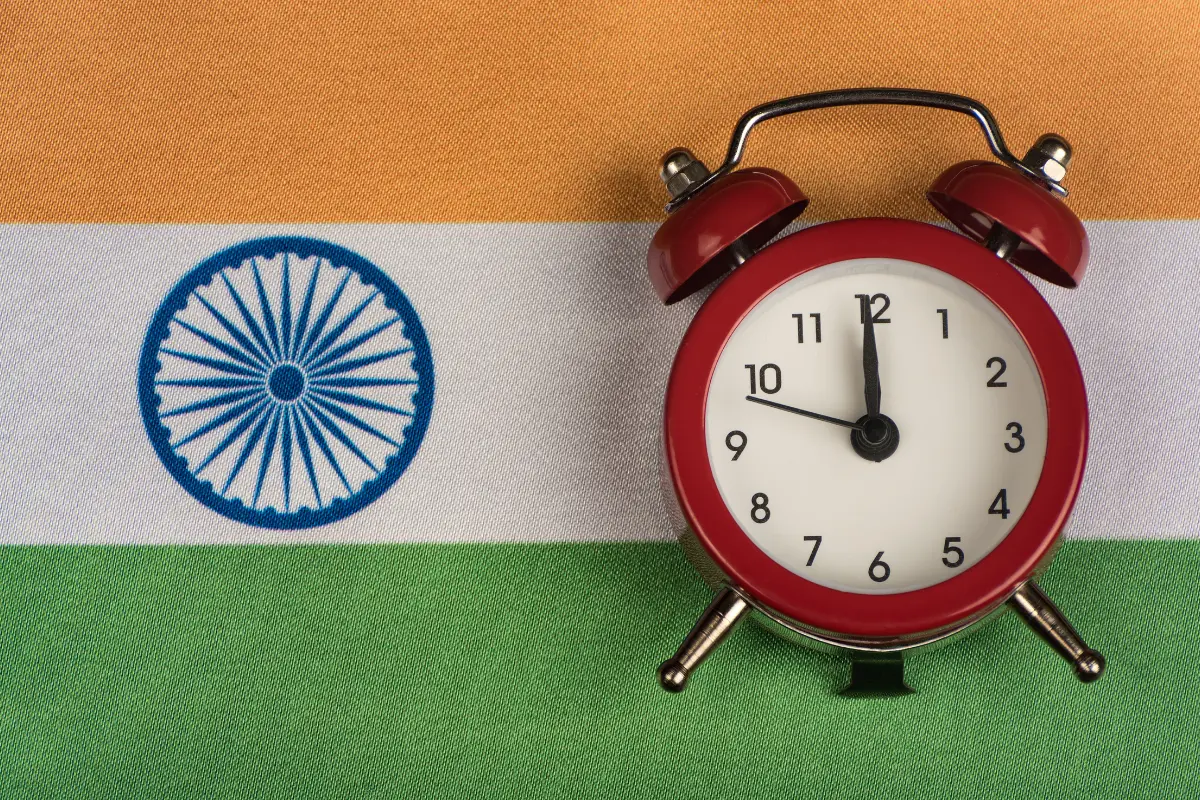
Clocks across India are set to sync to a single, secure home-grown time source under a sweeping legal reform designed to fortify the nation's digital economy.
The Department of Consumer Affairs has officially notified the new Legal Metrology (Indian Standard Time) Rules, 2026. This landmark policy, issued on 27 August 2026, establishes Indian Standard Time (IST) as the country's sole official time reference for legal, administrative, and commercial purposes.
Currently, many critical networks rely on foreign satellite-based systems. The new framework aims to eliminate this external dependence while smoothing out inconsistencies that can disrupt modern digital life.
What are the new rules actually changing?
Starting 180 days from their publication in the Official Gazette, the rules require all government departments, businesses, and institutions to align their systems to the official IST. This buffer period gives organizations time to adjust their technology.
At its heart, the policy targets digital synchronization. In a modern economy, a fraction of a second matters. Diverse networks currently pull time from different satellite coordinates, causing tiny, troublesome differences. These discrepancies can scramble digital payments, disrupt telecommunication signals, and complicate transport logs. Under the new law, every critical system must sing from the same hymn sheet.
It is a massive technical shift. The rules cover everything from banking transactions and mobile networks to train schedules, power grids, and legal records. Emergency services will also rely on this unified clock to improve response coordination.
Why is India moving away from foreign time sources?
India is building its own timing infrastructure to secure its digital sovereignty. Right now, many of the country's most vital systems rely on foreign satellites to keep time. This reliance creates a vulnerability the government wants to close.
By using NavIC, India's own satellite navigation system, along with other approved domestic timing sources, the nation will operate on an highly secure and independent clock. This change is part of the government’s wider "One Nation, One Time" initiative.
To make this happen, the government is developing a specialized dissemination network across Indian laboratories and institutions. This includes a highly successful technology demonstration network launched in July 2026 at the Regional Reference Standard Laboratory in Bengaluru. The Bengaluru hub proved that IST can be securely and accurately distributed across immense distances to sectors like banking, telecom, and digital governance.
Who will be responsible for setting up the system?
Implementing this nationwide standard is a joint effort involving several of India’s top scientific and regulatory bodies. The Ministry of Consumer Affairs, through its Department of Consumer Affairs, is leading the legal rollout.
On the technical side, the National Physical Laboratory (CSIR-NPL) and the Indian Space Research Organisation (ISRO) are lending their expertise to secure time dissemination. Regulators and service providers, including the Securities and Exchange Board of India (SEBI), the National Stock Exchange (NSE), and Bharat Sanchar Nigam Limited (BSNL), are also actively involved. A successful pilot run has already demonstrated secure time-sharing between the Bengaluru laboratory and the NSE in Chennai.
For the average citizen, the change will happen quietly behind the scenes. Your mobile network, banking apps, and railway bookings will simply become more reliable and tightly coordinated. Meanwhile, businesses and government offices have exactly 180 days to review their technical systems and implement the updates.