West Bengal opinion poll: Can BJP form government for 1st time on May 4?
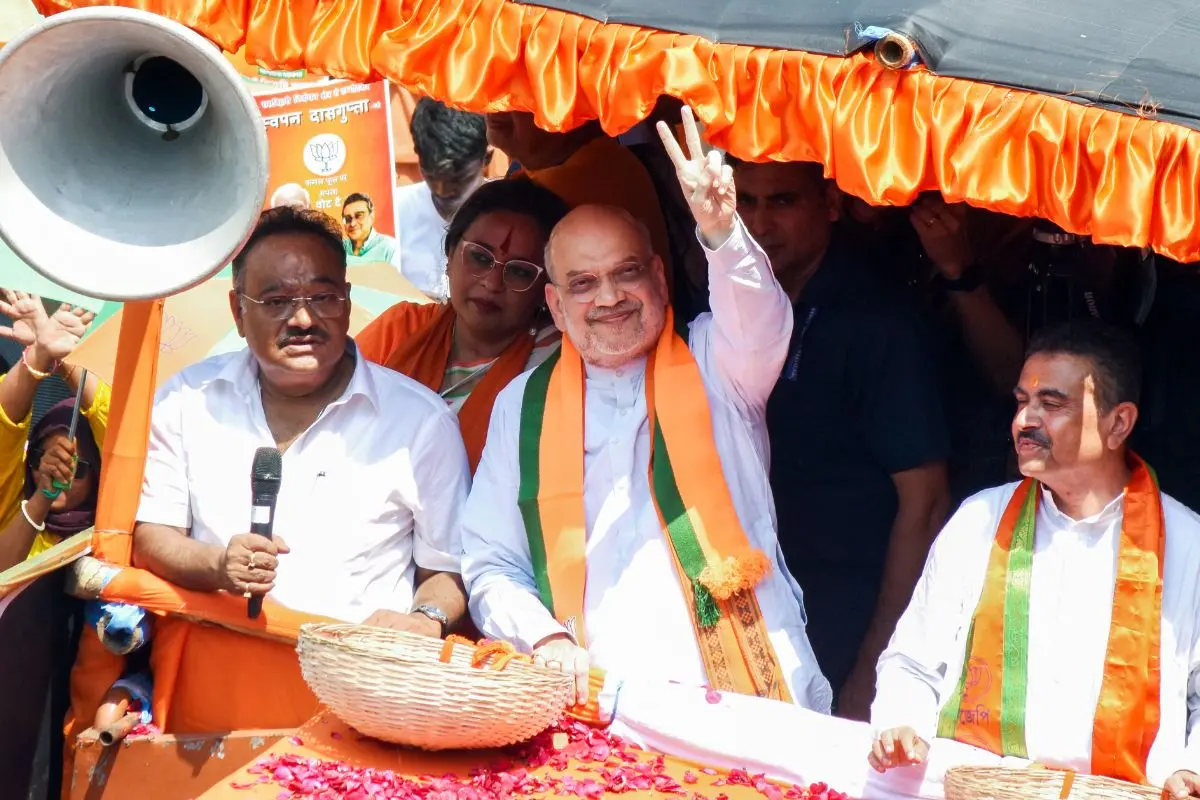
As West Bengal heads into the crucial 2026 Assembly elections, fresh opinion polls indicate a tightly contested battle between the ruling Trinamool Congress (TMC) and the Bharatiya Janata Party (BJP).
While Chief Minister Mamata Banerjee’s party appears to retain an edge, multiple surveys suggest that the BJP is poised to significantly improve its performance, raising the question of whether it can script a historic breakthrough in the state.
Surveys project TMC ahead, BJP narrows gap
According to a recent IANS-Matrize opinion poll, the TMC is projected to win between 155 and 170 seats in the 294-member Assembly, while the BJP could secure 100 to 115 seats.
This marks a notable rise for the BJP compared to its earlier tally, reinforcing its position as the principal challenger in Bengal.
Another survey by Vote Vibe–CNN-News18 suggests a stronger showing for the TMC, predicting 184–194 seats, with the BJP likely to win 98–108 seats.
However, even in this scenario, the BJP’s numbers indicate sustained growth and consolidation of its voter base.
More recent polling trends hint at an even closer contest. An ABP News–Matrize survey estimates the TMC at 140–160 seats and the BJP at 130–150 seats, pointing towards a potential hung Assembly scenario.
Such projections have fuelled speculation that the BJP could come closer than ever to power, even if it falls short of a majority.
North Bengal, urban belts key for BJP gains
- Constituency-level trends suggest that the BJP is likely to maintain or gain an edge in several pockets of north Bengal, including Alipurduar, Cooch Behar, Jalpaiguri, and parts of Darjeeling, along with strong performances in border districts like Nadia and North 24 Parganas, and urban-industrial belts such as Asansol, Durgapur and parts of Howrah, where anti-incumbency and organisational strength are working in its favour.
- In terms of vote share, the gap between the two parties appears narrow. Surveys show the TMC hovering around 43–45%, while the BJP is close behind at 41–43%, indicating a highly competitive electoral landscape.
- Despite these gains, the BJP still faces significant hurdles. Polls consistently show Mamata Banerjee as the preferred chief ministerial candidate, with around 48.5% support, compared to BJP leader Suvendu Adhikari’s 33.4%.
This leadership advantage remains a crucial factor working in the TMC’s favour.
Political analysts note that while the BJP has expanded its footprint, especially in north Bengal and urban pockets, converting this into a majority remains challenging due to the TMC’s strong grassroots network, welfare schemes, and consolidation of minority votes.
At the same time, the evolving electoral dynamics suggest that the BJP’s rise is no longer marginal.
Some surveys even indicate that its seat tally could cross the 100-mark comfortably, a significant leap that would mark its strongest-ever performance in the state.
The broader takeaway from the opinion polls is clear: while a fourth consecutive term for the TMC remains the most likely outcome, the BJP is narrowing the gap and turning the contest into a high-stakes battle.
The possibility of a fractured mandate or last-minute shifts cannot be ruled out.
With polling scheduled in two phases on April 23 and April 29 and results due on May 4, the final verdict will ultimately depend on voter turnout, alliances, and campaign momentum in the closing days.
For now, the opinion polls suggest that while the BJP may not yet be on the brink of forming government, it is closer than ever to making a historic dent in West Bengal’s political landscape.