Vijay promises relief to farmers, but is it really possible?
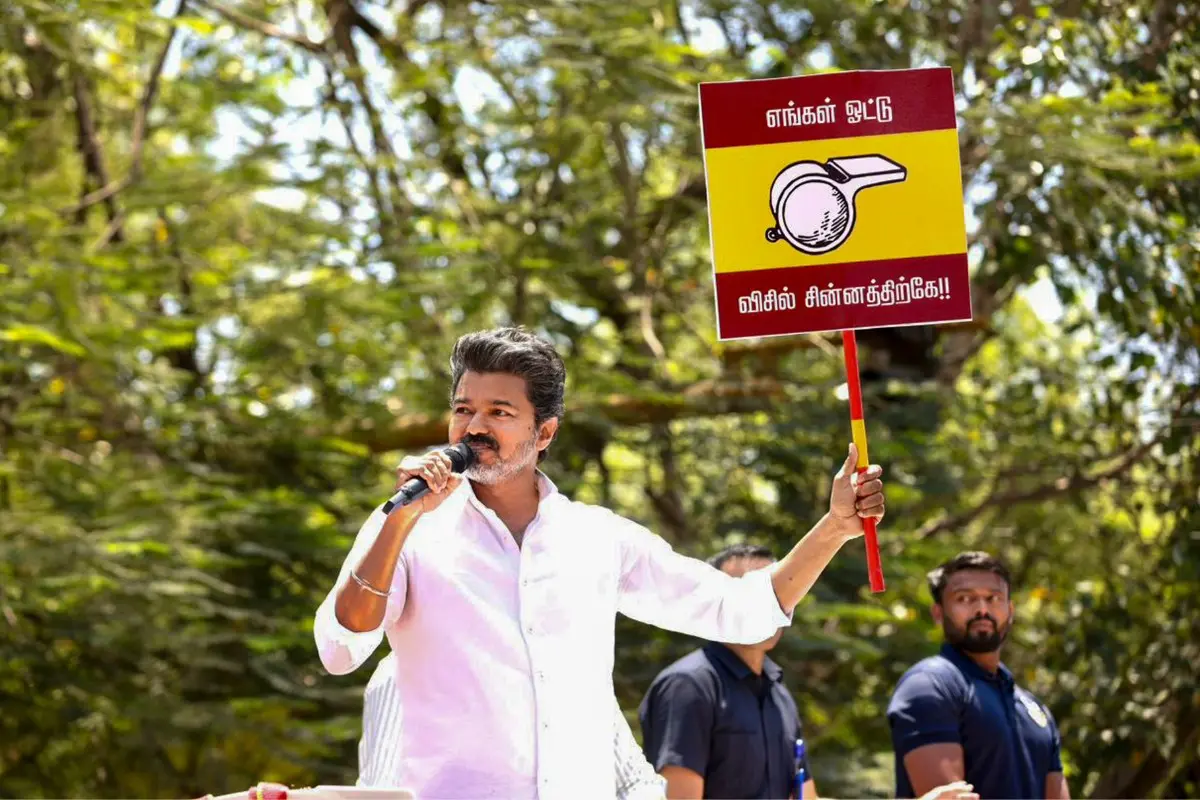
Chennai: A recent promise by Tamilaga Vettri Kazhagam (TVK) leader Vijay that crop loans of farmers would be waived if his party comes to power has triggered a debate over its practicality.
Officials from the cooperative sector have expressed doubts about whether such a commitment can be implemented effectively under current financial conditions.
Officials question viability of loan waiver
Cooperative department officials said that fulfilling such a promise would be difficult given the financial structure of agricultural lending. They explained that cooperative banks and societies do not operate solely on their own funds. Instead, they borrow from the National Bank for Agriculture and Rural Development (NABARD) and extend loans to farmers using deposits collected from the public.
While acknowledging that loan waivers can benefit economically weaker farmers, officials pointed out that such schemes often extend benefits to wealthier borrowers as well. This, they said, leads to inefficient use of public money.
Impact on cooperative societies
Officials further noted that governments usually do not reimburse cooperative societies immediately after announcing loan waivers. Instead, the repayment is made in instalments spread over five years.
This delay creates financial strain on cooperative institutions, as they continue to face repayment obligations to higher lending agencies while waiting for government compensation.
Past experiences have shown that staggered reimbursements can reduce the availability of funds within cooperative banks, affecting their ability to issue fresh loans to farmers .
RBI guidelines add further constraints
To address such issues, the Reserve Bank of India issued directions in 2024 stating that governments should not release loan waiver compensation in instalments. Instead, the entire amount should be paid in one tranche within 45 to 60 days.
Officials said that if this condition is not met, the outstanding loan amount would continue to remain in the borrower’s bank account, complicating the financial position of lending institutions.
State finances a key concern
Officials also highlighted that several state governments, including Tamil Nadu, are already facing financial constraints. Under such conditions, arranging the full waiver amount within a short period of two months would be highly challenging.
This, they said, is one of the reasons why the ruling DMK did not include a crop loan waiver promise in its election manifesto.
Background of loan waivers in India
Crop loan waivers have long been used as a policy tool in India to provide relief to farmers, especially during periods of distress. However, experts often caution that such measures can place a significant burden on state finances and disrupt the credit cycle if reimbursements are delayed.