Vijay Diwas: Revisiting India’s bravery in saving Bangladesh from Pakistan amid present row
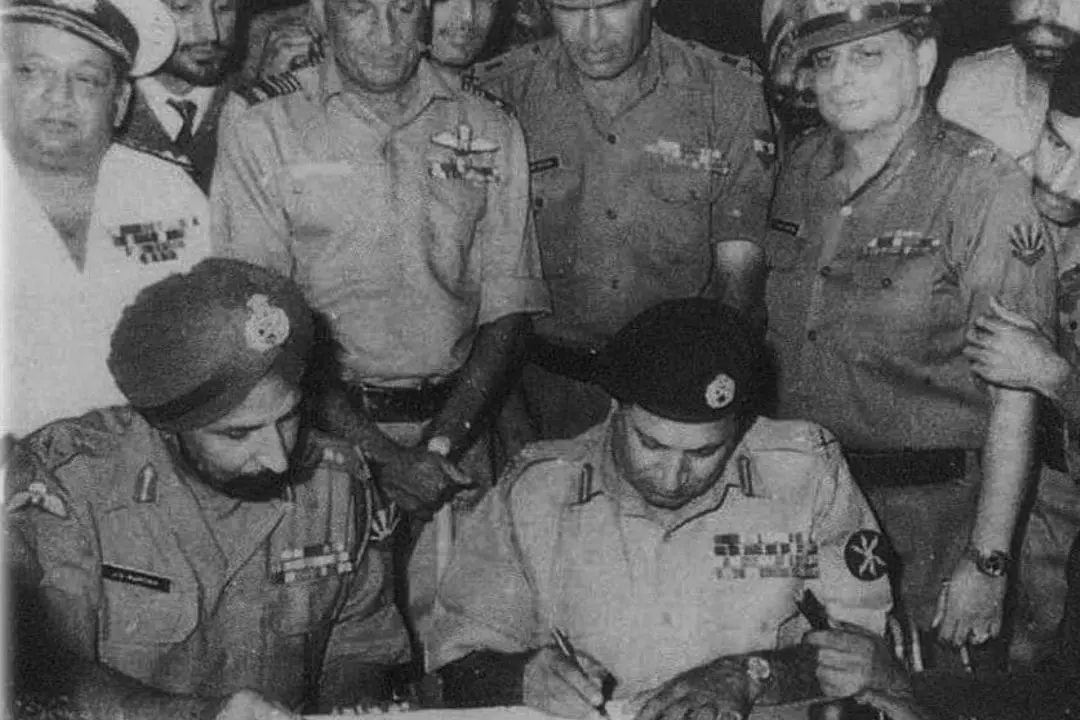
India celebrates Vijay Diwas on December 16 every year to remember the bravery and sacrifices of soldiers who fought in the 1971 war. This day marks India’s victory over Pakistan, which led to the creation of Bangladesh. It serves as a tribute to the soldiers whose courage and ultimate sacrifice continue to inspire every Indian.
The 1971 Indo-Pak War and Its Legacy
The war was a response to the widespread genocide committed by Pakistan’s military regime under General Yahya Khan in East Pakistan (now Bangladesh). India entered the war to stop the oppression and support the people of East Pakistan in their fight for independence. Over the course of the 13-day conflict, around 3,900 Indian soldiers died, and 9,851 were wounded.
The war, fought on both the Eastern and Western fronts, saw India’s military display remarkable strength and strategy. The Southern Command, tasked with defending India’s borders, became a symbol of resilience, with notable battles like the famous battle of Longewala. Here, Indian troops destroyed Pakistan’s armoured forces against overwhelming odds. Operations like the raid on the Pakistani town of Chachro, led by Lt. Col Bhawani Singh, and the capture of Parbat Ali, became part of India’s military history, highlighting the grit and determination of Indian soldiers.
A Day of Reflection and Strain in Relations
This year’s Vijay Diwas celebrations are set against a backdrop of political tension. There have been reports of violence against Bangladesh’s Hindu minority following the ousting of former prime minister Sheikh Hasina’s Awami League regime in a student-led uprising. Hasina fled the country and took refuge in India, while the interim government of Muhammad Yunus has denied any major communal violence.
In response, political analysts in Dhaka have pointed out that the exchange of veterans’ visits this year underscores the lasting friendship between India and Bangladesh, forged during the 1971 war. Indian External Affairs Secretary Vikram Misri’s visit to Dhaka earlier this month, where he met with senior Bangladeshi officials, helped ease tensions. The ongoing exchange of veterans is seen as an important step in improving bilateral ties.
Celebrating Shared History and Friendship
Both India and Bangladesh observe December 16 as a day of celebration. In India, Vijay Diwas is an annual occasion to remember the soldiers’ bravery. In Bangladesh, it is celebrated as Victory Day, marking the day Dhaka became the capital of a free nation. The celebrations are often marked by the participation of war veterans and serving officers from both countries, who come together to commemorate the sacrifices made during the 1971 war.
These annual visits offer a platform for Mukti Jodhas (Liberation War veterans) and Indian war veterans to celebrate the unique bond shared between India and Bangladesh. The Indian High Commission in Dhaka noted that these exchanges renew memories of the shared sacrifices made by both countries in the pursuit of Bangladesh’s freedom.
Beyond Military Victory: A Commitment to Justice
Vijay Diwas is not only about celebrating military success but also about honouring India’s commitment to justice and humanitarian values. The 1971 war demonstrated India’s ability to respond decisively to aggression, while also standing up for the oppressed. The war reinforced India’s position as a regional power and underscored the importance of military preparedness and strategic diplomacy. For Bangladesh, Victory Day is a time to reflect on their independence, with the crucial assistance from India.