Uttarkashi landslide: How does cloudburst trigger mudslide?
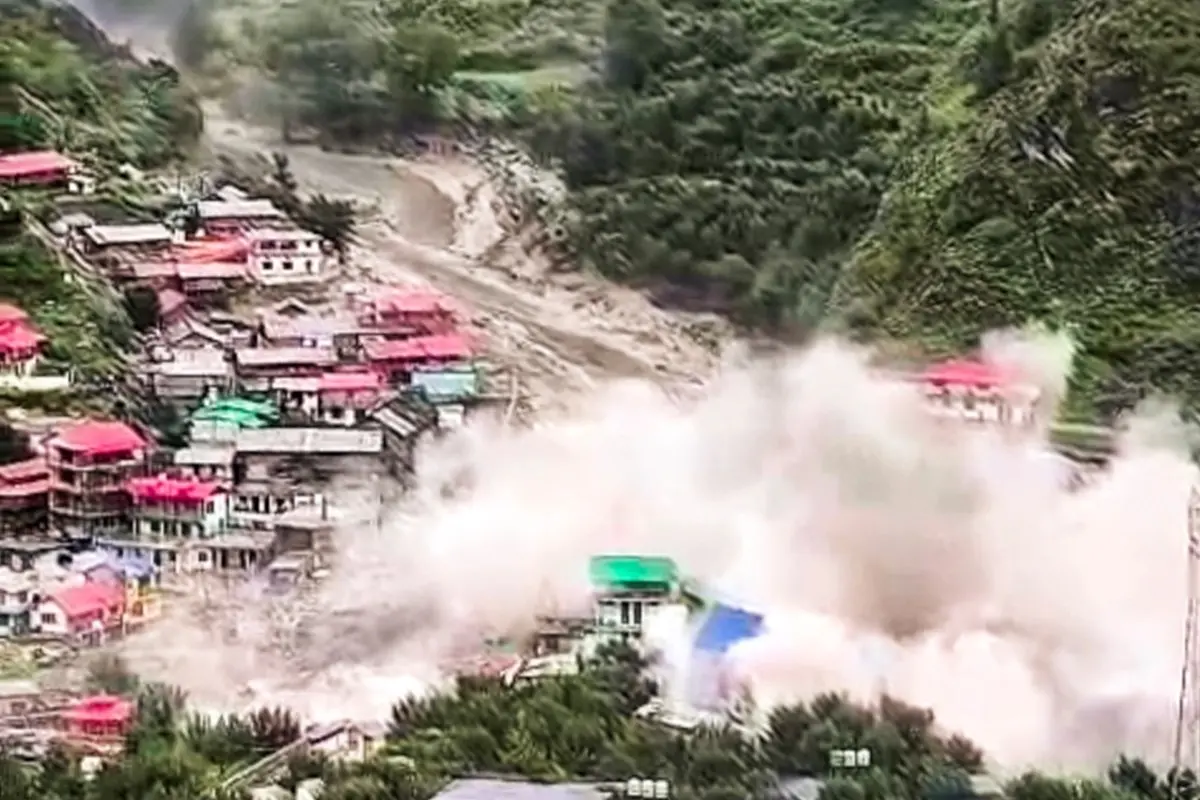
A cloudburst in the high-altitude region of Uttarakhand's Uttarkashi district on Tuesday triggered a devastating chain reaction of flash floods and landslides, leaving behind widespread destruction in Dharali village, a key stopover on the route to Gangotri.
According to local residents, the cloudburst occurred in the catchment area of the Kheer Ganga river, releasing a sudden torrent of water that swept through the mountain village. Several houses were damaged or completely washed away by the violent surge, while rescue operations continue amid fears of people being trapped under debris. Authorities are still assessing the full scale of the damage.
How does cloudburst trigger landslide?
Cloudbursts, by nature, are highly concentrated and extremely intense rain events, dumping over 100 mm of rainfall in an hour over a small area. In mountainous regions like Uttarkashi, such intense precipitation can quickly overwhelm the landscape, setting the stage for landslides. Here's how the chain of destruction unfolds:
1. Extreme saturation of soil
The ground in hilly areas cannot absorb such rapid rainfall. As the water saturates the soil, all the natural pores between rock and soil particles fill up, reducing the soil’s ability to hold itself together.
2. Loss of cohesion and friction
Normally, the stability of a slope is maintained by the friction between soil particles and the binding action of plant roots. During a cloudburst, the sheer volume of water acts like a lubricant, reducing this friction dramatically. The soil becomes loose and unstable.
3. Increased weight of the slope
As the ground becomes saturated, its weight increases significantly. This extra weight, combined with the loss of friction and cohesion, puts immense pressure on the slope. The force of gravity, which is constantly pulling the material downhill, now becomes much stronger than the slope's ability to resist it.
4. Debris flow and flash floods
The sudden deluge of water from the cloudburst creates a powerful surface runoff, often leading to flash floods. This fast-moving water picks up loose soil, rocks, trees, and other debris, turning it into a destructive, high-viscosity mudflow. This debris flow acts as a powerful bulldozer, carving out the mountainside and triggering a landslide by pushing and carrying away everything in its path.
5. Destruction along the path
The force of the flash flood also rips out vegetation and tree roots, which normally help hold soil together. Once these natural anchors are gone, the slope becomes even more unstable, heightening the risk of further landslides in the coming days.
Why the mountains are so vulnerable
In places like Uttarkashi, the combination of steep slopes, fragile geology, and frequent extreme weather events makes the terrain especially vulnerable. A single cloudburst can initiate a disaster chain, leading to catastrophic flash floods, landslides, road collapses, and loss of life.