Centre cites new CPCB report, says Ganga was fit for bathing during Kumbh
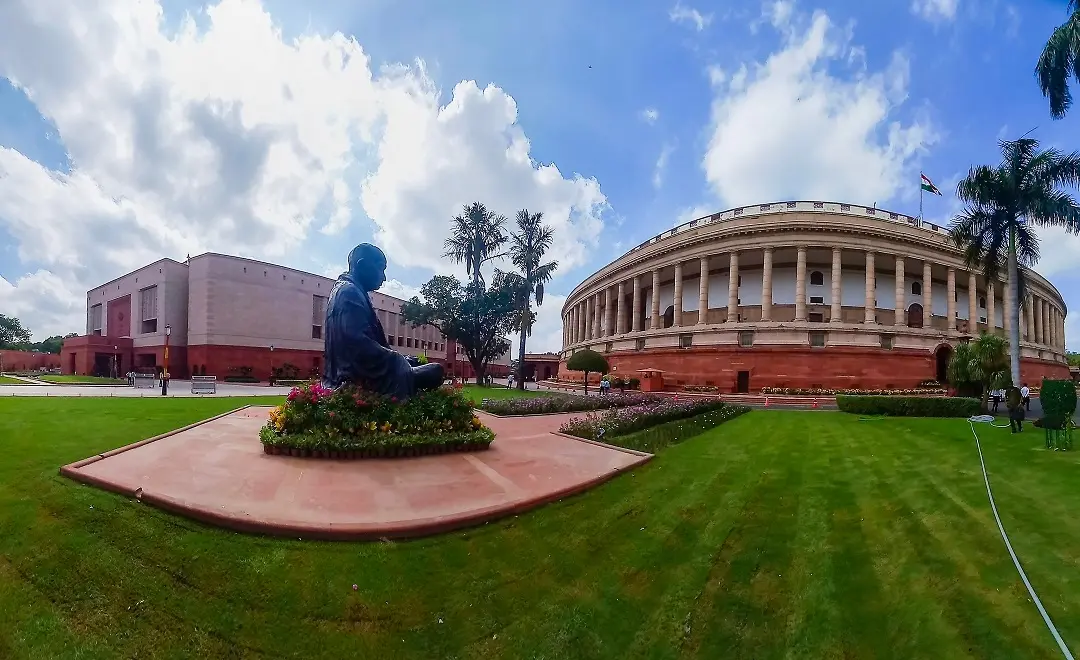
New Delhi: The central government on Monday told Parliament that the water in the Ganga at Triveni Sangam in Prayagraj was fit for bathing during the recently concluded Maha Kumbh, citing a new report from the Central Pollution Control Board (CPCB).
Triveni Sangam is the confluence of the Ganga, Yamuna, and Saraswati rivers.
The government also stated that it had allocated a total of Rs 7,421 crore to the National Mission for Clean Ganga (NMCG) for the river's cleaning in 2022-23, 2023-24, and 2024-25 (until March 9).
Responding to a question from Samajwadi Party MP Anand Bhadauria and Congress MP K Sudhakaran, Union Environment Minister Bhupender Yadav said that as per the CPCB report, key water quality indicators—pH, dissolved oxygen (DO), biochemical oxygen demand (BOD), and faecal coliform (FC)—were within permissible limits for bathing at all monitored locations.
DO measures oxygen levels in water, BOD indicates organic matter decomposition, and FC signals sewage contamination, making them critical for assessing water quality.
Earlier report flagged contamination concerns
In an earlier report submitted to the National Green Tribunal (NGT) on February 3, the CPCB noted that water at several locations in Prayagraj did not meet primary bathing water quality standards due to high faecal coliform levels. However, in a revised report submitted on February 28, the CPCB stated that statistical analysis showed the water quality was fit for bathing.
The latest report highlighted the variability of data, explaining that differences in samples collected from the same locations on different dates or spots on the same day meant individual readings did not fully represent the overall river water quality.
NGT-directed water quality monitoring
The NGT had earlier directed regular water quality monitoring of the Ganga and Yamuna during the Maha Kumbh in the case of "Kamlesh Singh vs State of Uttar Pradesh & Others" on December 23, 2024. Following this order, the CPCB conducted water quality monitoring at seven locations, from Shringverpur Ghat (upstream of Prayagraj) to Deehaghat (downstream), twice a week.
Monitoring, which began on January 12, covered auspicious bathing (Amrit Snan) days, with an initial report submitted to the NGT on February 3, detailing findings from January 12 to 26, 2025. The report also included data from 10 sewage treatment plants (STPs) in Prayagraj and seven geosynthetic dewatering tubes (geo-tubes) used for filtration.
Expanded monitoring and wastewater treatment
From February 21, the CPCB expanded monitoring to 10 locations and began testing twice daily to improve data accuracy.
The Uttar Pradesh government installed 10 STPs to ensure treated wastewater met environmental standards before being discharged. Seven geo-tubes were deployed as a temporary measure to treat wastewater from 21 untapped drains. Additionally, three prefabricated temporary STPs with a capacity of 500 kilolitres per day (KLD) each and three faecal sludge treatment plants with a total capacity of 200 KLD were set up in the mela area.
Yadav said the UP Jal Nigam used advanced oxidation techniques to prevent untreated wastewater from entering the Ganga.
To accommodate pilgrims, a sufficient number of toilets and urinals were installed across the mela area, along with strategically placed dustbins with liner bags for waste disposal, he added.
With PTI inputs