Top leadership detained; Can CJP’s Delhi protest survive without its key voices?
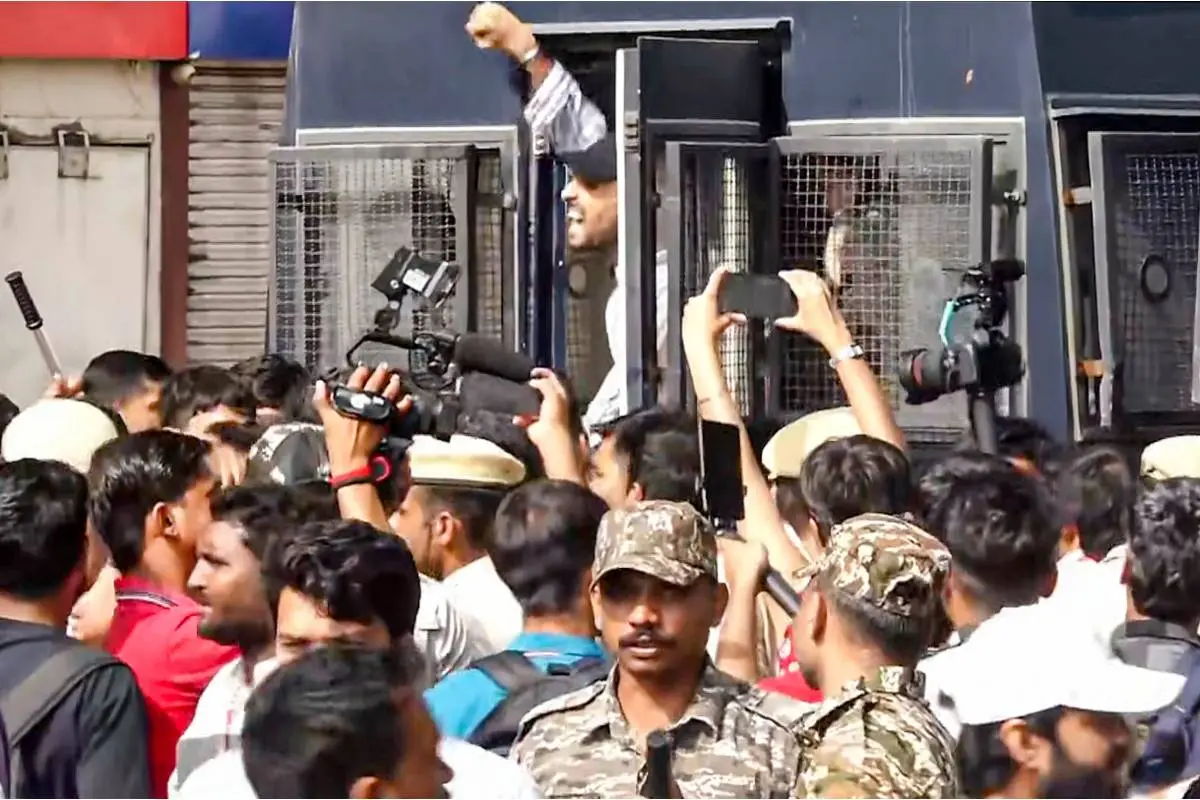
New Delhi: Following a series of dramatic pre-dawn actions and tarmac detentions across the national capital, law enforcement authorities have taken nearly the entire top leadership of the Cockroach Janta Party (CJP) and its allied parties into preventive custody. The unprecedented crackdown aims to neutralise the planned 'Jantar Mantar 2.0' rally demanding the immediate resignation of Chief Election Commissioner Gyanesh Kumar over alleged electoral roll discrepancies.
The operation reached a peak at Indira Gandhi International Airport when police boarded a flight arriving from Mumbai to detain CJP founder Abhijeet Dipke alongside national co-convenors Sourav Das and Ashutosh Ranga.
Dipke reportedly challenged officers on board, declaring he was prepared for arrest and unaffraid, while the official CJP handle on X accused the administration of “declaring war against his own citizens to save his traitor friend!”
Simultaneously, prominent commentator Dhruv Rathee was taken into custody from his residence early Saturday morning, while senior CPM figures, including general secretary M A Baby, Brinda Karat, P K Sreemathi and M V Govindan, were detained near Kerala House. Though former Kerala chief minister Pinarayi Vijayan, former minister K N Balagopal and MP John Brittas were initially permitted to proceed, they too were subsequently detained alongside student leaders from SFI and AISA.
Can the movement sustain momentum?
With official permission for the demonstration denied, the police strategy centers on nipping the movement in the bud by neutralising first-tier leadership. However, political observers and party functionaries indicate the protest is likely to evolve rather than dissipate.
Decentralised strategy: CJP cadre have reportedly received explicit instructions from Dipke prior to his arrest to continue peaceful agitation. As CPM Rajya Sabha MP A A Rahim noted, the demonstration will adapt to local conditions, operating under the principle that “wherever activists gather, that becomes Jantar Mantar”.
Second-tier leadership: Second-line organisers and student unions are preparing to sustain decentralised marches across Delhi's neighbourhoods, bypassing central barricades.
Legal challenges: Affected political organisations and civil rights groups are preparing urgent court petitions to challenge the legality of the detentions and the denial of peaceful assembly.
Nationwide escalation: Similar to past pan-Indian student and civic movements, preventing access to New Delhi is expected to trigger regional solidarity protests across states like Kerala, West Bengal, Maharashtra and Rajasthan.
Growing pressure on capital administration
The enforcement of widespread traffic regulations in the form of transit blockades and station closures, and digital blackouts presents a growing administrative challenge. Prolonged security lockdowns in the national capital carry huge collateral impact, disrupting the IT sector, banking networks and online services, while risking international optics near foreign embassies and diplomatic quarters.
As second-tier organisers assume operational control, the coming days will determine whether the pre-emptive detentions effectively halt the campaign or catalyse a broader national movement.