Cool roofs and solar power: How Tamil Nadu's ‘Green Schools’ are revolutionising energy consumption
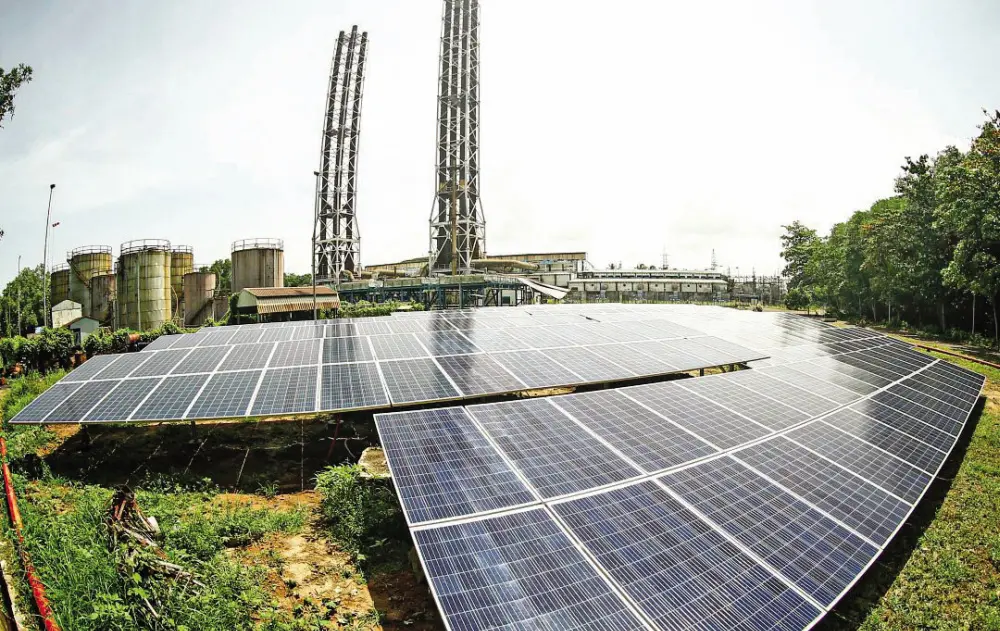
Chennai: The Tamil Nadu government’s Green School Scheme could offset nearly 91 per cent of the total electricity consumption of government educational and hospital institutions if expanded to all 45,000 government schools, according to an official impact study released on Monday.
The state has launched Climate Education and Cool Roof initiatives in 300 green schools. Finance and Environment Minister Thangam Thennarasu and School Education Minister Anbil Mahesh Poyyamozhi inaugurated the programme.
The study, prepared in collaboration with the Indian Institute for Human Settlements (IIHS), found that rooftop solar installations have already reduced grid electricity consumption by around 46 per cent per school. On average, each green school saves 3,572 kWh annually, resulting in financial savings of about Rs 26,000 per school per year.
“Extending the green school energy savings to all 45,000 government schools in Tamil Nadu will result in an annual reduction in electricity use that would be equivalent to roughly 91 per cent of the current annual consumption of all government and aided educational institutions and hospitals in the state,” the study said.
While indicative, the report noted that such savings could, over time, offset a significant portion of the capital investment required for solar installations and related infrastructure, highlighting the long-term economic and environmental impact of the scheme.
The Green School Scheme also prioritises student health by addressing extreme heat, which Tamil Nadu has officially recognised as a state-specific disaster. Officials noted that classrooms with concrete roofs often reach temperatures of 38–40°C, leading to a measurable “cognitive drop”, with exam pass rates falling by up to 10 per cent when classroom temperatures exceed 32°C.
The Cool Roof initiative, piloted in Ambattur, uses high-reflective coatings to lower indoor temperatures by 3–4°C and ceiling surface temperatures by 4–5°C. A government publication said thermal comfort plays a critical role in improving students’ attention and learning outcomes.
Beyond energy efficiency, the scheme adopts a holistic climate action approach, including smart water management through rainwater harvesting structures, implemented in 79 per cent of evaluated schools, and drip irrigation in 57 per cent. Waste management measures include source segregation and vermicomposting to convert organic waste into manure for school gardens.
Climate literacy is also a core component. So far, 4,000 teachers across all 38 districts have been trained as volunteer “Climate Ambassadors” to lead student nature camps and environmental audits.
The initiative is supported by the United Nations Environment Programme (UNEP) under the BeCool Project, funded by the Swiss Agency for Development and Cooperation (SDC). UNEP Country Head Balakrishna Pisupati described the programme as a national benchmark for sustainable educational infrastructure.
The Tamil Nadu government plans to continue phased implementation, with the latest phase targeting 100 schools for passive cooling retrofits, including shading, natural ventilation and increased green cover, according to a government press release.
PTI