108 + 5 + 2 ≠ 118: The math that refuses to make Vijay CM
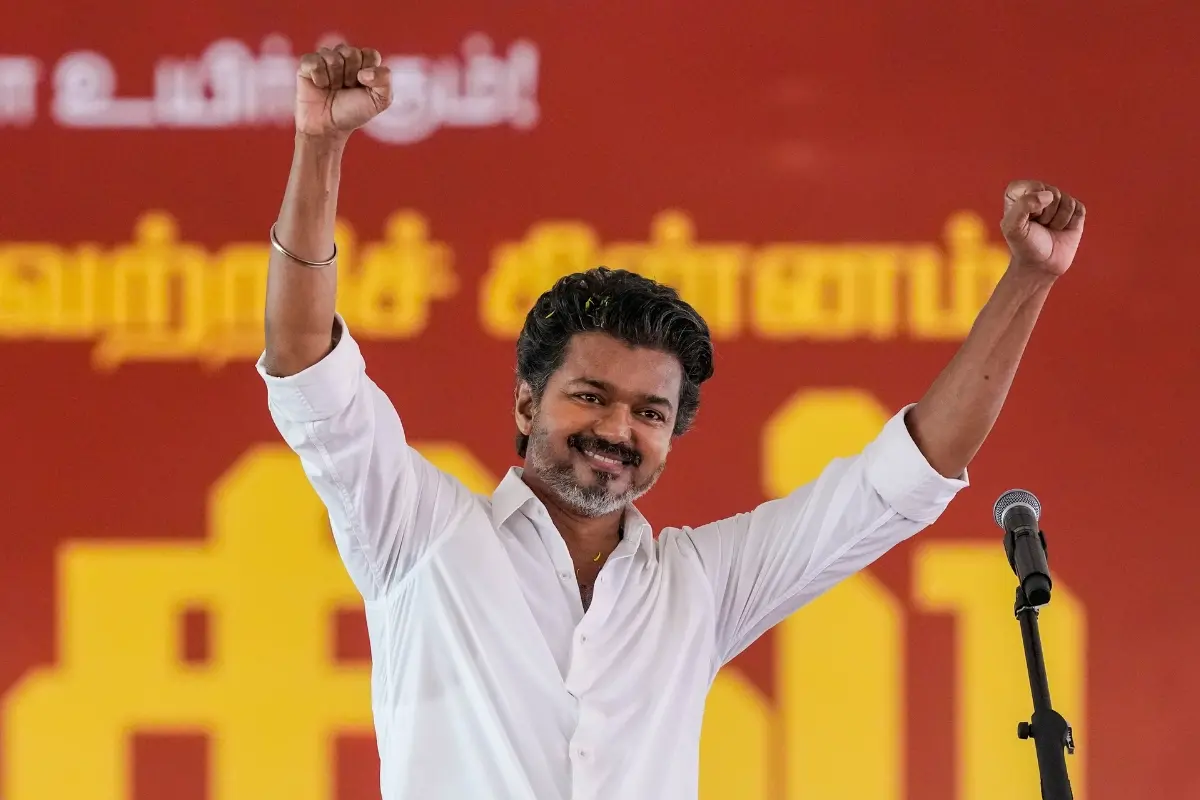
Chennai: Tamil Nadu’s post-election scenario has turned into a complex political arithmetic exercise, where the final outcome is no longer determined only by the number of seats won, but by post-poll alliances and verified support.
Vijay’s Tamilaga Vettri Kazhagam (TVK) emerged as the single-largest party with 108 seats in the 234-member Assembly, marking a strong debut in state politics. However, the party’s path to forming the government has been blocked by the majority mark of 118 seats, leaving it short by 10 seats despite its electoral performance.
Why is TVK’s 108-seat win not enough to form government?
In a hung Assembly situation, being the single-largest party does not automatically guarantee power. The constitutional requirement is to cross the majority mark, which in Tamil Nadu stands at 118 seats. TVK’s 108 seats fall short of this threshold, meaning the party cannot form government on its own and must depend on external support from other parties to bridge the gap.
What are the key party-wise seat numbers?
Total seats: 234
Needed to form governmet: 118
- TVK: 108 seats (single-largest party)
- DMK: 59 seats
- AIADMK: 47 seats
- Congress: 5 seats
- CPI: 2 seats
- CPI(M): 2 seats
- VCK: 2 seats (support unclear)
- IUML: 2 seats (support withdrawn/denied)
- AMMK: 1 seat
Others/independents: remaining seats
The majority mark required in the 234-member Assembly is 118 seats, meaning TVK is currently short by around 10 seats even after emerging as the largest party.
How did the post-poll numbers game begin?
Soon after the results, TVK began discussions with smaller regional parties and breakaway factions from larger alliances. Early signals suggested possible backing from Left parties and some regional groups. However, these initial indications quickly turned uncertain as most parties either offered conditional support or delayed formal written confirmation required to validate their backing at the administrative level.
Several smaller parties entered the post-poll negotiation space. The Congress extended conditional support but with political terms attached. CPI and CPI(M) offered outside support without joining the government. The VCK became a key but uncertain factor, with internal disagreements and demands for power-sharing delaying a formal commitment. Meanwhile, some parties that were initially believed to be supportive later denied issuing any official backing.
Why is there confusion over support letters?
A major issue in the current political situation is the lack of consistent and verified documentation. While some parties have made public statements indicating support, others have either withdrawn or denied such claims. In one instance, reported support letters were disputed, adding to political confusion. Since the Governor requires written and verifiable proof, verbal or media statements are not considered sufficient.
The Governor has reportedly taken a cautious stance, insisting that at least 118 MLAs must provide clear, written, and verifiable support before any invitation to form government is issued. This requirement is intended to ensure constitutional clarity in a hung Assembly situation. As a result, despite TVK’s claims of nearing the majority mark, no formal decision has been taken.
Why is the situation still unresolved?
The deadlock continues because of shifting political alignments and lack of confirmed numbers. Some parties have changed positions after initial announcements, while others have stayed non-committal or tied their support to negotiations. This has created a situation where the claimed support varies depending on political statements, making it difficult to establish a stable majority on record.
Until a clear list of 118 supporting MLAs is officially submitted and verified, the government formation process will remain on hold. TVK continues to negotiate with potential allies, but the outcome depends on whether these talks translate into formal and legally valid support. For now, Tamil Nadu remains in a state of political uncertainty, where electoral victory alone is not enough without confirmed majority backing.