Tamil Nadu Election 2026 opinion poll: Who will win Chennai, Coimbatore?
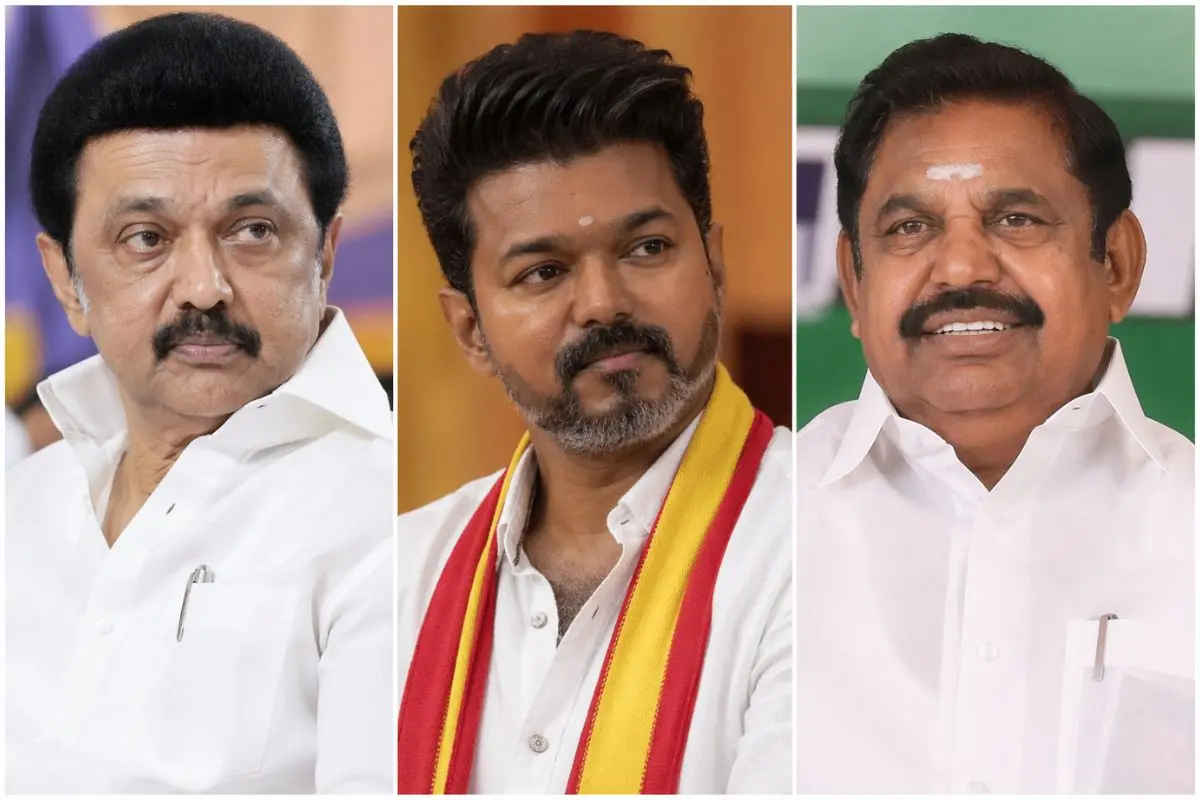
With Tamil Nadu heading into polling on April 23, a range of pre-election surveys conducted by agencies including Agni News, Lok Poll, Thanthi TV and Chanakya TV present a complex and evolving picture of the state’s political landscape.
While some polls suggest a comfortable lead for the DMK-led alliance, others indicate a much tighter contest, particularly in key urban centres like Chennai and Coimbatore.
The combined data from these surveys highlights a wide spectrum of predictions.
While Agni News and Lok Poll point towards a dominant showing for the DMK+, surveys by Thanthi TV and Chanakya TV suggest a nail-biting contest, with the AIADMK-led alliance remaining firmly in the race.
These contrasting projections underline one key takeaway: the 2026 Tamil Nadu election is far from a one-sided battle.
Chennai remains DMK stronghold but cracks emerge as opposition gains ground
Chennai continues to be a crucial battleground where the DMK-led alliance retains an advantage, but multiple surveys suggest that its earlier dominance may be weakening.
In 2021, the DMK swept all 16 seats in the capital. However, current projections across surveys indicate that the alliance may not repeat that clean sweep.
While it is still expected to lead, opposition gains in several constituencies could reduce its overall tally.
Urban issues are emerging as a key factor behind this shift. Concerns around flooding, rising property taxes, and infrastructure strain are influencing voter sentiment, particularly among middle-class populations in areas like Velachery and Mylapore.
At the same time, welfare schemes continue to provide strong support to the ruling alliance, especially among women voters.
This dual dynamic, governance concerns versus welfare satisfaction, is shaping a more competitive electoral environment in the city.
Another major factor highlighted across surveys is the rise of Tamilaga Vettri Kazhagam (TVK).
In some projections, particularly the Lok Poll, the party is estimated to secure close to 24% vote share, marking it as a significant disruptor.
Its growing appeal among younger voters is expected to split traditional vote banks, especially in urban constituencies.
As a result, seats that were once considered safe are now emerging as closely contested battlegrounds.
Coimbatore swings towards AIADMK as industrial sentiment reshapes voter mood
In contrast to Chennai, Coimbatore is witnessing a stronger push from the AIADMK-led alliance, according to all the three surveys.
Several projections indicate that the opposition holds an advantage in a majority of constituencies in the region.
This shift is being driven largely by economic concerns, particularly among small and medium enterprises in the industrial belt.
Issues such as electricity tariffs, operational costs, and broader business sentiment are influencing voter preferences in Coimbatore, which has long been a key economic hub of Tamil Nadu.
At the same time, leadership perception also plays a role. Edappadi K Palaniswami continues to retain strong support in western Tamil Nadu, adding to the opposition’s momentum in the region.
The presence of the BJP further complicates the contest. With a steady vote share in urban pockets, it could influence outcomes in closely fought seats, especially if vote transfers occur in favour of the AIADMK alliance.
However, the DMK remains competitive in select constituencies, where local campaigning and development promises are helping it stay in contention.
Tight margins could decide the outcome
One of the most striking patterns across all surveys is the high number of constituencies classified as “close contests”. In some projections, this number is estimated to be as high as 60 seats, accounting for more than a quarter of the Assembly.
This indicates that while the DMK+ alliance may appear ahead in overall projections, the outcome could hinge on narrow margins in dozens of constituencies.
In such a scenario, smaller parties like Naam Tamilar Katchi, along with emerging players like TVK, could play a decisive role by splitting votes and altering results in key battleground seats.
A two-horse race, with a twist
At its core, the election remains a contest between the DMK+ and AIADMK+ alliances. However, the variation across survey predictions highlights a deeper uncertainty in voter sentiment.
While some polls project the AIADMK alliance far behind, others place it close to the majority mark of 118 seats.
This wide range, from as low as around 38 seats in some surveys to over 100 in others, reflects the volatile nature of the current political climate.
The emergence of TVK as a significant vote-share player adds layer of unpredictability, especially in urban and semi-urban constituencies.
Urban divide shaping the larger contest
The contrasting trends in Chennai and Coimbatore reflect a broader shift in Tamil Nadu’s electoral dynamics. Urban voters are increasingly influenced by localized issues rather than traditional party loyalties.
In Chennai, welfare and governance continue to favour the ruling alliance, but civic issues are creating openings for the opposition. In Coimbatore, economic concerns are strengthening the AIADMK’s position.
This regional divergence suggests that the outcome may depend on how these localized swings play out across the state.
The final word
Taken together, the surveys suggest that the DMK-led alliance currently holds the momentum, but not a guaranteed landslide.
The large number of close contests, combined with the rise of smaller and emerging players like TVK, introduces significant uncertainty into the race. What may appear as a comfortable lead on paper could quickly narrow when translated into seat-by-seat results.
As Tamil Nadu prepares to vote, the real story is likely to unfold at the constituency level, where margins are thin and outcomes unpredictable.
(Disclaimer: All survey findings referenced in this article were released before the legally mandated silence period. This content is purely a collation of survey reports, and our organisation does not endorse, support, or promote any political party, alliance, or candidate.)