What caused the tigress and four cubs to die in Karnataka forest — a poisoned cow?
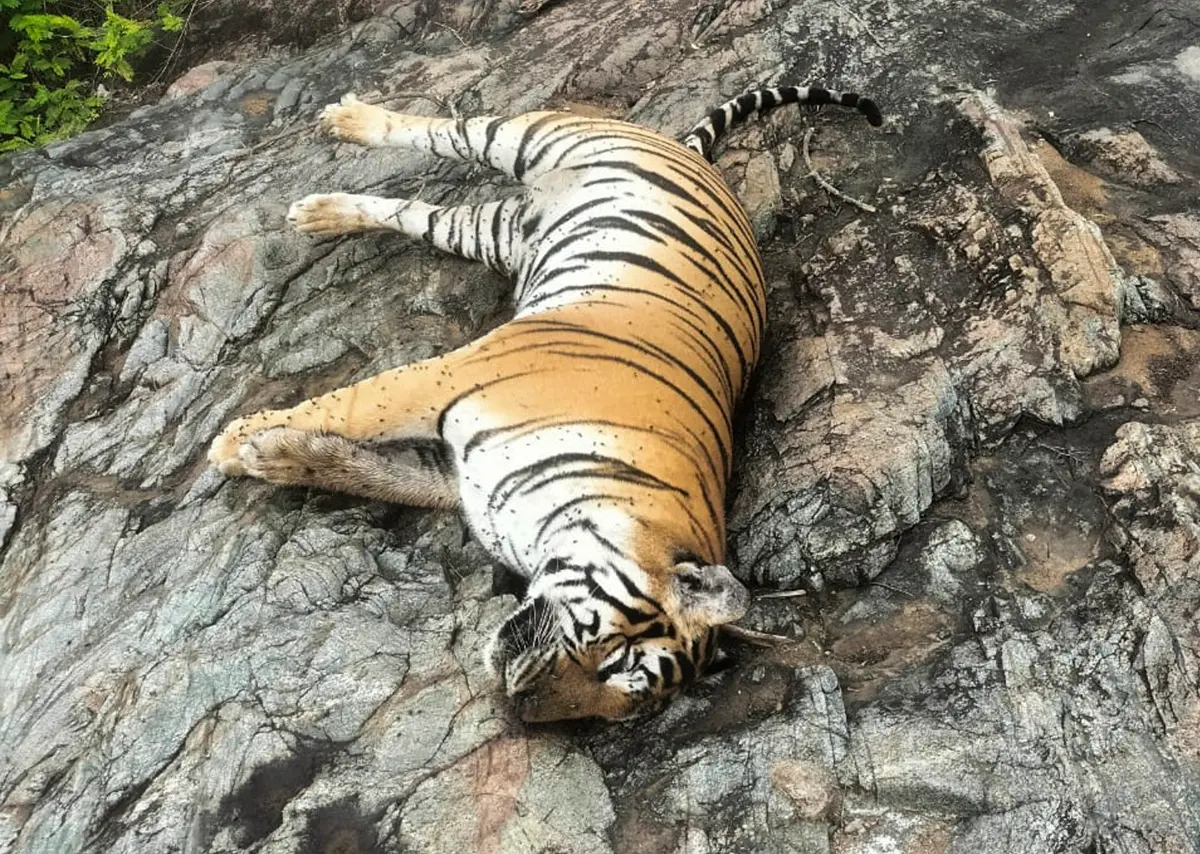
Bengaluru: The discovery of a decomposed cow carcass in the Hugyam forest range in Mahadeshwara Hills, Karnataka, has intensified suspicions that a tigress and her four cubs may have died due to poisoning, forest officials said on Friday.
The five tiger deaths, confirmed on Thursday, came to light during a routine patrol by frontline staff. According to officials, the felines may have consumed the poisoned carcass.
"Either the bovine was poisoned before being left in the forest, or the owner of the cattle, after spotting the dead cow, would have spread poison on its body, which the tigress and her cubs ate and died," an officer explained.
Karnataka Forest Minister Eshwar Khandre endorsed the theory of poisoning:
"Someone might have poisoned the cattle, which led to the death of the big cats," he told reporters.
"Our government has taken the matter very seriously, and we will investigate it from all angles. We will not spare those behind it."
Postmortem and forensic analysis underway
The mother tigress’s autopsy was carried out on Thursday, while the four cubs were being examined on Friday. A five-member expert team conducted a detailed necropsy, adhering to the National Tiger Conservation Authority (NTCA) protocols.
Officials stated that tissue, blood, and stomach content samples were being analysed for toxicology, histopathology, and DNA profiling.
Forest surveillance and anti-poaching efforts ramped up
In the wake of the incident, forest authorities have bolstered surveillance and anti-poaching vigilance in the Hugyam range.
Minister Khandre noted that real-time drone monitoring, infrared cameras, and GPS-based M-STRIPES patrols have been intensified. All Anti-Poaching Camps (APCs) are on high alert.
“Intensive sweeps for snares, poison baits, and traps are being conducted, and a confidential informer network with reward mechanisms is operational for actionable intelligence,” Khandre said on Thursday.
Karnataka holds major tiger population
As per the Status of Tigers, Co-predators and Prey in India 2022 report by NTCA, Karnataka houses the second-largest tiger population in the country with 563 tigers, behind Madhya Pradesh which has 785.