Bengal SIR update: Supreme Court tightens norms, seeks Madhyamik admit card and certificate
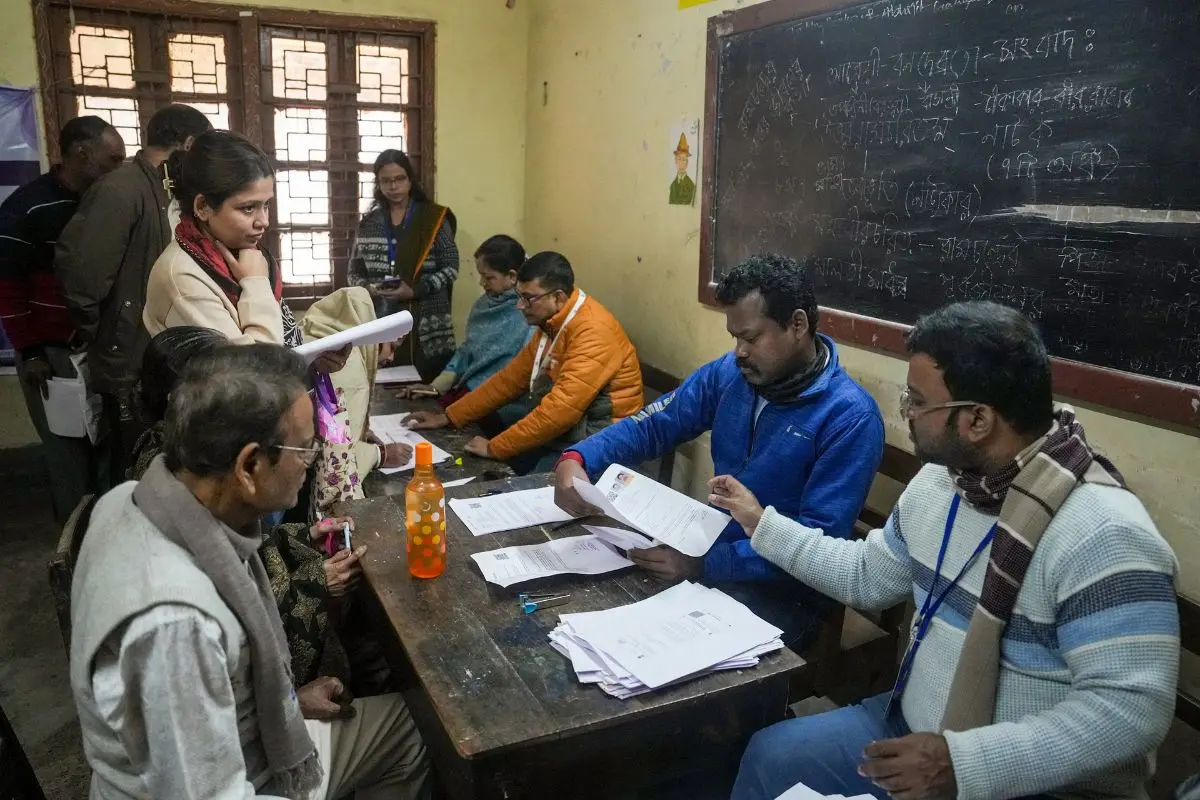
Kolkata: The Supreme Court on Wednesday issued a clarification refining its earlier directive on West Bengal’s ongoing Special Intensive Revision (SIR) of electoral rolls, stating that voters called for hearings over “logical discrepancies” will be required to produce both their Madhyamik (secondary examination) admit cards and passing certificates.
The bench led by Chief Justice Surya Kant observed that the two documents would complement each other in establishing critical details such as the voter’s age and parental information.
Justice Jaymalya Bagchi noted during the hearing that judicial officers are familiar with the particulars typically recorded in these documents, supporting their admissibility in the verification process.
The clarification comes amid concerns over the pace of document scrutiny in the state. According to Election Commission sources, a total of 532 judicial officers have been assigned to assist with verification related to disputed or discrepancy-marked voters.
Of these, around 200 officers have completed training and have begun examining documents submitted during hearings.
Officials, however, acknowledged that verification has progressed more slowly than anticipated. Many judges and judicial officers are undertaking such electoral duties for the first time, contributing to procedural delays.
While the Commission did not disclose specific figures on how many disputed voter documents have been cleared so far, sources indicated that efforts are underway to improve workflow efficiency.
To ensure the SIR exercise remains on schedule, the Supreme Court said additional judicial support may be drawn from neighbouring states if required.
The court indicated that judges from Jharkhand and Odisha could be assigned to Bengal to expedite pending verifications. Election Commission sources suggested that roughly 200 judges or judicial officers from these states are expected to be available for deployment should the need arise.
In its modified order, the court also addressed logistical aspects of document handling. It directed that documents related to voters with unresolved discrepancies, which had not been uploaded to the Election Commission’s portal by February 14, be handed over by Electoral Registration Officers (EROs) and Assistant EROs to judicial officers by Thursday.
Meanwhile, officials hinted at a high-level review meeting likely to take place at the Calcutta High Court.
The meeting is expected to involve the Chief Justice of the High Court, the state’s Chief Secretary, the Chief Electoral Officer (CEO), the Home Secretary, the Director General of Police (DGP), and the Police Commissioner, among others.
The session would focus on assessing progress in verification and addressing administrative bottlenecks.
The final voter list for West Bengal is scheduled to be published on February 28. Authorities said that following publication, a supplementary electoral roll will be released in phases alongside the resolution of disputed entries.
However, voters whose names do not feature in the final list will be ineligible to cast their ballots in the upcoming elections.
The Supreme Court’s latest clarification is seen as an attempt to standardise documentation requirements and reduce ambiguity in hearings, as the Election Commission races against time to complete the sensitive revision exercise.