Supreme Court to hear pleas against Waqf (Amendment) Act on May 5
New Delhi: The Supreme Court is set to hear on Monday, May 5, a group of five petitions questioning the constitutional validity of the Waqf (Amendment) Act, 2025.
This comes after the Union government temporarily paused two key provisions of the law following pointed queries from the apex court.
On April 17, Solicitor General Tushar Mehta assured a bench led by Chief Justice Sanjiv Khanna that the Centre would not denotify waqf properties—including those under the 'waqf by user' category—nor make appointments to the Central Waqf Council or state waqf boards until May 5.
He emphasised that the law was passed by Parliament with due deliberation and urged the court not to issue an interim stay without hearing the government’s position.
The court had noted these submissions and directed that no waqf properties already declared or registered be disturbed or denotified until further hearing. It granted the Centre a week’s time to file a preliminary affidavit.
Among the five lead petitions is one filed by AIMIM president and Hyderabad MP Asaduddin Owaisi. Other litigants include civil society groups, opposition parties, and the All India Muslim Personal Law Board (AIMPLB).
In its 1,332-page counter-affidavit submitted on April 25, the Ministry of Minority Affairs defended the amendment and opposed a blanket stay, arguing that such a move would create a “legislative regime by judicial order.” The Centre stated that mandatory registration of waqf, including ‘waqf by user’, has been in place since 1923 and that the amended law respects the religious practices of Muslims.
The affidavit also claimed a sharp increase in waqf land post-2013, with an alleged rise of over 20 lakh acres, which the government described as “really shocking.” It cited potential misuse of the waqf registration process, including unauthorised claims over private and government land under the 'waqf by user' provision.
The AIMPLB, however, has accused the Centre of submitting false data and has demanded action against officials responsible for the affidavit. The Board has challenged the government’s claim of a surge in waqf land registrations post-2013.
The Supreme Court recently declined to accept more petitions on the matter, stating it would consider only five selected cases despite over 70 challenges being filed.
The Waqf (Amendment) Act, 2025, received presidential assent on April 5 and was passed by both houses of Parliament—288 in favour and 232 against in the Lok Sabha, and 128 in favour and 95 against in the Rajya Sabha.
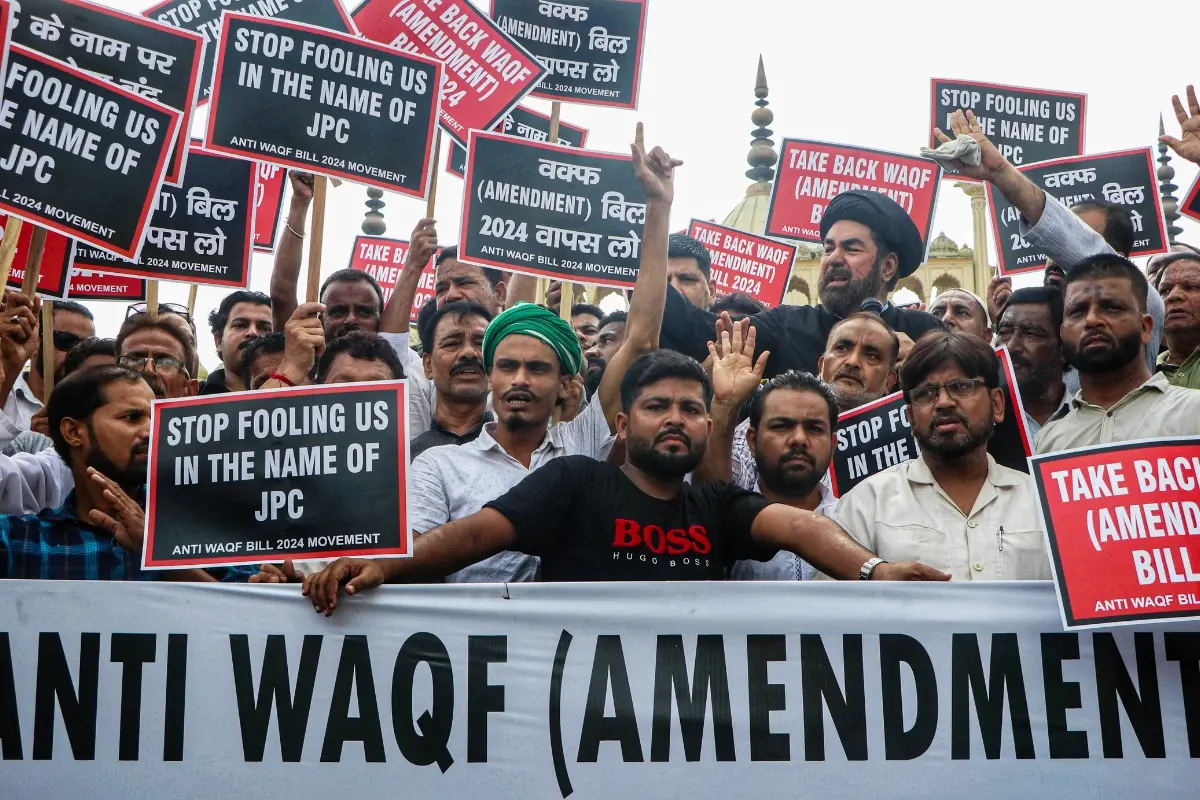
Political opposition from parties including the DMK, YSRCP, AIMIM, Left parties, and various NGOs continues as the legal battle moves forward in the Supreme Court.