‘Rats ate seized bribe money’: Supreme Court questions evidence storage in Bihar corruption case
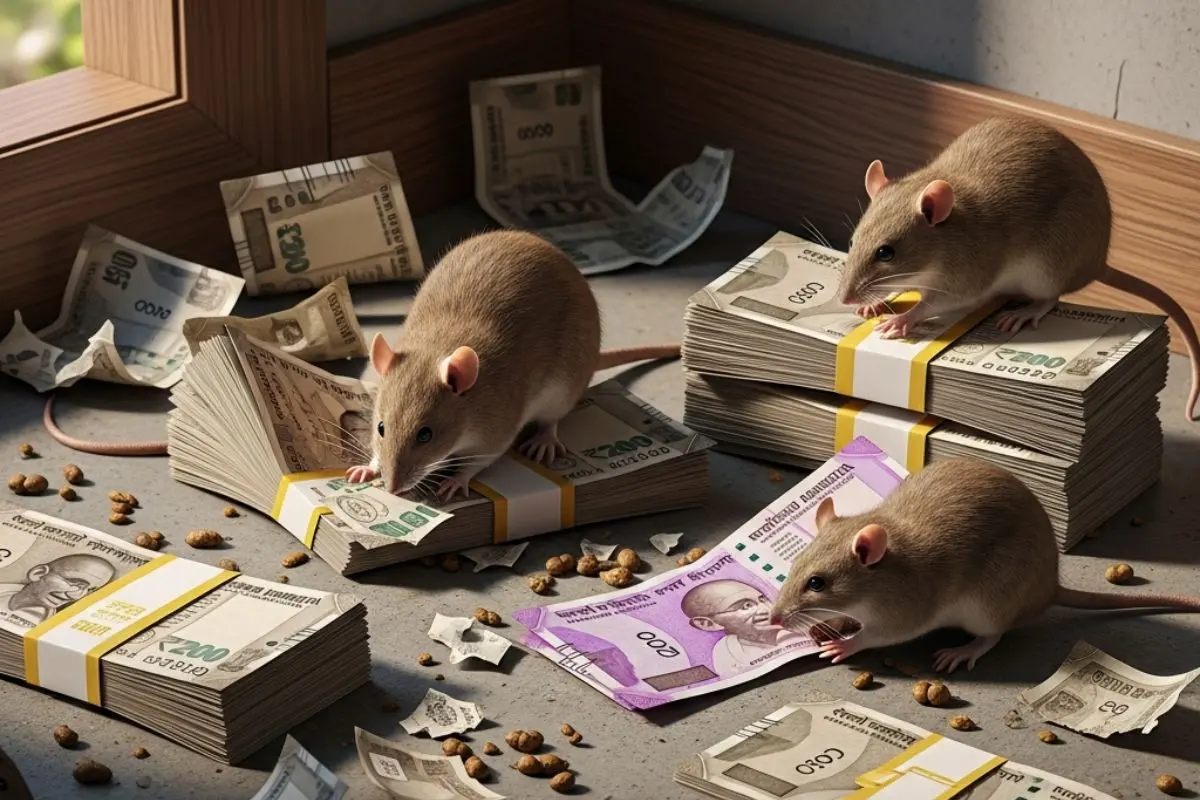
The Supreme Court on Friday expressed surprise over a claim that currency notes seized as alleged bribe money in a Bihar corruption case were destroyed by rodents while kept in police custody, questioning the safety and handling of evidence in such matters.
A bench of Justices J B Pardiwala and K V Viswanathan was hearing an appeal filed by a woman convicted in a 2014 bribery case when it took note of the explanation recorded by the Patna High Court regarding the condition of seized cash.
According to the High Court’s findings, the currency notes recovered during investigation were kept in a police malkhana, where they were allegedly damaged due to poor storage conditions. The record stated that rodents had destroyed the seized notes, raising questions about the preservation of material evidence.
The Supreme Court, reacting to the explanation, said it was surprised by such a lapse and questioned how frequently seized currency in criminal cases may be getting damaged due to improper storage.
“We are taken by surprise that the currency notes got destroyed by rodents. We wonder how many such currency notes recovered in this type of offence get destroyed, as they are not kept in a safe place. It's a huge revenue loss for the State,” the bench observed.
The court also said the explanation given for the destruction of the seized cash did not inspire confidence, indicating possible systemic issues in the maintenance of malkhana records and seized property.
The case arises from the conviction of a woman who was serving as a child development programme officer at the time of the alleged offence. She was accused of demanding and accepting a ₹10,000 bribe. While a trial court had acquitted her, the Patna High Court later overturned the decision and convicted her, leading to her appeal before the Supreme Court.
The top court has granted the appellant bail and suspended the sentence imposed by the High Court, which had sentenced her to four years in prison.
The bench said it would examine the larger issue of storage and preservation of seized currency and evidence when the matter is taken up for a detailed hearing.
With PTI inputs